

Professor Guojun He and Ms Qidan Wang
3 December 2025
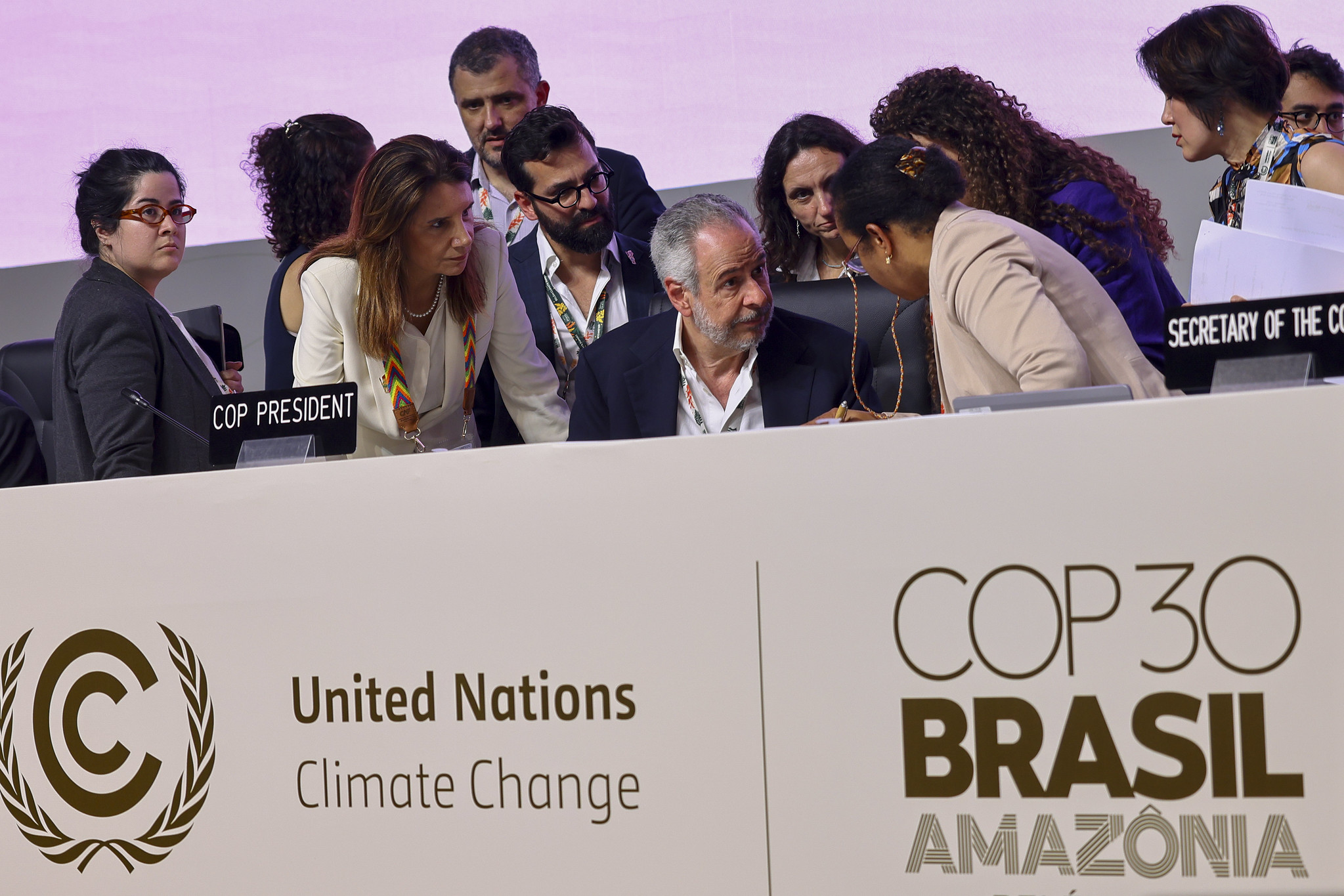
Tropical forests are disappearing at an alarming rate, with the loss of approximately 6.7 million hectares of tropical primary forests worldwide in 2024, representing close to an 80% increase over 2023 (see Note 1). Held in November in Brazil, the 2025 United Nations Climate Change Conference (COP30) was regarded as a major climate summit since the Paris Agreement. One of its topics focused on tropical rainforests, aiming to rewrite the profit-driven logic that “deforestation is more profitable than forest conservation”.
Economic hurdles to environmental performance
According to the estimates by the United Nations Environment Programme (UNEP), the annual global funding gap in nature conservation will reach about US$700 billion by 2030, while so far public and private funding for forest conservation remains far from adequate (see Note 2). It is important to note that the benefits of clean air, biodiversity, climate adjustment provided by forests are shared by all humanity but the cost of conservation is mainly borne by the countries where the forests are located (mostly developing nations).
In terms of the source of funding, long-term dependence on official development assistance and charitable donations from developed countries has further amplified uncertainty. The funds from such sources are, more often than not, subject to macroeconomic conditions and domestic political agendas. Once donor countries face economic downturns or shifts in policy priorities, related contributions may be drastically reduced, making it difficult to sustain long-term conservation programmes.
The economics behind all the above factors are not easy to work out. For countries with vast tropical forests such as Brazil and Indonesia, clearing forests to create farmland for rearing cattle or growing soybeans can reap considerable export revenue in the short term. In contrast, forest conservation is neither cost-effective nor is it considered fair, and the twin aspects of this nature have become drivers of deforestation and obstacles to forest conservation.
From the predicament of REDD+ to the breakthrough with TFFF
Reducing Emissions from Deforestation and Forest Degradation in Developing Countries (REDD+) was proposed in 2005 as an important policy framework in international climate governance (see Note 3). However, in practice it has been constrained by payment uncertainty, transaction delays, and sluggish market development, etc. REDD+ has been hard-pressed to provide forest countries with long-term, stable financial returns.
The Tropical Forests Forever Facility (TFFF) was officially kick-started at COP30, with plans to set up a US$125 billion tropical forest investment fund. Approximately US$25 billion will be contributed by sovereign states and charitable organizations as a risk buffer, while the remaining US$100 billion will be raised by issuing high-grade bonds in the financial capital markets. The initiative leverages public and charitable funds to mobilize long-term capital from institutional investors, thereby reducing overall financing costs.
As shown in the Table, TFFF’s innovativeness lies in turning investment gains from the capital market into predictable annual returns explicitly linked to forest area. Each participating country pays a fixed annual fee based on the area of tropical forests it has conserved or restored, and receives corresponding reductions in returns for areas of deforestation or forest degradation. This forms a stable incentive structure―the larger area of conservation, the higher the returns; the more deforestation, the lower the returns. Such a mechanism closely resembles payment for ecosystem services, directly compensating for current forest stock. It is particularly conducive to motivating countries that shoulder long-term, high conservation costs despite keeping deforestation rates under control, and is thus likely to fill the incentive gap under REDD+.
| Dimensions | REDD+ | TFFF |
| Primary Objective | Reduction in greenhouse gas (GHG) emissions from deforestation, forest degradation, and depletion of forest carbon | Long-term conservation of tropical forests |
| Geography | Mostly in countries and jurisdictions actively reducing deforestation and forest degradation, especially in high-deforestation-rate areas | Tropical and subtropical forest countries, especially those with low deforestation rates |
| Eligible activities | Activities that reduce GHG emissions and enhance removals | Forest conservation and forest restoration |
| Metric for results-based payment (RBP) | Tonnes of carbon dioxide equivalent (tCO₂e) | Hectares of moist tropical forests |
| Sources of funding | Carbon market buyers (sovereign entities, private companies, etc) purchasing carbon credits; and non-market initiatives financed through Official Development Assistance to support national climate objectives | Sovereign and institutional investors (e.g. sovereign wealth funds and pension funds). Returns to investors via financial instruments, with hybrid financing that combines public/charitable sponsor capital and bonds issued on the capital market. |
Source: TFFF-Concept Note 3.0; data compiled by the authors
Empirical cases in China
During the preparatory phase for COP30, US$6.7 billion was secured as seed funding for TFFF, markedly short of the initial target of US$25 billion. Citing differing views on operational mechanisms and domestic budget constraints, many developed countries put their contributions on hold.
Over the past few decades, China has advanced a series of large-scale ecological restoration projects, sufficient to build a rare national-scale empirical case. During the period between 2001 and 2020 alone, over 100 million hectares of forests and vegetation cover were added or restored nationwide via these projects. Of these, approximately 65 million hectares comprised newly established forests, an area exceeding half the total size of all national parks in the US.
The foremost outcome of this “afforestation campaign” was a systematic improvement in ecological and environmental conditions. Empirical assessments conducted by my collaborators and me indicate that, in priority ecological restoration areas, the number of extremely hot days (average daily temperatures above 30°C) fell by approximately 35%, with a considerable alleviation of heat waves. At the same time, annual mean concentrations of particulate matter 2.5 (PM₂.₅) declined by approximately 11 µg/m3, with the air-purification effect extending to cities located up to 300 km downwind. Indicators of downstream river pollution also dropped substantially, similarly exhibiting a spillover effect that propagated along the downstream flow.
Likewise, biodiversity showed signs of stabilization. In areas where ecological restoration projects were implemented, the rate of decline in bird populations was roughly 40% of that observed in the no-project scenario. This suggests that large-scale ecological restoration has at minimum preserved more habitats and living spaces for common species.
Our research findings show that, in areas covered by the restoration project, per-unit yields of staple crops were not materially affected, due in part to soil and water conservation measures and improvements in the local microclimate. During the same period, GDP and employment did not undergo any systemic decline, indicating that, with appropriate design, afforestation and economic development are not necessarily contradictory.
Investment returns of ecological improvements
Once the ecological improvements are translated into an “economic ledger”, the numbers become even clearer. The study converts premature deaths avoided through reduced heat exposure as well as less air and water pollution into monetary value using epidemiological models and population data. The results show that between 2001 and 2020, the health benefits brought about by China’s ecological restoration projects amounted to RMB13 trillion (approximately US$1.8 trillion), while financial investment during the same period totalled about RMB800 billion to RMB1 trillion―equivalent to a return of 13 dollars for each dollar invested. This calculation does not even include gains from ecological services such as carbon sinks and biodiversity.
Benchmarked on the experience of China, the study further develops a map of returns on global investments in forest restoration. For each inhabited one-degree grid cell on Earth, it compares the cost of restoring all land suitable for afforestation with the health benefits from improved air quality. The results demonstrate that in densely populated and heavily polluted regions such as South Asia, Southeast Asia, and West Africa, the rate of return from large-scale tree planting is likely to exceed 10, and may even match or surpass that of China.
It is evident that China’s experience provides empirical support in relation to the core problems TFFF seeks to solve. In other words, proper afforestation in suitable locations will not only reverse ecological deterioration in around two decades, but will also produce a clear ledger to demonstrate to the financial authorities and capital markets that such a long-term investment offers healthy returns and controllable risks rather than a financial burden.
A ray of hope in forest protection
TFFF represents a paradigm shift from “charitable aid” to “market investment”, as well as a bold economic experiment and global practice to address the forest crisis. Its success or failure hinges not only on political earnestness and financial commitment of the international community, but also on whether a social system can be established that balances economic benefits, environmental integrity, and social equity in terms of governance, monitoring, transparency, and protection of the rights and interests of local communities and indigenous peoples. If, ultimately, TFFF enables forest countries to secure expected revenues that genuinely exceed the short-term economic gains from deforestation, then protecting forests will no longer be a heavy fiscal burden. Instead, it can gradually be transformed into a rational national development strategy.
Note 1:https://www.wri.org/news/release-global-forest-loss-shatters-records-2024-fueled-massive-fires
Note 2:https://www.undp.org/zh/china/blog/deqiubingfeirenleiduxiangwomenyaozuozirandezhangqishouhuzhe
Note 3:https://unfccc.int/topics/land-use/workstreams/redd/what-is-redd