Highlights
- The Sabotage Backfire: Manipulated reviews boost an app’s product sales ranking within a week of posting, even when they are negative.
- Volume Over Sentiment: Consumers tend to spot fake negative reviews more easily. The visibility gained from these extra reviews ends up outweighing the negative sentiment.
- The ‘‘High-Risk’’ Exception: The misleading impact of fake reviews diminishes for paid apps or unknown developers, as consumers scrutinise high-risk purchases much more closely.
- The Six-Month Hangover: The distorting effects of review manipulation may take up to six months to be fully mitigated, urging digital platforms to filter them more promptly and accurately.
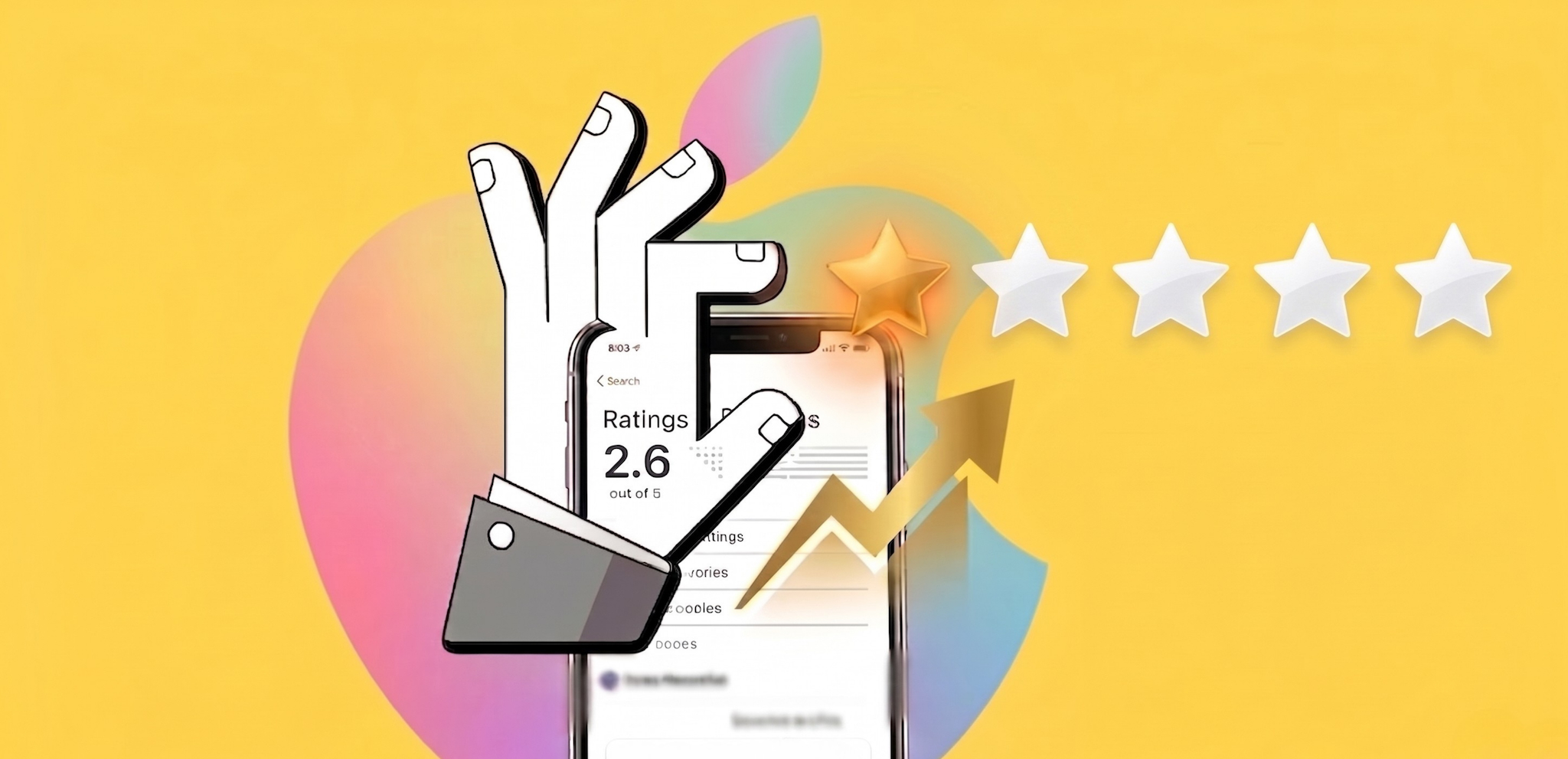
Could a fake one-star review help a business? Online consumer reviews make or break digital sales, but our recent study of the Apple App Store shows a surprising twist: manipulated negative reviews are pushing targeted apps higher up in the rankings. The short-term and long-term distorting effects of review manipulation highlight the need for online marketplace managers to reconsider their filtering strategies, particularly given the current penalties for posting manipulated reviews, such as app removal and developer expulsion. These findings also equip highly exposed app developers with key defensive insights while prompting everyday users to browse with greater care.
Online consumer reviews have long been recognised as an important factor in consumers’ purchase decisions. However, filtering manipulated reviews has become a common and increasingly vexing problem for digital platforms, taking anywhere from days to months to detect. Digital platforms such as Amazon, the Apple App Store, Tripadvisor, Google, and Yelp endeavour to filter out consumer reviews that violate platform policies, with an aim to retain consumer trust and provide businesses with a healthy marketplace.
Manipulated reviews may include those written by unethical businesses to promote their own products or damage the reputations of their competitors’ products, as well as those by businesses incentivising consumers to write positive reviews.
But what happens before the platforms catch and remove them? Little is known about the consequences for sales. Previous research has focused primarily on why firms manipulate reviews and how platforms respond.
To find out, researchers analysed all apps that appeared at least once among the top 1,500 apps in China’s App Store between November 2018 and October 2019, covering 40,570 apps and 58 million reviews. Roughly 10% of those reviews were filtered by Apple. Of those, 86% were identified as manipulated.
The study examined actual platform-filtered reviews and average app rankings to measure the sales performance of mobile apps. It also adopted an established framework based on review volume and valence (or sentiment) and a large language model to distinguish manipulated reviews from other filtered reviews more accurately.
When Fake Reviews Actually Help
Five-star manipulated reviews, being the most positive ones, are associated with significant improvements in app rankings within a week of posting. The research shows that a 100% increase in the number of five-star manipulated reviews resulted in an 11.1% increase in an app’s ranking, equivalent to moving up 82 positions.
But here is the twist.
A 100% increase in the number of one-star manipulated reviews still increased an app’s ranking by 9.2%, or 68 positions higher up.
This contradicts the expected effect of organic negative reviews and the intent behind using such reviews to harm competitors.
Volume over Sentiment
Why might one-star manipulated reviews be associated with higher rankings despite their negative sentiment? The answer may lie in an asymmetry in consumers’ ability to detect manipulated reviews, the study suggests.
Through text analysis, researchers found that manipulated positive reviews closely resembled organic ones, often going unnoticed by consumers.
Manipulated negative reviews, however, were linguistically more distinct from organic ones, making them much easier to spot.
This added visibility gained from these reviews may outweigh the negative sentiment, contributing to higher app rankings. In this way, attempted sabotage can sometimes backfire.
When consumers recognise these negative reviews as fake, they may disregard them. Nonetheless, the additional fake reviews can still increase the app’s overall visibility. This added visibility gained from these reviews may outweigh the negative sentiment, contributing to higher app rankings.
In this way, attempted sabotage can sometimes backfire.
The ‘‘High-Risk’’ Exception
Researchers found that the effectiveness of manipulated reviews depended critically on consumer scrutiny, which was highly influenced by their perceived risk.
When the stakes are higher, consumers are more likely to process information critically and make more cautious decisions, significantly reducing their susceptibility to manipulated reviews.
The study revealed a consistent pattern across three distinct dimensions to prove this—app price, function, and developer size. The effects of manipulated reviews were weaker for paid apps, which involve a financial cost. They also failed to heavily influence non-gaming apps, which serve practical, everyday functions, and apps built by larger, more established developers.
The ‘‘Six Month’’ Hangover
According to the research findings, while manipulated reviews initially improved app rankings, the impact began to turn negative after about one month as platforms gradually detected and removed these reviews.
The entire mitigation process could take as long as six months, meaning half a year of distorted rankings from one single fake review.
However, the entire mitigation process could take as long as six months, meaning half a year of distorted rankings from one single fake review.
These findings are highly relevant to online marketplace managers across industries beyond the mobile app market, particularly amid growing scrutiny of review manipulation and the increasingly severe penalties associated with it.
The ‘‘Must-know’’ Takeaways
Although the study focuses on the Apple App Store, its implications extend to other digital marketplaces reliant on user reviews, such as travel booking hubs and e-commerce sites.
For platforms, manipulated reviews often distort product rankings and sales well before detection systems catch them. As platforms may often need to balance the need for prompt filtering against the high financial costs and user friction of imperfect detection, the trade-off creates an urgent need to increase investment in filtering manipulated reviews more quickly and accurately, so as to uphold consumer trust and the platform’s reputation.
For developers, the research identifies a clear risk profile. Free apps, gaming apps, and products from smaller, less-established developers are more vulnerable to ranking shifts driven by review manipulation.
Consequently, consumers navigating these high-risk categories such as free and gaming apps should interpret ratings and reviews with greater care to make informed choices.
What’s Next?
Future studies may explore whether and how the timing of review filtering affects the impact of manipulated reviews, and how manipulated reviews cause a potential spillover effect.
Further analysis is also needed to determine how consumers’ responses vary across contexts, including the sensitivity of the app category, differences in user expertise, and different forms of product differentiation.
Keywords: Review manipulation, online consumer reviews, digital platform governance, platform algorithm visibility
* Learn more from the full research article here: