
Professor Yulin Fang
18 March 2026
The past few years have seen what can almost be described as the meteoric rise of generative artificial intelligence (AI). From writing, design, application development to customer service, marketing, financial analysis, and medical assistance, more and more companies have introduced generative AI into at least one part of their operations. Individuals and companies alike have also begun to use such tools for tasks that used to rely heavily on human expertise, including creative design, image processing, and content generation.
AI development to prioritize human well-being
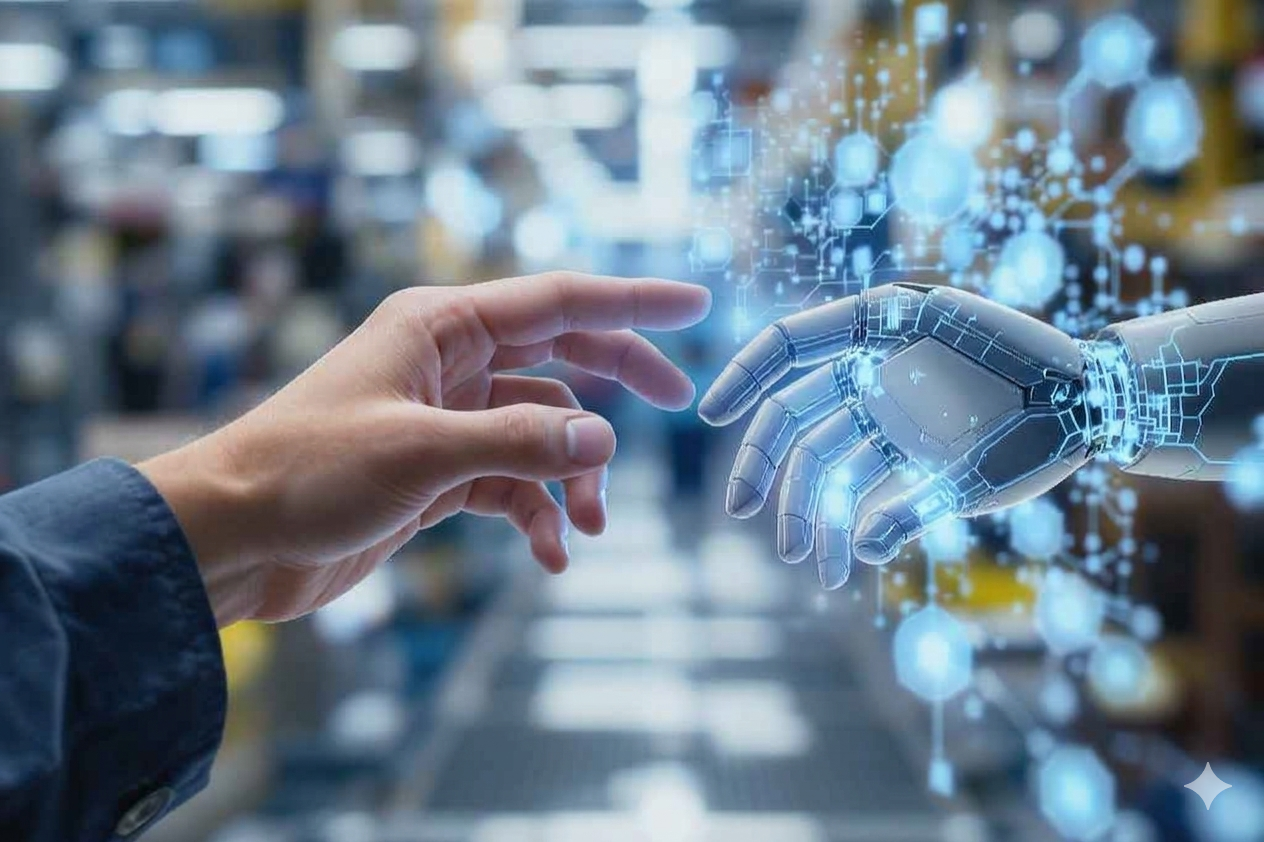
As technology permeates daily life at such a rapid pace, we need to ask a more fundamental question: Where do we hope AI will lead us? If it merely pursues efficiency and cost optimization, then AI is, after all, just a tool. However, if it can stimulate the growth of human capabilities, enhance organizational resilience, and uphold human values and dignity, then it can truly become a force for the advancement of civilization. This is exactly the core focus of human-centred AI.
A human-centred approach does not mean opposing automation, nor does it reject technological innovation. Rather, it emphasizes that the design, deployment, and governance of AI should put human development at the core. Why is this concept so important? The reason is that generative AI is reshaping the nature of knowledge work. In the past, automation mainly replaced repetitive and routine tasks. Today, generative AI is beginning to enter non-routine areas, covering creative design, strategic analysis, and decision support.
Even as corporate productivity has increased significantly, new causes for concern have arisen. Will employees experience de-skilling as a result of over-reliance on AI? Will organizations gradually lose their own knowledge assets? Will humans face the threat of being replaced in their collaboration with AI? Once AI begins to encroach on the realms of cognition and creativity, its impact on humanity will no longer be limited to efficiency alone, but will be a matter of the structure of abilities and a sense of self-worth.
The Institute of Digital Economy and Innovation (IDEI) at HKU Business School and its Human-Artificial Intelligence (HAI) Lab propose a clear governance perspective—in the process of AI-driven organizational innovation, to be truly “human-centred”, the focus must extend beyond financial returns and technological maturity to the following four key areas: performance, learning, creativity, and dignity.
Labelling functions key to performance improvement
Research conducted by the IDEI-HAI shows that in certain sales scenarios, even a generative AI pre-sales system that has yet to integrate leading best practices can still enhance overall performance. It is noteworthy that this improvement mainly stems from enhanced performance among low- to mid-performing employees.
For high-performing employees, early versions of AI may actually have a suppressing effect in that the system’s standardized suggestions limit their original professional judgment and innovative capabilities. Only after the system is upgraded and labelling functions added, allowing high-performing employees to further optimize AI’s suggestions, can overall performance be enhanced across the board. This finding shows that design details determine who benefits and who is disadvantaged. Without prudent governance, AI may widen gaps rather than narrow them.
Will humans’ capacity to learn be undermined
There are two systems of human cognition. System One is intuitive, fast, and automatic. System Two is analytical, reflective, and requires cognitive resources. Generative AI tends to reinforce the rapid-response mode of System One, making tasks easier. However, long-term reliance on such automated assistance could reduce humans’ deep thinking, resulting in a decline in their abilities. Such a de-skilling effect may give rise to two risks—increased likelihood of employees being replaced in the labour market and organizations’ gradual loss of their accumulated knowledge, leading to organizational forgetting.
HAI Lab’s proposed solution is not to reject AI, but to optimize its design, e.g. by using “deliberate reflection” prompts to guide users to think through the logic behind the machine’s reasoning; conducting post-task reflection to consolidate the experience of human-AI collaboration; and adopting a “human-in-the-loop” approach to ensure that human judgment continues to play a central role.
As a matter of fact, if designed properly, AI will not weaken learning. If anything, it may well be beneficial to knowledge retention.
Human-AI collaboration as a catalyst for creativity
In its research on the arts and creative industries, IDEI has found that digital artists’ use of generative AI can increase the market value of their original works by improving aesthetic quality, strengthening incremental innovation, boosting content creation capabilities, and building reputation within creative communities. However, since such gains are often incremental in nature, they do not necessarily produce disruptive breakthroughs.
At the team level, generative AI enhances creativity through two mechanisms: focus weaving, which helps to stabilize and deepen existing ideas, and gap spotting, which identifies blind spots and extend lines of thinking.
This effect is particularly pronounced in the processing of unstructured data. Hence, AI is not the enemy of creativity, but a force that reorganizes the creative process.
Will human dignity be compromised?
This is probably the most deep-seated problem. Once automation replaces conventional labour, individuals may lose the sense of value and purpose they derived from work, i.e. achieved dignity. If it is AI that dominates the creative process in human-machines collaboration, people may begin to question whether they still possess unique value of their own.
Research indicates that serendipitous inspiration gained from AI can enhance ideation performance, thereby strengthening one’s sense of dignity. By contrast, if AI leads to cognitive fixation and gives humans a sense of being replaceable, then their sense of dignity will decline. In other words, dignity is not determined by whether AI is used, but by whether humans still feel a sense of agency and contribution.
Examining governance practices through corporate cases
In the case of a world-leading gold mining company, autonomous haulage systems, digital twins, and AI-driven predictive maintenance have been introduced; at the same time, its digital strategy has been closely integrated with its core values—safety, sustainability, integrity, inclusion, and responsibility. More importantly, skills retraining and role reassignment have been provided to reduce employee resistance, with a focus on a human-centred approach to AI. Ultimately, not only has productivity been enhanced, but the lifespan of the mine has also been extended and carbon emissions reduced.
Another large mining company has, through a capital allocation framework, steered clear of technology for technology’s sake, established an AI centre, strengthened change management and human-in-the-loop mechanisms, thereby achieving true human-machine collaboration. Such cases indicate that successful AI transformation lies not only in technological upgrades but also in the enhancement of organizational capabilities and values.
Safeguarding humanity’s core against the tide of technology
Generative AI has become an irreversible trend. The question is not whether to use AI but how to design and govern it. “Human-centred” is not merely a slogan but a specific framework encompassing the four key areas mentioned above. In terms of performance, it hinges on “have we done better?” In terms of learning, it hinges on “have we become stronger?” In terms of creativity, the focus is on “have we thought further ahead?” In terms of dignity, it corresponds to “do we still retain our agency?”
As generative AI permeates deep into organizational and societal structures, we must ask ourselves: “as we become stronger through AI, do we still remain autonomous, secure, purposeful, and sustainable individuals and organizations?” This is not only a matter of corporate management, but also a civilizational choice the world must jointly confront in the digital age.