
Dr Tingting Fan
17 December 2025
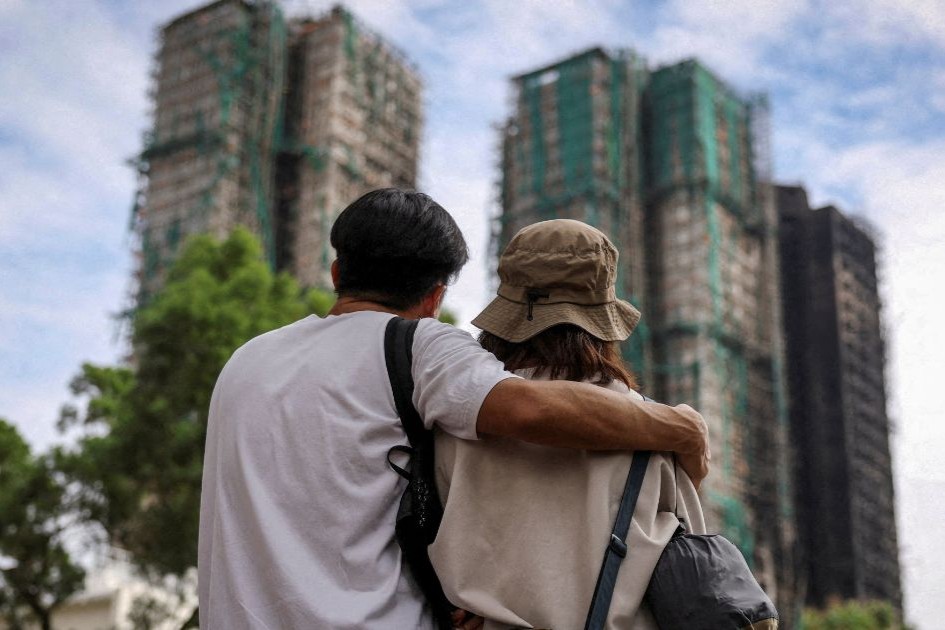
At 2:51 p.m. on 26 November 2025, seven blocks of the Wang Fuk Court residential complex in Tai Po were devastated by a massive fire. Raging non-stop for 43 hours, the blaze claimed at least 160 lives, robbed over 1,000 families of everything, and took away the smiles from everyone in Hong Kong. There were gut-wrenching cries, hopeless tears, endless lines of mourners, and bouquets of white chrysanthemums piling up high. Amid the towering flames, Hong Kong―and the world―gave their grief and pain full rein.
This is not Hong Kong’s first disastrous fire, much less the first fire that has caused heavy casualties in a modern metropolis worldwide. In the US, from the Triangle Shirtwaist Factory fire in New York in 1911, to the Cocoanut Grove fire in Boston in 1942, and the Our Lady of the Angels School fire in Chicago in 1958, each one of them was an accident waiting to happen. In the aftermath of each disaster came a thorough investigation borne of painful and bitter lessons, and every life lost was a price paid for our survival today.
In retrospect, despite differences in time and place, the three historical fires in the US and the recent one in Tai Po share an underlying background that is strikingly similar.
The fire that sparks New York’s conscience
At 4:40 p.m. on 25 March 1911, a huge fire broke out on the 8th floor of the Triangle Shirtwaist factory, where scraps of fabric and paper patterns were stored. It rapidly spread to the 9th and 10th floors. Since the workshop contained large amounts of flammable substances (fabric scraps, wooden tables and chairs) and lacked automatic sprinkler system, allowing the fire to rage out of control. To prevent workers from sneaking out to slack off, the factory had locked the emergency exit doors, leaving the women with no escape. The only elevator, with a capacity of 10 passengers, and the external fire escape collapsed under the intense heat and heavy load. In addition, in those days, fire truck ladders could only reach the 6th or 7th floors, making it impossible to rescue people on the upper levels. In the end, 146 people perished in the tragic accident, most of them immigrant women workers in their teens or twenties.
This fire was regarded as a watershed in labour safety and urban fire safety regulation in the US. The Factory Investigation Commission was set up in the New York state to conduct large-scale investigations and hearings on working conditions across various industries. Around 30 health and safety regulations were subsequently enacted, covering fire safety measures, such as installing automatic sprinkler systems in factories, holding fire drills on a regular basis, and posting evacuation route instructions. They also impose building and access requirements, including multiple safety exits, compliant fire escape facilities, with outward opening exit doors wherever possible, along with strengthened law enforcement and inspections.
Regrettably, relevant laws and regulations (e.g. prohibition on locking entrance and exit doors during business hours) had already been in place before the fire. Nevertheless, from legislation to enforcement of the law, it was the precious lives of 146 women workers that became the ultimate price.
The life-and-death revolving door at Cocoanut Grove
At 10:15 p.m. on 28 November 1942, a fierce fire that broke out in the basement of Boston’s Cocoanut Grove restaurant quickly spread to the entire single-storey structure. Large amounts of flammable decorations―artificial palm trees, fabric drapes, imitation leather, and bamboo rattan surfaces―accelerated the spread of the flames. The emergency exit door had been locked while the main entrance, a revolving door, was soon jammed by the fleeing crowds. With over 1,000 people inside the club that night and no emergency lighting and automatic sprinklers, 492 lives were lost in the blaze.
This nightclub fire, the most lethal in the history of America, provided a direct impetus to upgraded fire safety and construction regulations for public assembly venues across the states, coupled with a systematic tightening of law enforcement. From then on, highly flammable decorative materials (e.g. large fabric curtains) were prohibited at such venues; emergency exit doors were required to be opened outwards and kept unlocked; a revolving door could no longer be the sole exit or principal evacuation exit and must be flanked by outswing doors; maximum capacity limits of venues must be strictly enforced; and all evacuation routes must be kept unobstructed. These measures were incorporated into the NFPA 101: Life Safety Code, developed by the US National Fire Protection Association (NFPA).
Yet, it is obvious that the locked emergency exit in the Cocoanut Grove disaster echoed a previous tragedy―the Triangle Shirtwaist factory fire, in which bolted doors cut off the escape route for the women workers. Although their wrongful deaths led to the enforcement of safety laws, thirty years later, the emergency exit at the Boston nightclub was still locked! During the period from simply having fire safety laws on paper to their rigorous enforcement, the US once again paid the price, with nearly 500 more lives lost.
The inferno at Our Lady of the Angels School
At around 2 p.m. on 1 December 1958, a fire broke out in a trash bin next to Our Lady of the Angels School’s basement stairwells. Soon the blaze spread to the first and second floors of the school building. Almost everything inside was made of flammable wood while the floors were coated with highly combustible wax or oil-based materials. There were no sprinklers, no fire doors in the corridors or staircases, and not even a fire alarm, let alone an alarm system directly connected to the fire department. The fire gobbled up the lives of 92 school children and three nuns.
The disaster immediately prompted a systematic upgrade of school safety regulations in Chicago, across Illinois, and throughout the US. In Chicago, installation of sprinklers was made compulsory in wooden school buildings of two or more storeys, fire alarm systems on campus were enhanced, off-campus alarm boxes directly connected to the fire department were installed, and fire drills were held in all schools on a monthly basis. Across the country, school buildings were subject to comprehensive upgrades, and non-compliant school facilities were shut down. The local authorities also promoted the use of fire-resistant materials, e.g. concrete and steel, fire-protected stairwells and fire doors, improved multi-exit evacuation routes, and configurations such as automatic alarm linkage systems. Following the revision of the NFPA: 101 Life Safety Code, the importance of automatic sprinkler systems and fire compartmentalization was highlighted.
Tragic history repeats itself time and again. Flammable construction materials, missing sprinkler systems, and malfunctioning fire alarm systems still remain. Despite decades of hard lessons, the lives of 92 school children were once more sacrificed to make up for the loopholes.
A century on, in the towering fire at Wang Fuk Court, we witness not only the loss of more than 100 Hongkongers but also the deceased in fires over the past century. We pray for the wounds to heal, yet the grief of losing loved ones cannot be erased. We hope the scars will fade, but the lessons learned at the cost of lives must always be remembered! How can we avoid treading the same tragic path and repeating the same mistakes again? Only through vigilance among the living can the departed rest in peace.