

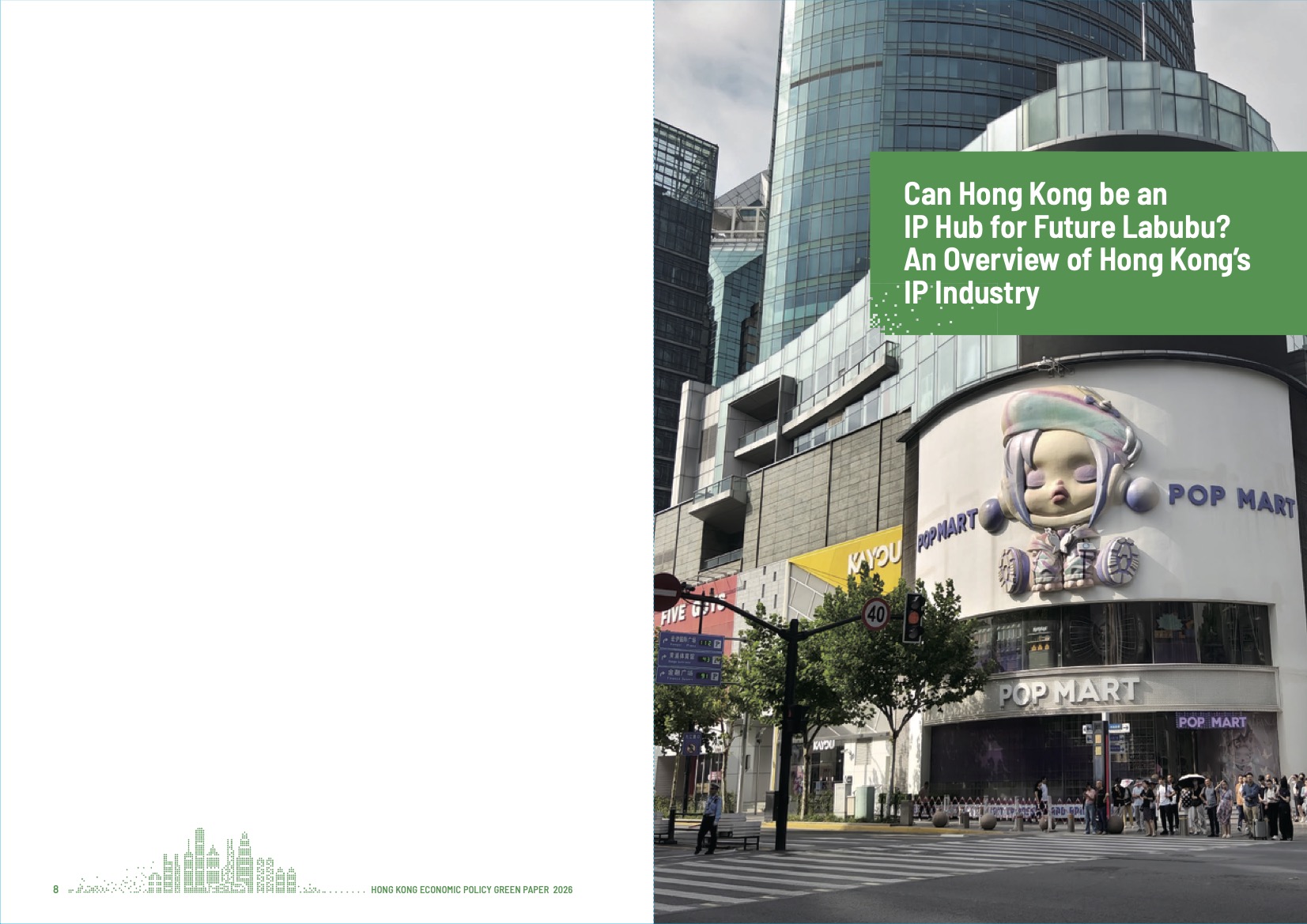
Labubu, a popular designer of art-toy characters produced by the Beijing-based company Pop Mart, has experienced an extraordinary surge in popularity and commercial success throughout 2024 and 2025. By mid-2025, the “Monsters” series, featuring Labubu, generated US$677 million in just six months, and international sales surged by 400%. Driven by Labubu’s success by mid-2025, Pop Mart reported US$1.94 billion in revenue—a 204% increase year-on-year—and net profits of US$641 million. A major growth engine is from overseas markets, including Southeast Asia, North America, and Europe. By mid-2025, Pop Mart’s international revenue surged 440% with the Americas market alone growing more than 1,100%.[1]
The phenomenal success of Labubu and Pop Mart has spotlighted the growing importance of the intellectual property (IP) industry. Their popularity underscores the commercial potential of IP-driven products, not only inspiring more creators and businesses to invest in branding, licensing, and cross-border collaborations, but also attracting policymakers’ attention to the emerging IP sector as a key driver of innovation and economic growth.
Yet, examining the history of Labubu and Pop Mart raises important questions about Hong Kong’s role in the IP industry. As one of the world’s leading international business hubs, Hong Kong (also referred to as the HKSAR) has long served as a bridge between mainland China and global markets. The rationale behind choosing Singapore instead of Hong Kong for its overseas IP registration needs further investigation.
In addition, HKSAR has a long-standing history in the toy art industry, dating back to the 1960s. Many iconic designs originated from Hong Kong artists, including Pop Mart’s first commercially successful IP, Molly, and its most famous IP, Labubu. Yet, these creations remained niche until Pop Mart transformed them into global commercial successes. This raises a critical question: given Hong Kong’s rich heritage in toy art and its status as a leading international business hub, why have local companies not managed to turn these homegrown IPs into major business triumphs?
The question has led to the broader question of whether or not the HKSAR can capitalize on the rapidly growing IP industry. If so, what are its unique advantages, and what are the challenges it must overcome? Furthermore, what strategies should the HKSAR adopt to elevate its local IPs from creative concepts to ensure commercial success? This article explores these issues and concludes with actionable recommendations for shaping Hong Kong’s future IP policy.
The IP Industry
First and foremost, IP refers to creations of the mind that have commercial value and are protected by law.[2] These include:
- Patents – Protect inventions and technological innovations.
- Copyrights – Protect original works like books, music, films, and software.
- Trademarks – Protect brand names, logos, and symbols.
- Trade Secrets – Protect confidential business information.
- Industrial Designs and Geographical Indications – Protect aesthetic designs and origin-based product qualities.
The IP industry encompasses:
- Legal and consulting services for IP protection, management, and enforcement.
- IP valuation and licensing for monetizing intangible assets.
- Technology-driven IP solutions like AI-based patent analytics and infringement detection.
- Industries that are heavily reliant on IP, such as technology, pharmaceuticals, media, and consumer goods.
The global IP market was valued at approximately $13.54 billion in 2024 and is projected to grow to $19.12 billion by 2033, reflecting a compound annual growth rate (CAGR) of about 3.9%. This growth is fueled by several key factors: a surge in patent filings (3.46 million in 2023), a rise in trademark applications (18.1 million in 2023), and the rapid expansion of IP-intensive sectors such as artificial intelligence, biotechnology, and digital content (see Figures 1 and 2). Additionally, increasing globalization and the need for robust cross-border IP enforcement are further accelerating market demands.[3]
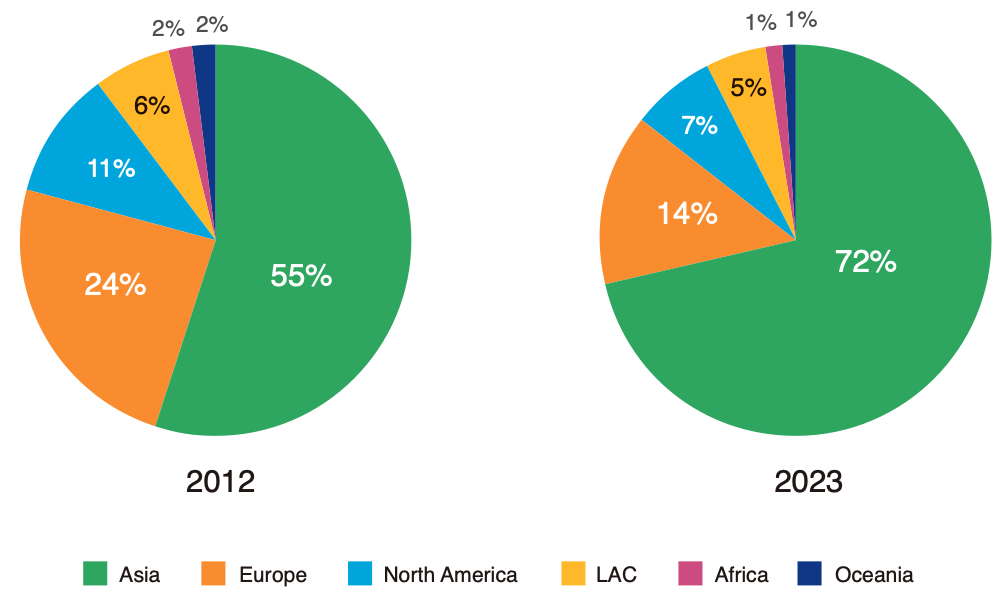
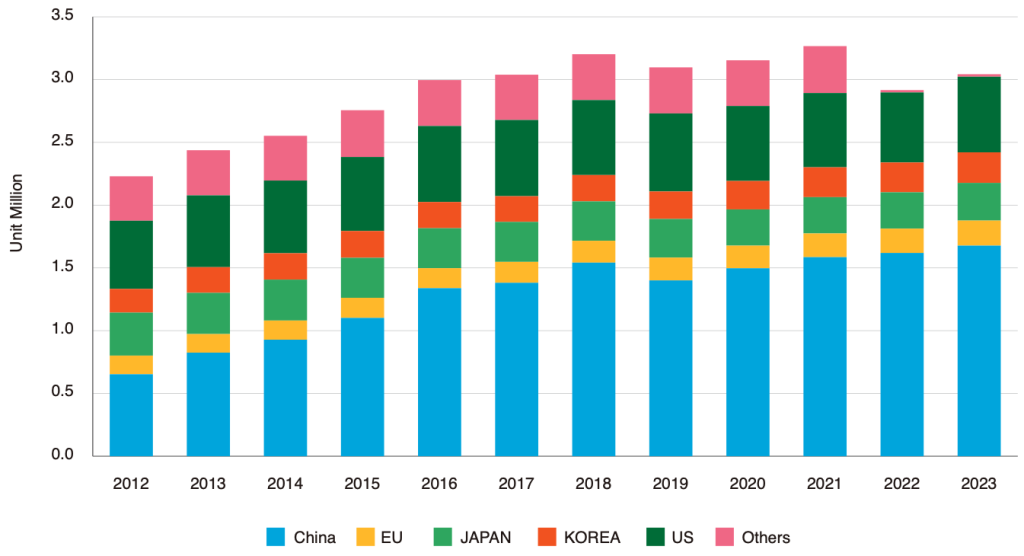
As shown in Figures 3 and 4, the United States dominates the global IP market in terms of services and licensing revenue, with its IP licensing sector alone valued at $62.18 billion in 2023.[4] IP-intensive industries in the U.S. contribute approximately 41% of GDP and 33% of total employment.[5] On the other hand, China leads in patent filings, recording 1.58 million applications in 2023, and the Nation plays a pivotal role in driving IP-related legal and consulting services. Europe follows closely, with the European Patent Office (EPO) receiving 199,275 filings in 2023,[6] while Japan remains a key player, leveraging strong IP monetization in sectors such as electronics and automotive.[7]
Figure 1: Types of IP Applications globally (2012-2023)

Data Source: WIPO statistics database (Last updated: May 2025). https://www3.wipo.int/ipstats/keysearch.htm?keyId=201
Figure 2: IP trade, 2012-2023 in terms of value globally
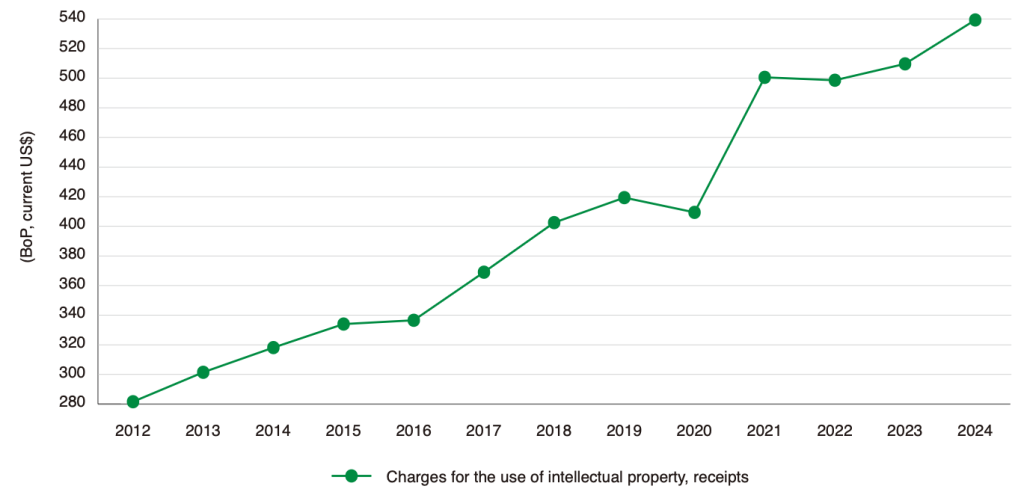
Data Source: The World Bank, Charges for the use of intellectual property, receipts (BoP, current US $) https://data.worldbank.org/indicator/BX.GSR.ROYL.CD?end=2021&start=2012
Figure 3: Regional IP Applications (2012 & 2023)
Data Source: WIPO statistics database (Last updated: May 2025). https://www3.wipo.int/ipstats/keysearch.htm?keyId=203
Figure 4: Patent Applications for Top 20 IP Offices during the same period
Data Source: WIPO statistics database (Last updated: May 2025). https://www3.wipo.int/ipstats/keysearch.htm?keyId=221
Noted: Data for some countries under ‘others’ for 2022 and 2023 were not publicly available.
IP Industry in Hong Kong: Landscape, Advantages and Challenges
The IP industry plays a vital role in HKSAR’s economy. According to a study released by the Intellectual Property Department (IPD) in December 2023, IP-intensive industries accounted for an average of 32.7% of Hong Kong’s GDP and 29.1% of total employment between 2019 and 2021.[8]
The city’s IP filings have remained robust, reflecting its role as a regional IP hub (Figure 5). For trademarks, applications totaled 35,240 in 2021, dipped to 29,432 in 2022, and rebounded to 33,149 in 2024, with over 4,96,000 trademarks currently in force. Short-term patent applications increased from 552 in 2021 to 813 in 2024, indicating strong interest in rapid protection for innovations. Design filings also grew, with 2,228 applications covering 4,582 designs in 2024, up from 1,882 applications in 2021.[9]
As the IP industry’s role has become more important in Hong Kong’s economy, the government is committed to fostering its continued growth and development. In the Chief Executive’s 2024 Policy Address, the clear stated goal was to position the HKSAR as a regional IP trading center.[10] This initiative seeks to leverage Hong Kong’s unique advantages to build a highly valued economic pillar that supports the Chinese Mainland’s innovation goals, and to facilitate global IP commerce. To achieve this objective, the Hong Kong government has been actively implementing measures to support the development of the IP industry (Figure 6).
Figure 5: Amount of IP filings in Hong Kong. (2016-2023)

Data Source: The World Bank, Charges for the use of intellectual property, receipts & payments (BoP, current US$), https://data.worldbank.org/indicator/BM.GSR.ROYL.CD?locations=HK & https://data.worldbank.org/indicator/BX.GSR.ROYL.CD?locations=HK
Figure 6: Timeline of HK government’s IP industry development policies

The HKSAR has a distinct advantage in becoming a regional center for IP trading, particularly due to its favorable legal and regulatory environment, strong innovation inputs, and ability to attract global talent. Hong Kong consistently earns high ratings for the quality of its legal and regulatory environment. In the 2024 World Competitiveness Yearbook by the International Institute for Management Development, the HKSAR was ranked 8th worldwide for “intellectual property rights.”[11] Additionally, in the Global Innovation Index (GII) 2024, Hong Kong secured the 9th position for innovation inputs, which include factors such as institutional stability, regulatory quality, and market sophistication.
Given Pop Mart’s decision to register its overseas IP in Singapore, we acknowledge that Hong Kong still has room for improvement. Although the HKSAR ranked among the top 10 globally for innovation inputs in the Global Innovation Index (GII) 2024, its performance in innovation outputs—measured by indicators such as patent filings and creative goods exports—was significantly lower, at 31st place. This contrasts sharply with South Korea, a global innovation leader that ranks 4th in outputs and 6th in inputs, reflecting a highly efficient system for transforming R&D investments into tangible, marketable IP.[12]
Singapore has been a member of the Madrid System since 2000. This is an international treaty administered by the World Intellectual Property Organization (WIPO) that enables companies to secure trademark protection across multiple jurisdictions (including the U.S., U.K., Europe, and Southeast Asia) through a single application. In comparison, Hong Kong has yet to fully implement the Madrid Protocol. Like the HKSAR, Singapore offers robust legal protections, attractive tax policies, and strategic access to the Southeast Asian market, making it an appealing hub for IP registration.
HKSAR’s Improvements in the IP Industry
In recognition of these areas for improvement, the government of the HKSAR recently enhanced legal support, introduced tax incentives, and brought talent development initiatives to strengthen the city’s IP industry.
- Legal Support:In September 2025, Hong Kong joined the World Intellectual Property Organization (WIPO) Lex-Judgments Database, contributing key IP case precedents from local courts to showcase the quality of its judicial decisions to the international community. Hong Kong became the first city in the Greater Bay Area to participate in the database. Furthermore, starting from October 2025, the HKSAR’s High Court introduced streamlined IP litigation procedures, unifying processes for trademarks, patents, and design cases to enhance efficiency and case management.[13]
- Tax Benefits:Since July 2024, the Hong Kong government introduced the Patent Box Regime, offering a reduced profits tax rate of 5% (compared to the standard 16.5%) on qualifying income from patents, copyrighted software, and new plant-variety rights.[14] Additionally, as of late 2025, the government implemented a one-off tax deduction for lump-sum IP licensing fees and related acquisition costs.[15]
- Talent Development: In 2025, the government introduced the Innovation and Technology Talents Exchange Scheme to promote cross-sector collaboration by facilitating the exchange of talent between academia and industry. Concurrently, the government continues to engage with the patent agent sector and relevant stakeholders to develop regulatory arrangements for local patent agent services. These plans cover areas such as qualification requirements, registration processes, and service standards, with the goal of nurturing professional talent and enhancing the overall quality of services.
The IP Industry in Hong Kong: Opportunities in the Greater Bay Area (GBA)
Hong Kong’s most distinctive advantage lies in its position as a central hub within the GBA’s IP economy. In the Global Innovation Index (GII) 2025, the Shenzhen–Hong Kong–Guangzhou cluster ranked No. 1 globally, surpassing the Tokyo–Yokohama cluster.[16] In 2023, Guangdong filed over 28,000 international patent applications through WIPO’s PCT system, representing 10% of global filings and 40% of China’s total. Notably, six GBA companies—Huawei Technologies, BOE Technology, Contemporary Amperex Technology (CATL), Oppo Mobile Telecommunications, ZTE, and Vivo Mobile Communication—ranked among the world’s top-20 PCT applicants.[17]
While IP filings representing the first step toward commercialization in GBA have surged, converting them into economic value requires multiple stages. These include valuation, licensing, investment, and legal protection. As GBA firms expand globally, many are licensing or selling their IP in markets such as Southeast Asia and the Middle East. Simultaneously, the GBA is actively acquiring high-value IP from overseas to support strategic industries like artificial intelligence, biomedicine, new materials, integrated circuits, and renewable energy. However, Chinese companies face significant challenges in these regional IP transactions, as there are mismatches in legal systems, financial markets variety, currency controls, regulatory uncertainties, language barriers, and inconsistent IP valuation standards.
Hong Kong’s Major Role as a Two-way, Full-service IP Channel
Since the aforementioned obstacles for Chinese companies seeking to trade IP internationally exist, they present opportunities for the HKSAR to serve as a two-way, full-service IP corridor between mainland China and the global market. Some ways to overcome these obstacles are:
- Hong Kong boasts the region’s most developed IP-trading infrastructure, including Patent Cooperation Treaty (PCT) international patent filings, overseas trademark registrations IP due diligence, tax-efficient financing (e.g., patent box tax incentives[18] and foreign-sourced income exemptions[19]), insurance and re-insurance, helping businesses mitigate international IP risks, and boosting their global competitiveness.
- Hong Kong’s common-law, bilingual legal system is trusted by foreign investors and fully enforceable in the Chinese Mainland under the 2019 Arrangement on Reciprocal Recognition and Enforcement of Judgments. The HKSAR is also actively positioning itself as an international hub for legal and dispute resolution services, particularly in handling cross-border IP disputes. This dependable legal support facilitates both Chinese and foreign companies to engage in intellectual property transactions in Hong Kong.
- The HKSAR hosts significant capital reserves, including the Hong Kong Stock Exchange (HKEX), private equity firms, and family offices. These financial resources facilitate the monetization of IP—such as patents, trademarks, and copyrights—through mechanisms like securitization, Special Purpose Acquisition Companies (SPACs), and its role as the world’s largest offshore RMB liquidity hub.
- Hong Kong provides a competitive tax regime, featuring an 8.25% profits tax on qualifying IP-derived income and a 0% withholding tax on royalties. This positions it as the most cost-efficient jurisdiction in Greater China for managing and channeling IP assets.
- HKSAR acts as a strategic gateway under the Mainland–Hong Kong Closer Economic Partnership Arrangement (CEPA), allowing foreign companies to register their IP and immediately benefit from national treatment when licensing or litigating in Mainland China.
- Hong Kong’s talent pool has climbed to 4th place globally in the IMD World Talent Ranking 2025—the highest in Asia, and a notable leap from 9th place in 2024. This underscores Hong Kong’s rapid emergence as an innovation and technology hub, attracting top global talent to build their careers.[20]
In summary, the HKSAR is a lot more than just a filing destination; it functions as an RMB-denominated, rule-of-law gateway that converts Chinese IP into global revenue, while opening the Chinese market to international IP. Increasingly, multinational corporations and leading Chinese Mainland enterprises are setting up regional headquarters or IP-holding entities in Hong Kong to manage and commercialize high-value patents, trademarks, and copyrights (Figure 7). In 2023, Hong Kong ranked 13th globally for patent applications, with non-resident filings making up about 97%, primarily from the US, Mainland China, Japan, Switzerland, and the UK.[21]
Figure 7: Foreign-affiliated Companies in Hong Kong

Source: https://www.censtatd.gov.hk/en/scode360.html
Policy support in the GBA
With the increasing volume of IP filings and transactions in the GBA, a notable concentration of high-end IP services—including agency, valuation, trading, legal, and consulting—has occurred, particularly in Guangzhou, Shenzhen, and Hong Kong. This expanding IP service industry chain is becoming a key driver for the structural advancement of regional economies.
To support this advancement, Guangdong, Hong Kong, and Macao have progressively enhanced their cooperation frameworks recently. For example, through the Greater Bay Area IP Cooperation Mechanism and the GBA IP Information Exchange Platform (see Table 1).
In 2023, Guangdong Province enacted the Copyright Regulation, marking China’s first local law aimed at fostering the high-quality development of the copyright industry. This regulation highlights the importance of coordinated growth within the copyright sector across the GBA and promotes collaboration among Guangdong, Hong Kong, and Macao in critical areas such as film, television, music, animation, gaming, and software. The HKSAR has also been designated as a regional IP trading center in China’s 14th Five-Year Plan,[22] aimed at transforming the region’s scientific and technological output into economic value.
Table 1An overview of the policies related to IP Industry in Greater Bay Area
| Title of policy/platform | Launch time | Purpose |
| 《粤港澳大湾区发展规划纲要》[23] The State Council for the Guangdong-Hong Kong-Macao Greater Bay Area | 2019 | Issued by the State Council of China, it emphasizes leveraging Hong Kong’s strengths in IP protection and professional services to support its role as a regional IP trading center. It also advocates for cross-border collaboration in IP enforcement and technology transfer. |
| 《关于构建知识产权保护司法协作机制的框架协议》[24] An Integrated Judicial Protection Platform for Intellectual Property in the Greater Bay Area | 2023 | Signed by the courts of Nansha (Guangzhou), Qianhai (Shenzhen), and Hengqin (Zhuhai), it establishes a unified platform for cross-border IP case handling, including joint evidence preservation, technical expertise sharing, and standardized adjudication criteria. It also promotes the recognition of mediation results from Hong Kong and Macao. |
| 《关于促进粤港澳大湾区数据跨境流动的合作备忘录》[25] Agreement framework of Memorandum of Understanding on Facilitating Cross-boundary Data Flow Within the Guangdong-Hong Kong-Macao Greater Bay Area | 2023 | Co-signed by China’s Cyberspace Administration and Hong Kong’s Innovation, Technology and Industry Bureau, it establishes security protocols for cross-border data flows, crucial for AI and digital innovation while safeguarding privacy. |
| 南沙知识产权综合服务平台[26] Nansha District Market Supervision Administration | 2023 | This platform integrates patent databases from the Chinese Mainland, Hong Kong, and Macao (over 70 million trademarks), providing one-stop services for IP registration, enforcement, and commercialization. It also hosts 30+ regional IP service institutions. |
| 粤港知识产权合作计划[27] New Round of Guangdong-Hong Kong Intellectual Property Cooperation Plan Officially Signed | 2024-2025 | The 20th iteration of this annual plan focuses on enhancing IP protection in the Hetao Shenzhen-Hong Kong Innovation and Technology Park, facilitating patent cross-recognition, and organizing joint training programs for IP professionals. |
| 前海知识产权金融服务联盟[28] Qianhai Forges a New Vision for Intellectual Property Protection | 2025 | This alliance supports IP securitization and pledge financing, with an initial 80 million RMB fund targeting tech small- and medium-sized enterprises (SMEs) in Qianhai. It also offers fast-track patent pre-examination for Hong Kong applicants, reducing authorization time from 2–3 years to just months. |
Promoting HKSAR’s Local IP
Serving as a regional IP trading center not only strengthens Hong Kong’s IP economy but also elevates its homegrown IP. For example, Pop Mart’s first hit character, Molly, originated in Hong Kong—an example of the city’s rich pool of locally recognized IP and its thriving creative industry. Other examples follow:
- Ocean Park Hong Kong: Established in January 1977, it is one of Asia’s largest marine-themed amusement parks at the time, blending entertainment, education, and conservation. Ocean Park is famous for its beloved animal ambassadors, including giant pandas such as Ying Ying and Le Le, and mascots like Whiskers the sea lion and his friends, alongside themed characters like Goldie the goldfish and Later Gator the alligator. The Park reached its peak attendance with over 7.7 million visitors in 2014[29]. However, in the 2023-2024 fiscal year, the number of visitors decreased to 3.14 million visitors, and the park was struggling with a net deficit of HK$71.6 million (US$9.2 million).[30]
- Television Broadcasts Limited (TVB): Founded in 1967 as Hong Kong’s first free-to-air television station, TVB has been a cultural powerhouse in the Chinese-speaking world for decades. During its peak years in the 1980s and 1990s, TVB dominated local ratings with iconic variety shows like Enjoy Yourself Tonight and drama series such as The Greed of Man, Moonlight Resonance, and Journey to the West, while its Miss Hong Kong Pageant became a major annual event. These programs not only shaped Hong Kong’s pop culture but also launched the careers of stars like Andy Lau, Tony Leung, and Maggie Cheung. At its peak, TVB dramas were exported globally, influencing Chinese communities across Asia, North America, and Europe. However, TVB has recently experienced a decline in viewership and persistent financial challenges. In 2022, TVB reported its largest loss of HK$807 million, followed by HK$763 million in 2023 and HK$491 million in 2024.[31] [32]
- Art Toy: Hong Kong’s art toy industry traces its origins to the city’s legacy as a global toy manufacturing hub in the mid-20th Century, when it was the world’s largest exporter of toys. In the late 1990s, Hong Kong pioneered the designer-toy movement with Michael Lau—dubbed the “Godfather of Designer Toys”—introducing his iconic Gardener series and creating the “urban vinyl” style that fused street culture with collectable art. Today, Hong Kong remains a global hub for collectable art toys, with its Toys & Hobby market generating around HKD 1.14 billion in 2025.[33] The industry thrives on limited-edition releases and collaborations. Famous Hong Kong designers include Michael Lau, Eric So, and Winson Ma, alongside emerging talents such as Helen Tam, known for food-inspired characters; Bee Wong, creator of the Fire Panda brand; Joseph Tang of PLANET-X with sci-fi themes; and Ryan Lee, whose Rumbbell series reflects his “Muscle Mind” philosophy.
The examples of Hong Kong’s local IP highlight several commercialization challenges:
- Intense Competition: Ocean Park exemplifies the challenge of intensifying competition, facing not only its local rival Hong Kong Disneyland but also major regional players such as Chimelong International Ocean Tourist Resort in Guangzhou and Zhuhai.
- Fast-changing Consumer Preferences: TVB and Ocean Park exemplify how shifting consumer preferences challenge traditional entertainment brands. As younger audiences migrate to streaming platforms and short-form video apps, TVB now struggles with declining linear TV viewership. Similarly, Ocean Park faces mounting challenges as younger consumers seek more immersive and Instagram-worthy experiences rather than traditional rides.
- Minute Scalability: Although the global art toy market reached US$6.07 billion in 2025, Hong Kong’s local market is too small for local artists to sustain production. If IP creators solely focus on Hong Kong’s local market, they cannot generate the revenue needed for successful commercialization.
To address current challenges and strengthen Hong Kong’s local IP, we can take valuable lessons from TVB’s prime-time strategy:
- Differentiation: Uniqueness is the cornerstone of standing out in a competitive market. While Pop Mart secures exclusivity through artist collaborations, Hong Kong’s local IP can only win by creating and investing in distinctive, original content. This approach mirrors TVB’s prime-time strategy in the 1980s. Iconic dramas such as The Bund and Legend of the Condor Heroes broke rating records because they reflected local culture and deeply resonated with audiences. These unique cultural narratives not only differentiated TVB but also forged strong emotional connections, a critical driver of long-term brand loyalty.
- Globalization: Commercialization thrives on economies of scale, and Hong Kong’s local market alone is too small to sustain IP success. To grow, Hong Kong IP must look beyond its borders—just as TVB did in the mid-1980s, when they expanded globally through multiple strategies: launching cable services in Los Angeles, Taiwan, and Europe; licensing programs to Malaysia and Singapore; renting videos in the UK and other European cities; and even circulating content informally via videotapes and later through provincial TV stations in the Chinese Mainland.[34] These efforts made Hong Kong pop culture a powerful influence across Southern China and among overseas Chinese communities. The lesson is clear: global reach and diversified expansion channels are essential for long-term IP growth.
- Monetization: IP commercialisation demands significant financial investment, making diversified monetization essential for sustainability. Hong Kong’s IP should adopt multiple revenue streams, just as TVB did in the 1980s. TVB capitalized on high-margin advertising in Hong Kong, licensed programs to Malaysia and Singapore, offered video rentals across Europe, and introduced subscription services in the U.S. By the mid-1980s, following its 1984 HKSE listing, TVB’s annual turnover was estimated at HK$1–2 billion.[35] These revenues fueled the continuous development and promotion of its IP, reinforcing its market leadership.
Summary
The Hong Kong government aims to position the city as a leading regional IP trading center. To succeed, this vision requires coordinated efforts from IP developers, entrepreneurs, government agencies, and industry institutions. Key focus areas include:
1. Build a Robust IP Financing Ecosystem:
As Asia’s top financial hub and the world’s third-ranked international financial center,[36] the HKSAR is uniquely positioned to lead in IP-backed financing ecosystem that requires:
- IP-backed financing mechanisms such as:
- Leveraging the existing financial ecosystem to utilize Hong Kong’s mature financial markets, incubation programs, and venture capital networks to support IP-backed financing for startups and scale-ups.
- Issuing IP bonds. The Hong Kong government can replicate its green finance model by issuing IP bonds to attract global investors.
- Incentivizing banks, by encouraging banks to accept IP as collateral for loans and providing incentives or regulatory mandates for IP-related lending.
- Insurance schemes that collaborate with insurance companies to create protection schemes that reduce downside risks for IP investments.
- Low costs and risks of IP valuation:
- Standardized valuation frameworks that develop clear, consistent methodologies for IP valuation to improve transparency.
- Create IP trading platforms that enhance platforms like Asia IP Exchange to include valuation tools, pricing information, and matchmaking services for buyers, sellers, and service providers.
- Support advanced industries:
- Align IP financing with Hong Kong’s Innovation & Technology Development Blueprint.
2. Enhance Infrastructure and Platforms:
Developing a regional IP trading center requires robust infrastructure to support seamless transactions and trust. The HKSAR should prioritize building specialized platforms and institutions that enable transparency and efficiency in IP trading. For example, establish a WIPO Technology & Innovation Support Centre and expand platforms like Asia IP Exchange, and creating similar digital marketplaces. These initiatives will not only enhance accessibility but also position the city as a leading hub for IP commercialization and cross-border innovation.
3. Develop Talent and Professional Services:
Building a robust IP trading center requires a comprehensive ecosystem of professional services—from IP legal advisory and valuation to IP insurance and risk management. These specialized capabilities are critical for enabling smooth transactions and protecting IP assets. To meet this demand, Hong Kong could invest in cultivating local talent through targeted IP training programs across legal, financial, and technology sectors. At the same time, attracting top international professionals is crucial. Global experts bring cross-border expertise that facilitates complex IP transactions and ensures efficient dispute resolution, strengthening Hong Kong’s position as a trusted regional IP hub.
4. Promote IP in the GBA:
Hong Kong’s creative industries—spanning TV shows, films, music, design, and theme parks—have produced numerous successful IPs over the decades. Building on this rich legacy, Hong Kong can providefinancial incentives (e.g., expand the “Patent Box” tax regime) to encourage global commercialization of its own creative IP. Concurrently, Hong Kong should leverage the technological strength of the GBA by implementing cross-boundary IP cooperation measures with innovation hubs like Shenzhen and Qianhai. This integration will position HKSAR as a vital gateway for the Chinese Mainland’s IP to reach global markets, combining creative excellence with technological innovation to create a dynamic, future-ready IP ecosystem.
5. Strengthening IP Protection and Legal Framework:
One of Hong Kong’s strongest advantages in becoming a regional IP trading hub is its internationally recognized legal system. This is a critical foundation for cross-border IP transactions. To reinforce this strength, the HKSAR should deepen its participation in international IP treaties and establish more cross-border protection agreements to attract global IP contracts. Streamlining IP litigation processes for faster dispute resolution and enhancing enforcement mechanisms will further boost confidence among international stakeholders. Hong Kong must modernize its Copyright and Design Laws to address emerging technologies such as AI-generated works and digital content, ensuring its legal framework remains future-ready and competitive.
[1] https://www.scmp.com/business/china-business/article/3322488/mini-labubus-are-coming-after-your-mobile-phone-pop-mart-aims-double-2025-sales & https://www.thestandard.com.hk/wealth-and-investment/article/314717/Pop-Mart-Q3-revenue-surges-despite-investor-concerns-over-growth-sustainability
[2] https://www.wipo.int/en/web/about-ip/
[3] https://www.marketgrowthreports.com/market-reports/intellectual-property-ip-market-113355
[4] https://virtuemarketresearch.com/report/intellectual-property-services-market
[5] https://www.wipo.int/web-publications/world-intellectual-property-indicators-2024-highlights/en/patents-highlights.html
[6] https://markwideresearch.com/intellectual-property-market/
[7] https://www.marketgrowthreports.com/market-reports/intellectual-property-ip-market-113355
[8] https://www.ip.gov.hk/filemanager/ip/en/content_150/Study-on-IP-Intensive-Industries-to-HK-Economy-e.pdf
[9] https://www.ipd.gov.hk/filemanager/ipd/common/tools-resources/ip-statistics/IPD_D1_D28-Statistics_eng.pdf
[10] https://www.ipd.gov.hk/en/ip-overview/ip-in-hong-kong/2024-policy-address/index.html
[11] https://productivity.gov.ng/wp-content/uploads/2025/03/WCY_Bookletv1_2024-1.pdf
[12] https://www.wipo.int/web-publications/global-innovation-index 2024/assets/67729/2000%20Global%20Innovation%20Index%202024_WEB3lite.pdf
[13] https://www.cedb.gov.hk/en/news/press_release/2025/pr23052025a.html
[14] https://www.elegislation.gov.hk/hk/2024/17!en;https://www.china-briefing.com/news/hong-kongs-new-patent-box-regime-a-5-tax-concession-for-qualified-ip-income/
[15] https://www.ey.com/en_gl/technical/tax-alerts/hong-kong-announces-2025-26-budget-proposing-favorable-tax-measures-for-specific-sectors
[16] https://www.wipo.int/pressroom/en/articles/2025/article_0008.html
[17] https://www.wipo.int/edocs/pctndocs/en/2024/pct_news_2024_3.pdf
[18] https://www.mayerbrown.com/en/insights/publications/2024/10/patent-box-tax-incentive-takes-effect
[19] https://taxsummaries.pwc.com/hong-kong-sar/corporate/taxes-on-corporate-income#:~:text=The%20’nexus%20approach’%20endorsed%20by,for%20the%20preferential%20tax%20treatment.
[20] https://www.humanresourcesonline.net/global-talent-rankings-2025-hong-kong-and-singapore-secure-top-10-spots
[21] https://research.hktdc.com/en/article/MzExMTM0MzQ0
[22] Greater Bay Area, Intellectual Property. https://www.bayarea.gov.hk/gbais/en/development/intellectual-property
[23] State Council, Outline Development Plan of the Central Government and the State Council for the Guangdong-Hong Kong-Macao Greater Bay Area. https://www.gov.cn/gongbao/content/2019/content_5370836.htm?eqid=8758bd1b0000ce80000000036472c674
[24] People’s Daily, Nansha, Qianhai, and Hengqin Join Forces to Build an Integrated Judicial Protection Platform for Intellectual Property in the Greater Bay Area.https://paper.people.com.cn/rmrb/html/2023-04/27/nw.D110000renmrb_20230427_6-11.htm
[25] Agreement framework of Memorandum of Understanding on Facilitating Cross-boundary Data Flow Within the Guangdong-Hong Kong-Macao Greater Bay Area, https://www.digitalpolicy.gov.hk/tc/our_work/digital_infrastructure/mainland/gbacbdf/
[26] Nansha District Market Supervision Administration, Guangzhou City, Building a Strong Intellectual Property Zone to Support High-Quality Development Guangdong-Hong Kong-Macao Innovation and Entrepreneurship Intellectual Property Comprehensive Service Platform Officially Launched. https://www.gzns.gov.cn/gznsscjg/gkmlpt/content/8/8950/post_8950954.html#9860
[27] Ministry of Commerce People’s Republic of China, New Round of Guangdong-Hong Kong Intellectual Property Cooperation Plan Officially Signed. https://ipr.mofcom.gov.cn/article/gnxw/zfbm/zfbmdf/gd/202501/1989873.html
[28] Qianhai Shenzhen, Qianhai Forges a New Vision for Intellectual Property Protection. https://qh.sz.gov.cn/sygnan/qhzx/dtzx/content/post_12187650.html
[29] Ocean Park Hong Kong, Ocean Park Marks Year of New Beginnings with Second Highest-ever Annual Attendance of 7.6 Million Guests New Highs of $633 Million in EBITDA and $2.0 Billion in Revenue for Fiscal Year Ending 30 June 2014. https://www.oceanpark.com.hk/en/press-release/ocean-park-marks-year-of-new-beginnings-second-highest-ever-annual-attendance-of-76
[30] Ocean Park Hong Kong, Ocean Park Visitor Numbers and Revenue Reach a Five-year High Seizing the Opportunity from Panda Fever to Drive Business Momentum. https://www.oceanpark.com.hk/en/press-release/ocean-park-visitor-numbers-and-revenue-reach-a-five-year-high-seizing-opportunity
[31] Television Broadecasts Limited, TVB Announces 2024 Annual Results Significantly Positive EBITDA of HK$295 Million Positive Adjusted Net Profit Attributable to Equity Holders Achieves HK$53 Million in the 2H 2024. https://corporate.tvb.com/article/ab03013a372e2772750a643e8698bca6.html
[32] Yau, C., Hong Kong broadcaster TVB slashes net losses by 65% year on year to HK$143 million. South China Morning Post. https://www.scmp.com/news/hong-kong/hong-kong-economy/article/3275358/hong-kong-broadcaster-tvb-slashes-year-year-net-losses-65-hk143-million
[33] https://www.statista.com/outlook/cmo/toys-hobby/hong-kong?srsltid=AfmBOorISL60BZnYUXyLYJK6H3J5eb8XVkKBKoCmF_57R1uqQDFdWtG4
[34] https://www1.hkexnews.hk/listedco/listconews/sehk/2018/0418/00511_3299061/e106.pdf
[35] https://thebambooworks.com/beating-its-rivals-but-losing-to-the-times-tvb-fades-on-hong-kong-entertainment-stage/
[36] https://www.news.gov.hk/eng/2025/03/20250320/20250320_173128_257.html