
Abstract
This paper examines the application of blockchain technology in green finance, with a particular focus on Hong Kong’s pioneering initiatives. It shows how blockchain’s key features—immutability, transparency, and traceability—address critical challenges such as greenwashing, fragmented data, and limited retail access. The analysis highlights Hong Kong’s world-first sovereign tokenised green bonds and innovative projects such as Genesis and Ensemble, which streamline issuance, enable real-time impact tracking, and facilitate integration with carbon markets. Through a global comparison with jurisdictions including Singapore and the European Union, the paper positions Hong Kong as a leading hub that leverages blockchain to enhance market efficiency and trust. It concludes by outlining future opportunities for standardisation and cross-border integration to advance sustainable finance.
1. Introduction
Climate change has made green finance a policy priority worldwide, channeling capital toward sustainable development projects such as climate-change mitigation and resource conservation. However, the field faces persistent challenges, including verification of the use of proceeds, the risk of greenwashing, fragmented data, and limited access for retail investors. Recent advances in blockchain and Web3 technologies, which are decentralised, immutable, and traceable by design, are widely regarded as promising tools to address these issues. Hong Kong, as a leading international financial hub, has become a focal point for government and industry stakeholders who are actively exploring how these technologies can accelerate climate-related financing and improve market transparency.
Green finance refers to loans, bonds, and investments directed toward projects that benefit the environment or mitigate climate change, including renewable energy development, energy-efficiency improvements, pollution reduction, and climate-change adaptation measures. Rigorous disclosure of fund allocation and environmental outcomes is essential to prevent “greenwashing”. In practice, however, tracking capital flows and verifying environmental performance are costly and often hindered by a lack of standardized methodologies, which undermines investor confidence and market transparency.
Blockchain technology offers practical solutions to these challenges. As a distributed ledger, it synchronises transaction records across multiple nodes, ensuring data immutability and traceability. Once financial flows and environmental data are recorded on-chain, all participants can access the same verified information, reducing information asymmetry and the risk of tampering. Smart contracts further enable automated fund disbursement and data updates based on predefined conditions, such as releasing payments only when environmental targets are met. This automation lowers monitoring costs and minimises human error or fraud.
Beyond the base-layer ledger infrastructure, Web3 can be understood as the broader application and user-facing layer built on top of blockchain. In this paper, we use the term to encompass programmable digital assets, decentralised applications, and wallet-based identity systems that allow investors, issuers, and service providers to interact directly on-chain. For green finance, these Web3 components shape how users access tokenised products, exercise governance rights, and consent to the sharing and verification of sustainability data. For example, tokenised deposits, central bank digital currencies, and other programmable forms of money provide alternative rails for allocating capital and settling transactions, while decentralised identity and verifiable credentials can support secure, privacy-preserving ESG disclosure. In Hong Kong, such Web3 building blocks are increasingly embedded in policy initiatives on virtual assets, e-HKD experimentation, and tokenised bond infrastructure, reinforcing the link between digital-asset development and sustainable finance.
Tokenisation extends these benefits by converting assets such as bonds, carbon credits, or renewable energy certificates into digital tokens. This process makes traditionally illiquid, high-minimum-investment green assets more divisible and tradeable, expanding access for investors with shallow pockets. For example, while conventional green bonds may require minimum investments exceeding USD 10,000, tokenised versions can be purchased in much smaller fractions, thereby broadening market participation.
Finally, blockchain’s openness fosters collaboration and data sharing among governments, banks, firms, and certification bodies. By recording updates on a shared ledger, stakeholders can avoid fragmented data silos and improve information alignment. In cross-border contexts, such as linking carbon markets or financing global projects, decentralised systems reduce reliance on intermediaries and enhance coordination efficiency. In short, blockchain technology provides a technical foundation to enhance transparency, trust, and inclusiveness in green finance.
In this report, we first examine the typical applications of blockchain in green finance, with a particular focus on Hong Kong. We then analyse selected international cases to place these developments in a global context. Finally, we discuss future opportunities and potential pathways for green finance in Hong Kong.
2. Application of Blockchain in Green Finance
In this section, we review the major applications of blockchain in green finance, including green bonds, carbon markets, supply chain certification, and renewable energy trading. Among these domains, the green bond market provides the most concrete evidence that blockchain can enhance transparency and trust, particularly in issuance, settlement, and post-issuance reporting.
2.1 Issuance and Tracking of Green Bonds
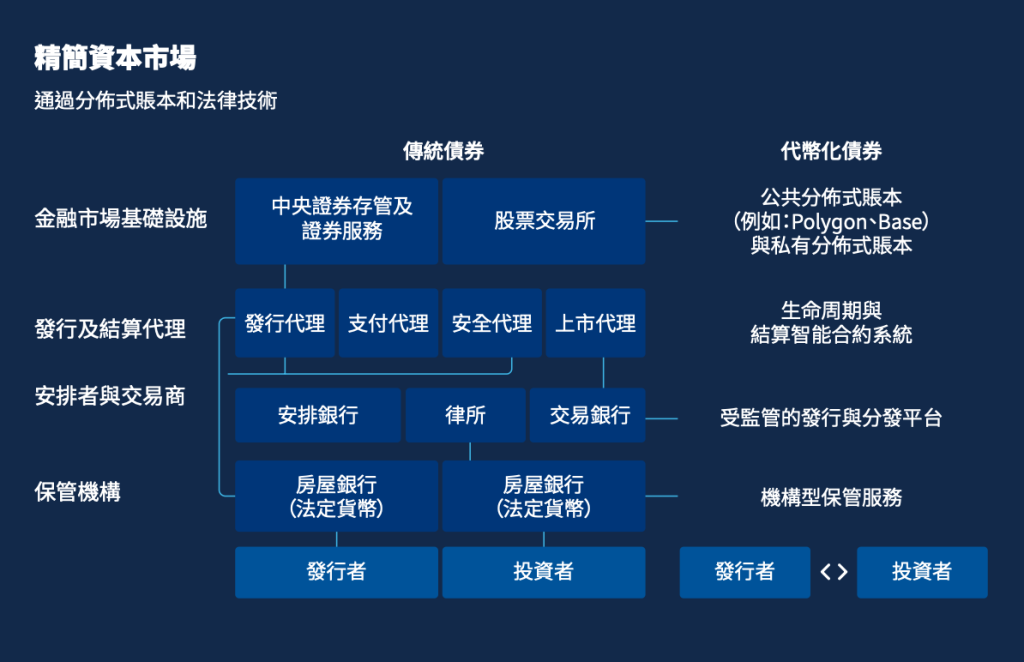
Green bonds raise funds for environmentally beneficial projects, but the complexity of traditional issuance and investment procedures—spanning multiple parties and stages—limits investors’ visibility into fund allocation and realized environmental outcomes. Disclosure typically relies on periodic, self-reported issuer documents, which impedes independent verification and heightens greenwashing risk. Blockchain can mitigate these limitations by enabling tokenized issuance and near real-time, tamper-evident tracking of both financial flows and environmental performance metrics. A comparison of traditional and tokenised bond issuance and tracking is presented in Figure 1.
Figure 1: Comparison of traditional and tokenised bond market structures.
This figure illustrates how blockchain can streamline capital markets by replacing multiple intermediaries in traditional bond issuance with a unified distributed ledger and smart contract system. The tokenised bond model enables direct interaction between issuers and investors through automated lifecycle management and on-chain settlement. (Source: Tran Linh, 2024, Obligate and InvestaX)

Hong Kong’s recent experience provides a pioneering example. In February 2023, the Hong Kong Special Administrative Region (HKSAR) Government issued the world’s first sovereign tokenised green bond, totaling HKD 800 million with a 1-year maturity and a 4.05% coupon. [2] These bonds were issued on a permissioned blockchain platform governed by Hong Kong law, and their entire lifecycle was managed on-chain. Market participants, including the issuer, underwriters, custodians, and paying agents, interacted on a unified digital platform rather than through separate systems (Lok, 2024). Settlement of the primary issuance was completed on a delivery-versus-payment (DvP) basis using tokens: investors received security tokens representing the bond, and payment was made with Hong Kong Monetary Authority (HKMA)-issued cash tokens representing Hong Kong dollars, enabling atomic settlement on T+1 instead of the typical T+5. Subsequent processes—such as coupon payments, secondary trading settlement, and final maturity redemption—were executed via smart contracts on the blockchain, demonstrating end-to-end digital lifecycle management. Integration with the Hong Kong Monetary Authority’s Central Moneymarkets Unit (CMU) provided statutory settlement finality for on-chain transactions, indicating that Hong Kong’s legal and regulatory framework can accommodate distributed ledger technology (DLT)-based securities issuance.
In February 2024, Hong Kong issued a second and larger tokenised green bond of approximately HKD 6 billion (USD 750 million), with tranches in four currencies (HKD, RMB, USD, EUR). [3] This multi-currency digital green bond, the first of its kind globally, was comparable in scale to conventional benchmark issuances, marking a transition of tokenized bonds from pilot projects to mainstream implementation. The 2-year bond attracted a diverse set of global institutional investors, including asset managers, banks, insurers, and corporates. The second issuance incorporated several technological innovations and achieved new milestones in broadening investor participation and streamlining the issuance process. A hybrid access model allowed investors to participate either directly on the digital platform or via existing market infrastructure. The bonds were cleared through the HKMA’s CMU, with links to Euroclear and Clearstream, enabling investors to use their regular custodian channels without opening new wallets. This interoperability reduced technological frictions and encouraged adoption. The issuance was also the first to be natively digital, with securities created directly on-chain rather than through a global note. Key bond documentation, including term sheets and green certification reports, was recorded on-chain, thereby enhancing transparency.
The 2024 multi-currency digital bond also demonstrated that tokenised securities can be integrated with secondary markets. The large issuance size and diverse investor base led to active post-issuance trading. Notably, two banks conducted Hong Kong’s first repo transaction using a digital bond as collateral in 2024, marking a significant milestone. This repo transaction showed that digital bonds can function like traditional bonds in financing operations, settling smoothly on the DLT platform. Such developments enhance liquidity, making digital bonds more appealing to a wider range of investors and dealers by enabling trading, lending, and repo transactions.
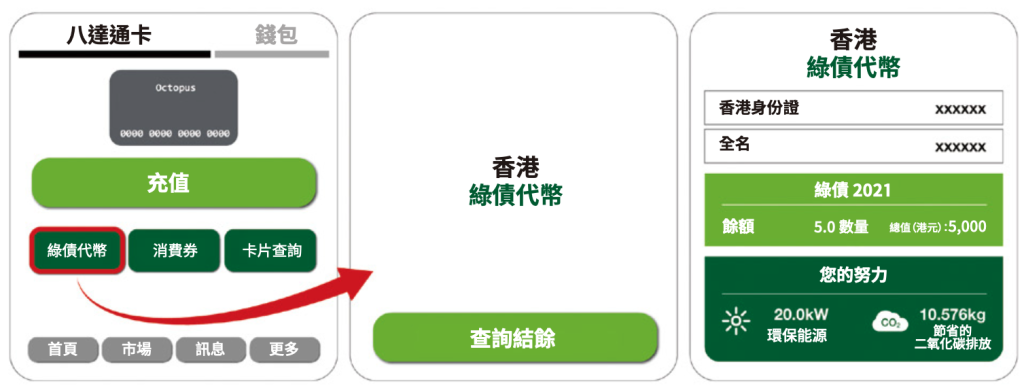
Additionally, blockchain strengthens the traceability of green bond proceeds and their environmental impact. Future issuances may integrate the Internet of Things (IoT) with blockchain to enable real-time reporting. For example, in the Project Genesis pilot by the HKMA and the Bank for International Settlements (BIS), data on solar-panel output and associated carbon-emission reductions were recorded on-chain and linked to a mobile application, allowing investors to monitor clean-energy generation in near real time. The pilot also demonstrated that tokenisation can substantially lower minimum investment sizes from HKD 10,000 to HKD 100 by dividing the bond into digital units. Although tested in a prototype environment, these features suggest the potential for platforms that provide greater transparency and inclusiveness. As illustrated in Figure 2 using the Octopus app prototype, investors could purchase fractional green bonds and monitor renewable-energy generation or emissions reductions in real time, thereby lowering greenwashing risks and enhancing investor engagement. By combining immutable records, smart contracts, and external data feeds, blockchain can strengthen trust in green bonds and help ensure that funds are allocated to legitimate green projects with transparent impact tracking.
Figure 2: Prototype interface of the Octopus app.
This figure illustrates potential displays of clean energy generation and CO₂ reduction from green bond projects. In the Project Genesis proof-of-concept, blockchain and IoT data feeds enabled investors to visualize the environmental impact of their investments in near real time. (Source: Kitano, Yohei, 2024, Nomura Insights; pilot demonstration only)

2.2 Carbon Markets and Carbon Credit Systems
Carbon markets, including compliance cap-and-trade systems and voluntary offset programs, rely on accurate emissions data and credible credit verification. Traditional arrangements, however, suffer from opacity, double counting, and limited liquidity, which undermine confidence in using carbon credits to meet climate goals (McLellan, 2022). Blockchain’s transparency, traceability, and immutability make it well-suited for tracking carbon credits, ensuring that each tonne of CO₂ reduced is uniquely issued, transferable, and permanently retired.
Hong Kong has begun developing such infrastructure. In October 2022, the HKEX launched Core Climate, a voluntary carbon marketplace offering trading, custody, and settlement services. [4] By mid-2024, Core Climate had more than 80 participants and credits from over 50 projects across Asia, Africa, and South America, verified under standards such as Verra’s VCS. In 2024, the HKMA established Project Ensemble to pilot tokenised green assets, including carbon credits. In May 2025, Northern Trust and several other institutions conducted cross-border tokenised carbon-credit transactions to test peer-to-peer trading with near-instant settlement.
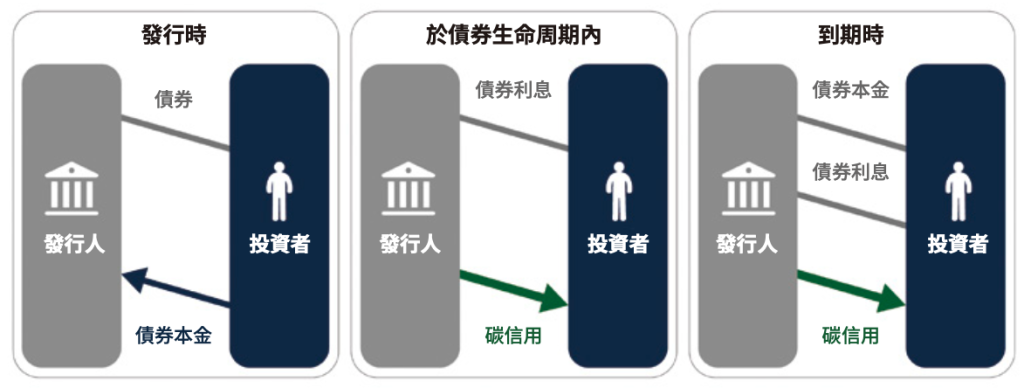
Blockchain also enables innovative carbon-credit products linked to green finance instruments. One such concept, explored in the Mitigation Outcome Interest (MOI), is a tokenised co-benefit linked to a green bond and developed under Project Genesis 2.0 by the BIS Innovation Hub and the HKMA. As shown in Figure 3, investors receive conventional coupon payments and, if the financed project achieves verified emissions reductions, they also receive carbon credits or similar environmental assets. Smart contracts automatically deliver these credits to investors’ digital wallets once third-party verification is completed. By linking part of investors’ returns to verified mitigation outcomes in the form of carbon credits, MOIs can lower issuers’ cash funding costs, provide investors with near real-time visibility into project impacts, and guard against double counting through shared-ledger ownership records. [5] Although still at the prototype stage, MOIs demonstrate how blockchain can link green finance with carbon markets. In the future, platforms such as Core Climate could integrate with tokenised bond ledgers so that purchasing a green bond automatically allocates associated carbon credits to investors, thereby broadening the investor base and increasing carbon-market liquidity.
Figure 3: Illustration of the MOI mechanism.
This figure illustrates the MOI mechanism, under which investors receive carbon credits alongside bond coupons, with smart contracts ensuring transparent allocation and preventing double counting. (Source: Kitano, Y., 2024, Nomura Insights)

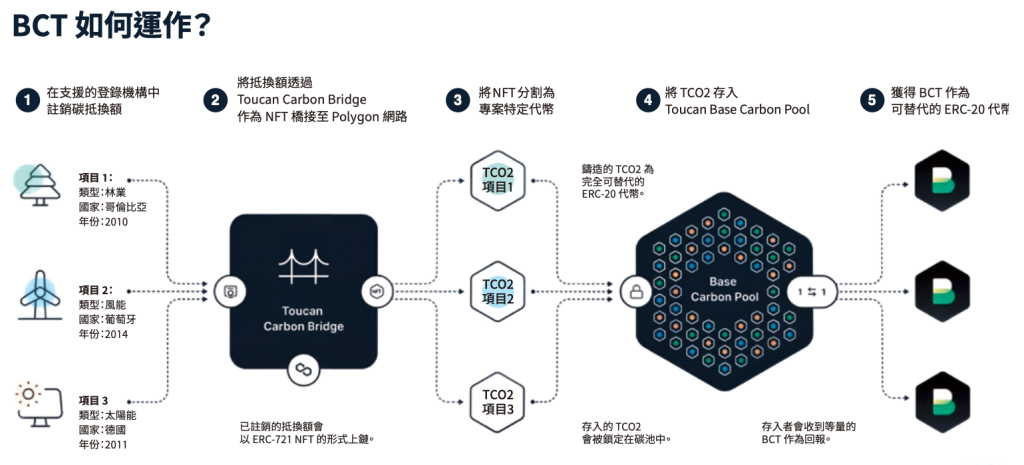
Blockchain also strengthens trust and efficiency in carbon-credit systems. Each carbon-credit token contains auditable metadata on its origin and certification, and all transactions are immutable and time-stamped, facilitating oversight. Smart contracts can encode market rules and automate compliance. Figure 4 illustrates the detailed process. Overall, these features reduce fraud, double counting, and transaction costs, encouraging broader participation in carbon offsetting and strengthening the credibility of carbon trading as a mechanism for achieving climate goals. Taken together with parallel developments worldwide, Hong Kong’s initiatives are setting the stage for interconnected carbon ledgers and reinforcing the credibility of carbon trading as a tool for addressing climate change.
Figure 4: Process of Base Carbon Tonne (BCT) on the Toucan Carbon Bridge.
This figure shows how verified carbon offsets from different projects are bridged on-chain, fractionalised into project-specific tokens (TCO₂), and deposited into a Base Carbon Pool. Smart contracts automate issuance and retirement, while blockchain records ensure transparency, auditability, and the prevention of double counting. (Source: Toucan Protocol, 2023)

2.3 Sustainable Supply Chain Finance
Blockchain’s benefits for transparency and decentralised verification extend beyond financial instruments to supply chain management and energy markets, both of which are crucial for sustainability. In supply chains, firms and regulators require reliable data on environmental footprints, including carbon emissions, water use, and labour practices. Under traditional arrangements, records are siloed within firms, which impedes the verification of environmental claims. A shared blockchain ledger can allow suppliers to upload verified data and create an immutable audit trail. For example, a European pilot tracked sustainably-caught tuna on Ethereum, assuring buyers of product origin. Manufacturers in Hong Kong and mainland China could adopt similar systems to log product-level carbon footprints.
Sustainable supply chain finance aims to provide funding to firms and their upstream suppliers that meet defined ESG objectives. In traditional supply chains, however, information asymmetry across multiple tiers and the limited financing capacity of smaller suppliers make it difficult to assess and reward sustainability performance. Blockchain can address these gaps by providing a decentralised, tamper-resistant ledger that records transactions and ESG attributes in real time, so all participants and lenders can access verifiable data. On this basis, banks can offer green supply chain finance products with preferential terms to low-emission or certified suppliers, while instant verification reduces the scope for greenwashing and facilitates compliance with emerging rules such as the EU Carbon Border Adjustment Mechanism (CBAM).
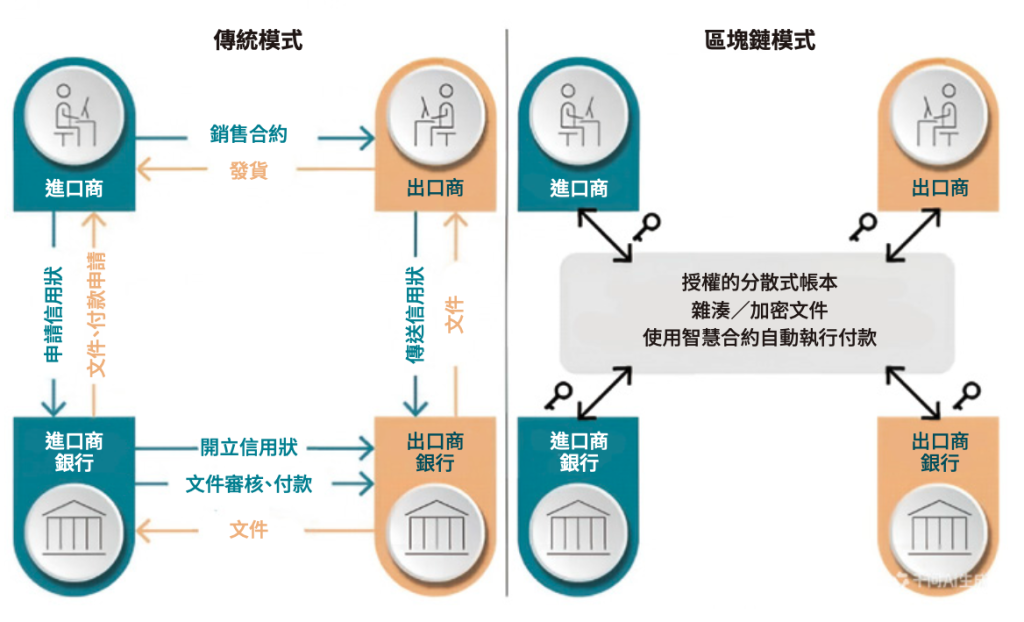
A typical example is the Contour platform, a blockchain network developed in 2019 by eight major banks including the Hongkong and Shanghai Banking Corporation (HSBC), Standard Chartered Bank, and BNP Paribas. Built on distributed ledger technology, it digitalises trade finance instruments such as letters of credit and guarantees, allowing all participants to share secure, real-time transaction data. Figure 5 compares traditional and blockchain-based letter of credit processes. By replacing paper-based procedures, Contour shortens settlement times, reduces fraud risk, and enhances transparency. Its smart contract functions enable ESG criteria, such as certified suppliers or low-emission logistics, to be automatically verified within the financing workflow. In a 2020 pilot led by the Asian Development Bank, the Contour platform facilitated a letter of credit transaction for a US$50,000 shipment of plastics from Thailand’s SCG Plastics Co. Ltd. to Vietnam’s Opec Plastics Joint Stock Company. This marked ADB’s first use of distributed ledger technology to issue a blockchain-based credit guarantee for trade finance. [6]
Figure 5: Comparison of traditional and blockchain-based letter of credit process.
This figure illustrates how blockchain streamlines trade finance by replacing manual document exchanges with a shared, permissioned ledger. The blockchain model enables encrypted data sharing and smart contract automation between importers, exporters, and banks. (Source: S&P Global Mart Intelligence, 2022)

2.4 Renewable Energy Certification and Trading
In renewable energy markets, blockchain has enabled peer-to-peer energy trading and improved the traceability of renewable energy certificates (RECs). A well-known example is the Brooklyn Microgrid, where households can sell excess solar power locally on a blockchain platform, reducing reliance on traditional utility intermediaries (Figure 6). Blockchain has also been used to manage RECs by tokenising each certificate, allowing cross-border trading with full provenance. Very Clean Planet (VCP) is the world’s first blockchain-enabled platform on which renewable energy certificates can be traced end to end. In April 2022, VCP facilitated an inaugural over-the-counter International-REC (I-REC) trade between Hebei Construction and Investment Group Co., Ltd. and BroadVision Hong Kong Ltd. The platform provides detailed and verifiable information on each I-REC, including its origin, generation process, timing, and other environmental attributes, helping organisations meet stringent ESG and disclosure requirements while reducing the risk of double counting. Singapore’s SP Group, for instance, launched a blockchain platform for REC trading that enables small solar installations to sell directly to corporate buyers. Hong Kong could adapt this model to connect corporate renewable-procurement programs with local generation.
Figure 6: Brooklyn Microgrid application interfaces.
This figure consists of two subfigures: (a) feed view, showing energy-sharing options and community participation prompts; (b) map view, visualising local solar generation sites and enabling peer-to-peer electricity trading. (Source: Brooklyn Microgrid, LO3 Energy)

Although most blockchain energy projects remain at pilot scale, they point to a future in which clean energy is more democratised and efficiently allocated. Electric-vehicle owners, for example, could purchase renewable power from nearby producers at the point of charging, with settlement on a blockchain and tokenised RECs credited to buyers. As technology matures, smart grids could process large volumes of micro-transactions while maintaining a trustworthy record for environmental reporting. By aligning financial incentives with sustainable behaviour, blockchain supports business models that reward green-energy producers and hold consumers accountable for their carbon footprints. With strong fintech capabilities and stated carbon-neutrality goals, Hong Kong is well positioned to adopt and scale these innovations. Table 1 summarises the main application domains of blockchain in green finance and highlights corresponding Hong Kong and international examples.
3. Hong Kong’s Experience
As an international financial centre, Hong Kong has actively integrated blockchain and Web3 into green finance. In the Hong Kong policy discourse, Web3 typically refers to a regulated digital-asset ecosystem that combines tokenised securities, virtual assets, and wallet-based market access on top of distributed-ledger infrastructure. In recent years, the government and financial regulators have moved beyond theory, launching pioneering initiatives supported by a robust legal and infrastructural framework. Hong Kong’s experience is reflected in government-led bond issuances, innovative pilots, and supportive regulation.
3.1 Government Tokenised Green Bonds
In February 2023, the Hong Kong government issued its first tokenised green bond under the Government Green Bond Programme, building on the earlier Project Genesis proof‑of‑concept, and became the world’s first sovereign issuer of a digital green bond. The HKD 800 million (about USD 100 million) issuance confirmed that bonds could be validly issued, cleared, and settled on a blockchain under Hong Kong law. Placed with institutional investors, the one-year bond ran smoothly, demonstrating faster settlement and reduced paperwork. Regulators later published a detailed report providing guidance for future issuances.
In February 2024, Hong Kong launched its second tokenised green bond, this time a much larger HKD 6 billion-equivalent offering with multi-currency tranches in HKD, USD, EUR, and RMB—the world’s first multi-currency digital bond (Chan, 2025).Issued on HSBC’s Orion DLT and cleared via the HKMA’s CMU, it gave international investors access through either Euroclear, Clearstream, or directly on the platform, thereby broadening participation. It was also the first to adopt ICMA’s Bond Data Taxonomy, embedding standardised machine-readable terms into legal documents and linking its green bond framework and external review reports directly on-chain for greater transparency. These issuances established Hong Kong not only as a first mover but also as a leader in setting practical standards for tokenised sovereign green finance.
By 2025, Hong Kong had signaled that tokenised issuance was shifting from pilot to routine practice. Authorities announced preparations for a third batch of tokenised green bonds, potentially adding new features based on market feedback, and confirmed that regular digital bond offerings would run alongside traditional ones. This batch was designed to explore tokenisation on both the asset and capital sides, with the capital side linked to CBDC, marking a move from one-off trials to institutionalised issuance. To further support adoption, the government considered incentives such as waiving stamp duty on secondary trading of tokenised bonds or other digital securities, thereby lowering transaction costs and aligning them with conventional instruments. Hong Kong’s commitment to Web3 in capital markets has been emphasised at the highest level: in early 2025, Financial Secretary Paul Chan highlighted the city’s achievements in issuing tokenised green bonds and reaffirmed its goal of building a robust digital asset ecosystem under clear regulation. These steps indicate that Hong Kong views blockchain-based green finance as a long-term strategic advantage and underscore the government’s commitment to leveraging blockchain for market efficiency.
In November 2025, the HKSAR Government completed a third digital green bond issuance under the Government Sustainable Bond Programme. The offering totalled around HKD 10 billion equivalent across four currencies (HKD, RMB, USD, and EUR), making it the largest digital bond issuance globally to date. The transaction retained the key features of the 2024 deal—native digital issuance on the HSBC Orion platform, clearing and settlement through the HKMA’s CMU, listing on HKEX, and the option for investors to access the bonds either directly on the digital platform or via existing market infrastructure—but also introduced several important enhancements. For both the HKD and RMB tranches, investors were given the option to settle primary issuance using tokenised central bank money in the form of e‑HKD and e‑CNY alongside traditional settlement rails, further shortening settlement time and reducing costs and counterparty credit risk. The issuance attracted total subscriptions exceeding HKD 130 billion across the four tranches and extended tenors to up to five years; thereby scaling up the market for tokenised sovereign green bonds and broadening the investor base to include a larger number of first-time digital bond investors. To advance the adoption of global standards, Digital Token Identifiers (DTIs) were obtained for all tranches under the ISO 24165 standard and directly linked to the bonds’ ISINs and the issuer’s Legal Entity Identifier (LEI),. The deal also expanded the use of ICMA’s Bond Data Taxonomy to support machine-readable, end‑to‑end automation of issuance information and green bond disclosures. [7]
3.2 Innovative Projects: Genesis, Evergreen, and Ensemble
Hong Kong’s leadership in blockchain and green finance is built on iterative innovation—testing new ideas in pilots and scaling those that prove effective. Three flagship HKMA initiatives illustrate this approach: Project Genesis, Project Evergreen, and Project Ensemble.
Project Genesis (2021–2022) was a proof-of-concept jointly developed by the HKMA and the BIS Innovation Hub to explore tokenised green bonds. It consisted of two phases. The first phase focused on the tokenisation of green bonds with the aim of promoting sustainable investment and addressing transparency concerns. In this phase, two prototype platforms were developed—one on a private blockchain and the other on a public blockchain—so that their performances could be compared. The prototypes also incorporated Internet of Things (IoT) data feeds to track solar power generation and were integrated with the Octopus e-wallet to enhance retail-level visibility. [8]
The second phase, Project Genesis 2.0, explored the use of blockchain, smart contracts, and related technologies to demonstrate the technical feasibility of tracking, delivering, and transferring digitised carbon forwards to enhance the transparency, objectivity, and environmental integrity of the green-bond market. This phase proposed a new green-bond structure that adds Mitigation Outcome Interests (MOIs), under which part of the bond’s future payments to investors can be made in the form of carbon credits largely generated by the activities financed by the original green bond. The project highlighted several design insights: permissioned distributed-ledger technology is generally better suited to bond markets because of privacy requirements; smart contracts can automate complex workflows such as coupon payments; and interoperability with existing payment systems is essential. Although Project Genesis remained at the prototype stage, it provided important technical and architectural lessons for Hong Kong’s subsequent live tokenised-bond issuances.
Project Evergreen (2021–present) operationalised tokenised bonds, serving as the backbone for the world’s first sovereign digital green bond. It moved from “concept to application” by building market infrastructure and incentives, including a Digital Bond Grant Scheme (subsidising issuers’ costs) and a knowledge-sharing hub (EvergreenHub). Evergreen developed a hybrid issuance model linking a private blockchain platform with the HKMA’s CMU, allowing investors to hold bonds either on-chain or through custodians. This flexibility broadened access and boosted confidence. The model proved effective: the second government issuance in 2024 saw active secondary trading and even repo transactions, demonstrating interoperability with existing markets. By late 2024, Evergreen had moved beyond proof-of-concept, laying the foundation for routine issuance and broader adoption by corporates.
Project Ensemble (2024–present) represents the next stage: cross-border and multi-asset tokenisation. Launched as an HKMA sandbox, it allows banks, asset managers, and infrastructure providers to experiment with tokenised bonds, deposits, trade finance assets, funds, and carbon credits. One trial tested settling tokenised bond trades with tokenised bank deposits, simulating a future of atomic settlement between securities and digital money. Another involved Northern Trust and others trading tokenised carbon credits, addressing cross-border regulatory recognition. By engaging international institutions, Ensemble positions Hong Kong as a hub for developing tokenisation standards while enabling regulators to adapt oversight as needed. Together, Evergreen and Ensemble complement each other: Evergreen drives real-world implementation, while Ensemble fosters experimentation across asset classes. This two-track approach ensures that Hong Kong remains at the forefront of green fintech innovation while managing risks prudently. Table 2 provides an overview of Hong Kong’s key blockchain and green finance initiatives, from pilots to live issuances.
3.3 Financial Infrastructure and Regulatory Support
Hong Kong’s progress in blockchain-based green finance rests not only on projects and bond issuances but also on a supportive policy environment and strong market infrastructure. Regulators apply the principle of “same activity, same risk, same regulation,” ensuring that fintech and Web3 innovations operate within established frameworks that underpin Hong Kong’s reputation as a trusted financial centre.
A key element is regulatory clarity. In 2022, the government released a Policy Statement on Virtual Assets, committing to the responsible adoption of Web3 and tokenisation. Since then, Hong Kong has launched a licensing regime for virtual asset trading platforms (with the first licenses granted in 2023) and has implemented stablecoin rules in 2025. For green finance, the Cross-Agency Steering Group coordinates taxonomy development, mandatory climate disclosures, and incentives, aligning blockchain-based products with global standards. The Centre for Green and Sustainable Finance, established in 2020, supports data and capacity building, with its repositories and frameworks complementing blockchain by feeding trusted ESG data into DLT systems.
Market infrastructure has also been upgraded. HKEX introduced a Sustainable Bond Market and the Core Climate carbon trading platform, providing venues for both conventional and digital green instruments. The government’s 2024 tokenised green bonds were listed directly on HKEX markets, demonstrating integration with mainstream exchanges. The HKMA’s CMU has been enhanced to link with DLT platforms, as demonstrated in Project Evergreen, and this integration will deepen with the planned e-HKD, which could serve as the settlement leg for tokenised transactions.
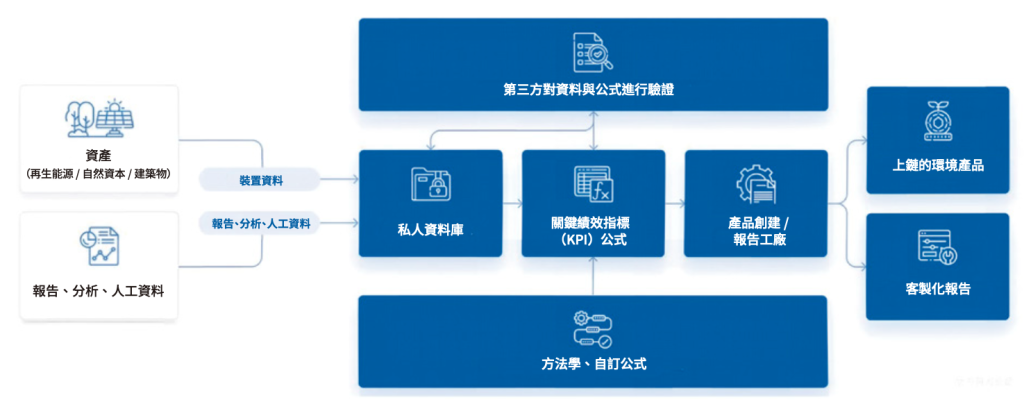
In addition to government-led initiatives, Hong Kong has seen the emergence of private, technology-driven infrastructure. Allinfra Climate (Figure 7), developed by Allinfra, is a blockchain-enabled environmental data platform that offers end-to-end services to collect, store, use, and monetise verifiable and auditable sustainability data. It gathers climate-relevant information from smart devices across an asset portfolio and creates an immutable, reliable data repository that can be used to calculate carbon footprints, report environmental performance to stakeholders, support green financing, and generate digital environmental products such as renewable energy certificates or emissions-reduction units. By ensuring data integrity and transparency, the platform helps to reduce greenwashing risks and strengthens carbon-emissions tracking for green-finance activities. When integrated with Allinfra Digital, the firm’s asset-tokenisation platform, users can mint and manage environmental tokens through a unified interface and rely on secure storage functions that support the full lifecycle of tokenised sustainability assets.
Figure 7: Allinfra Climate platform.
This figure illustrates how the core Allinfra Climate platform combines blockchain, IoT, and other technologies to deliver a robust climate data tool that increases the reliability, transparency, and timeliness of climate data. (Source: Allinfra Climate blog post, August 07, 2022)

Talent and ecosystem development are another pillar. Authorities work with hubs such as Cyberport and Science Park to incubate blockchain, carbon tech, and green fintech startups, supported by grants and industry programs. International collaboration is also prioritised, with Hong Kong participating in BIS Innovation Hub projects, G20 sustainable finance groups, and cross-border partnerships with markets such as Singapore. This global engagement helps Hong Kong align with international standards while also shaping emerging ones.
In summary, Hong Kong has adopted a holistic approach that combines pilot projects, live market transactions, regulatory clarification, infrastructure enhancement, and talent development. By institutionalising tokenised issuance and embedding blockchain within a transparent and predictable framework, Hong Kong demonstrates how an international financial centre can leverage digital technology to support sustainable finance. This balanced emphasis on innovation and prudence provides a reference model for other markets seeking to promote green finance through digitalisation.
4. International Comparison: Global Cases of Blockchain in Green Finance
4.1 Singapore
Singapore has emerged as a leading jurisdiction in applying blockchain to green finance, particularly in asset tokenisation, carbon markets, renewable energy, and ESG data infrastructure. In May 2022, the MAS launched Project Guardian to explore the use of tokenisation and interoperable networks in future financial infrastructure. Under this initiative, in March 2023 the National University of Singapore (NUS), in collaboration with Northern Trust Corporation and United Overseas Bank (UOB), piloted a tokenised green bond. [9] The issuance comprised SGD 340 million of 10-year notes with a 3.268% coupon. ESG reporting and impact data were delivered to investors as verifiable on-chain credentials, enabling tamper-evident tracking of the use of proceeds and environmental performance and ensuring that this information remained attached to the bond during secondary-market transfers. This design safeguarded data integrity and allowed investors to access secure and immutable impact information for independent evaluation and portfolio-level sustainability disclosures, with all investors receiving an identical and consistent data set over the life of the bond.
Singapore has also taken a leading role in applying blockchain technology to carbon markets. In 2021, SGX, Temasek, DBS, and Standard Chartered launched Climate Impact X (CIX), a voluntary carbon exchange that has since moved into full commercial operation.With technology support from Nasdaq, CIX ensures the authenticity of carbon credits and prevents double counting. Within just four months of launching its spot trading platform in 2023, it cleared over one million tons of credits, and total transactions have now surpassed two million tonnes, with daily bids of about 40,000 tonnes. By creating a transparent and trusted marketplace, CIX reduces fragmentation in the voluntary carbon market, deters low-quality credits, and provides companies with a reliable avenue for carbon-neutral commitments.
Meanwhile, in October 2019, Singapore launched the AirCarbon Exchange (ACX), a blockchain-based carbon marketplace that provides airlines and other corporate buyers with a venue to trade tokenised carbon credits. [10] The carbon credits are securitised into tokens on a 1:1 basis, so that each ACX token corresponds to one certified carbon credit, typically representing one metric tonne of CO₂ reduced or removed. This structure makes the credits more liquid and easily transferable and allows users to buy, sell, and retire them on a transparent platform. By recording transactions on-chain and automating post-trade processes, ACX reduces settlement risk and shortens settlement from days to minutes, while lowering transaction costs compared with traditional over-the-counter carbon markets. The exchange lists credits issued under major standards, including Verra and the Gold Standard, enabling participants to access high-quality environmental assets with price transparency and traceable retirement.
Singapore has also innovated in renewable energy trading. In 2018, SP Group introduced one of the world’s first blockchain-based renewable energy certificate (REC) platforms, allowing producers to tokenise and sell certificates directly to corporate buyers such as City Developments Limited and DBS. Blockchain’s immutable ledger streamlines verification, reduces administrative costs, and enables even small-scale rooftop solar producers to participate. The platform ensures that corporate sustainability spending flows directly to clean energy generation, lowering transaction costs and encouraging wider adoption of renewables.
In terms of solar energy tokenizsation, renewable energy investment company Fracsio launched its SEA Solar Token Series 1,30 $SSOL1, which is the first in a series of solar-asset-collateralised ESG security tokens on the IX Swap Launchpad. $SSOL1 aims to generate stable returns for investors and focuses on ESG mandates that directly address rising climate challenges. This as the issuer aims to help asset owners transform their illiquid assets into liquid, financially sustainable, socially and environmentally responsible investments that are accessible to every investor. SEA Solar Series 1 is an ESG-focused, solar-collateralised security token addressing key global challenges. By leveraging tokenisation, Fracsio enabled investors to participate in the economic interest of solar power generation projects in Southeast Asia.
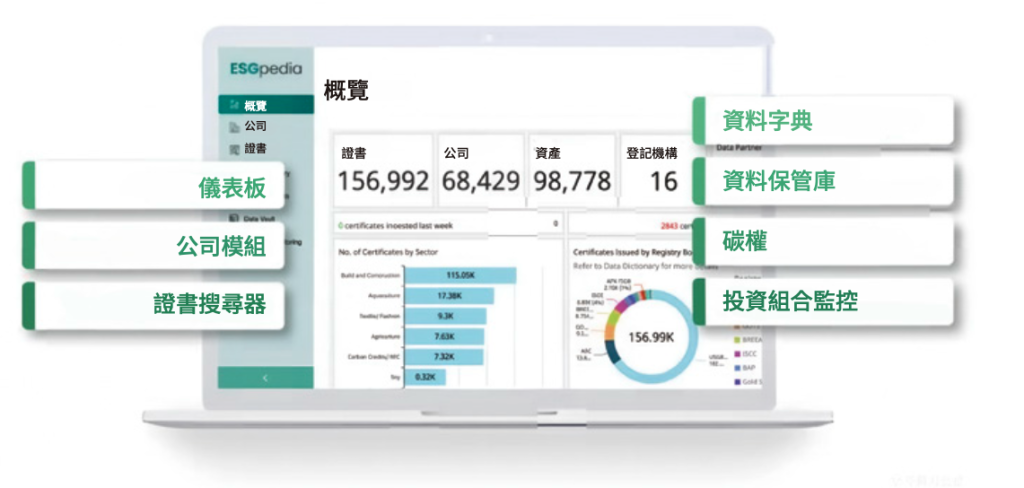
At the infrastructure level, the Monetary Authority of Singapore (MAS) launched Project Greenprint in 2021, which includes ESGpedia (Figure 8), a blockchain-based registry developed with fintech firm STACS. ESGpedia aggregates verified sustainability data, such as emissions, renewable generation, and building certifications, into a shared, tamper-proof repository accessible to banks and investors. Major institutions including Citi, UBS, and DBS have tested the platform, which aims to break down data silos and improve trust in ESG certifications. By improving data quality and accessibility, ESGpedia enhances due diligence, helps financial institutions allocate green capital more effectively, and provides regulators and the public with clearer insights into environmental outcomes.
Figure 8: ESGpedia dashboard interface.
This figure illustrates a blockchain-based ESG data registry under Singapore’s Project Greenprint, aggregating verified sustainability metrics (e.g., emissions, renewables generation, certifications) into a tamper-proof platform for financial institutions and investors. (Source: ESGpedia / Project Greenprint)

4.2 Europe
Europe’s engagement with blockchain in green finance began in bond markets. In February 2019, the Spanish bank Banco Bilbao Vizcaya Argentaria, S.A. (BBVA) arranged a €35 million, six-year green bond issuance for Mutualidad de la Agrupación de Propietarios de Fincas Rústicas de España, Sociedad Anónima (MAPFRE) using its in-house blockchain platform, marking the region’s first blockchain-supported green bond. Negotiation and execution were recorded immutably on a distributed ledger, shortening timelines and reducing manual reconciliation. Issued under BBVA’s sustainable finance framework and backed by a Second Party Opinion confirming its green credentials, this transaction demonstrated how distributed ledger technology can reduce issuance costs by an order of magnitude (Reyes and Argüello, 2022),enhance efficiency, and strengthen confidence in the use of proceeds. BBVA has since expanded the use of blockchain in other sustainable finance deals, moving beyond pilot projects.
On June 19, 2023, the European Investment Bank (EIB) issued a SEK 1 billion, two-year digital climate awareness bond on so|bond, a sustainable, open digital bond platform based on a public, permissioned blockchain and launched by Crédit Agricole CIB and SEB. [11] The bond, issued under Luxembourg law, carried a 3.638% fixed coupon. Crédit Agricole CIB acted as central account keeper, while CACEIS and SEB provided custody for their investor clients, with CACEIS also serving as paying agent. The so|bond platform uses the proof of climate awareness protocol, designed to keep energy use at a level comparable to non-blockchain systems and to encourage participants to operate in a more sustainable way. Each validator node is assessed under ISO life-cycle standards, and nodes with a lower environmental footprint receive higher rewards.
On June 10, 2025, Italy’s Cassa Depositi e Prestiti issued an eight-year, EUR 500 million green bond with a fixed coupon of 3.25%, reserved for institutional investors. [12] Blockchain will be used to tokenise the reporting process so that investors can independently verify the allocation of proceeds and associated environmental impacts, thereby enhancing transparency, data integrity, and reliability. The bond is reported as the first in Europe to incorporate blockchain-based reporting. The proceeds will finance projects with positive environmental effects, including renewable energy and sustainable mobility infrastructure. The issuance was jointly managed by Banca Akros, BofA Securities, BNP Paribas, Intesa Sanpaolo (IMI CIB Division), Santander Corporate & Investment Banking, and UniCredit. This transaction strengthens CDP’s role in promoting sustainable finance and supporting Italy’s energy transition and climate adaptation investments.
Blockchain has also been applied in Europe’s carbon and energy markets. Launched in 2020, the Port of Rotterdam’s Distro project established one of Europe’s first blockchain-enabled energy marketplaces to support automated, high-frequency peer-to-peer trading within an industrial microgrid. [13] On this transparent platform, buyers and sellers of renewable power can trade and access dynamic local prices that reflect real-time supply and demand. Developed by a consortium of 32 companies, the system integrates blockchain, AI, and IoT to enable decentralised and autonomous coordination of energy flows. Using predictive algorithms and smart contracts, participants can plan and execute trades up to 48 hours in advance based on pricing rules and real-time data. The pilot phase delivered measurable benefits, including an 11% reduction in energy costs for consumers, a 14% increase in revenues for local renewable producers, and 92% on-site solar consumption, as 32 commercial users employed the automated marketplace to balance local electricity demand and supply. These results highlight the platform’s potential to improve economic performance and energy self-sufficiency in port and industrial environments.
Furthermore, European members have been active in multilateral initiatives. Since 2020, several have participated in the World Bank’s Climate Warehouse project, which uses blockchain to link national carbon registries and prevent double counting under Article 6 of the Paris Agreement. In the private sector, the European Power Exchange (EPEX SPOT), a French-based power exchange serving Germany, the United Kingdom, the Netherlands, Belgium, Austria, Switzerland, and Luxembourg, enables cross-border trading of short-term electricity. In 2021, EPEX SPOT partnered with the U.S. firm LO3 Energy to test a blockchain-based platform that links local, peer-to-peer energy markets with wider power networks (De, 2021).These pilots demonstrated that blockchain can support more decentralized and transparent energy markets in Europe.
Europe has also pioneered blockchain in supply chain traceability. In 2016, UK startup Provenance piloted tracking Indonesian tuna on Ethereum, recording the journey from catch to retail to assure sustainable sourcing. This early use of tokenizsed supply chain data gave consumers immutable proof of origin (Turns, 2021).Similar projects, such as Everledger’s tracing of conflict-free diamonds and minerals, showed the feasibility of using blockchain to support sustainability claims. While many of these efforts remain pilots, they reflect Europe’s regulatory drive—from anti-deforestation rules to due diligence laws—where blockchain can underpin accountability. Together, these initiatives underscore Europe’s cautious but meaningful progress in embedding blockchain into green finance and sustainability.
4.3 Mainland China
In Mainland China, blockchain applications in green finance have focused primarily on credit monitoring and internal systems management. Banks such as Ping An Bank have piloted DLT-based platforms to track the disbursement and use of green loans in real time, with smart contracts flagging potential misuse of funds. This ensures that capital earmarked for environmental projects is not diverted to non-green purposes. In the bond market, the Bank of China developed a blockchain-based bond book-building and custody system as early as 2017, which has been used in several offerings to improve transparency and settlement efficiency. According to KPMG International Limited, Chinese financial institutions are actively integrating blockchain, AI, and big data into green products to strengthen data reliability and traceability. However, unlike Hong Kong, Mainland China has not issued large-scale blockchain-based government or corporate green bonds; efforts remain largely at the pilot stage, with an emphasis on reporting systems, registries, and verification tools to support one of the world’s largest green bond markets.
China’s carbon trading system has also seen early blockchain pilots. Before the launch of China’s national Emissions Trading System (ETS) in 2021, the Beijing Energy-Blockchain Lab and IBM developed a prototype carbon trading platform on Hyperledger Fabric in 2017, described as the world’s first blockchain “green asset” management platform. [14] It enabled end-to-end tracking of carbon credits—from issuance and trading to retirement—cutting costs and time for developing carbon assets by an estimated 20–30%. Although the unified ETS did not adopt this system, the pilot demonstrated how immutable ledgers and smart contracts could prevent double counting and reduce greenwashing risk. At the consumer level, cities such as Shanghai, Shenzhen, and Wuhan have experimented with personal “carbon credit” programmes, in which individuals earn points for low-carbon actions. Some trials considered recording these points on blockchain to ensure transparency and potentially allow tokenised rewards or marketplace exchanges, aligning with China’s “carbon inclusiveness” strategy.
China is also actively exploring blockchain-based carbon-data networks. In June 2023, the China Academy of Information and Communications Technology (CAICT) launched a carbon data service network called Carbon Data Reliable Circulation (CRC). The CRC network integrates technologies such as logo analysis, distributed digital identity, smart contracts, privacy computing, and industrial big data to provide a comprehensive and reliable solution for digitally capturing and verifying the carbon footprint of products. It is designed to ensure that carbon data can be transmitted, authenticated, and used in a secure and trustworthy manner. Core functions include carbon data monitoring, carbon footprint and emission accounting and analysis, carbon asset management, and dual-carbon pathway planning.
As a global manufacturing hub, China is also testing blockchain in green supply chain finance. For example, Ant Group’s AntChain has been applied to share ESG data—such as energy usage or emissions—across suppliers and banks. In one pilot, suppliers with lower carbon footprints, verified via blockchain-based systems, gained access to preferential loan rates. These initiatives aim to provide a trusted source of ESG information for lenders and buyers while preventing fraudulent claims by suppliers. Current trials in industries such as textiles and electronics focus on logging verified sustainability data, sometimes via IoT sensors, directly onto distributed ledgers. While still at an early stage, such pilots reflect China’s push for greener supply chains and could lay the groundwork for national platforms covering carbon footprint tracking, green labelling, and export compliance.
Overall, China’s use of blockchain in green finance has been incremental and pragmatic, focusing on improving monitoring, data quality, and verification. This pattern reflects a cautious but strategic approach to embedding blockchain within the country’s broader sustainability agenda.
4.4 United States
In the United States, blockchain and green finance have largely developed through bottom-up experiments led by startups and local utilities. A seminal case is the Brooklyn Microgrid in 2016, mentioned above, where residents tokenised and traded rooftop solar power directly on Ethereum. One transaction involved about 195 kWh credits at 7 cents each, demonstrating that neighbors could securely trade energy without a central utility.Although initially small, the pilot by LO3 Energy and ConsenSys showed how smart metres, smart contracts, and blockchain could support peer-to-peer energy markets. Other trials followed, such as a 2018 project in Santa Clara, California, where the municipal utility partnered with Power Ledger to link solar panels and EV chargers to a blockchain system. Each kilowatt-hour of solar used for charging generated a “low carbon credit” token, later sold to corporates seeking offsets, creating a micro carbon market tied to local clean energy.
Blockchain has also been applied to the verification and lifecycle management of voluntary carbon credits. Northern Trust, headquartered in Chicago, launched the Carbon Ecosystem, a blockchain-based platform enabling near-real-time issuance, verification, and settlement of voluntary carbon credits. The system allows project developers to create and register carbon credits with detailed, auditable attributes—such as CO₂ captured, energy consumption, and project location—and to transact them directly with buyers, thereby reducing reliance on intermediaries. Smart legal contracts, executed via Avvoka, ensure legal enforceability and automate documentation for each transaction. By recording trades on a distributed ledger and enabling fast settlement, the platform enhances transparency, reduces friction, and strengthens trust in voluntary carbon markets.
Blockchain has also been tested in renewable energy certificate tokenisation. Around 2018, PJM Environmental Information Services and the Energy Web Foundation built a blockchain platform that allowed RECs to be tracked down to the kilowatt-hour. Instead of bulk 1 MWh units, the system issued fractional certificates with unique identities, enabling even household-scale solar producers to participate. Each token carried metadata on the source and time of generation, ensuring provenance and building trust. These pilots illustrated how blockchain could democratise REC markets and make green power procurement more accessible.
Beyond energy and carbon markets, blockchain has been used to enhance traceability in sustainable supply chains. Walmart’s pilots with IBM (2017–2018) used Hyperledger to trace pork in China and mangoes in the Americas. Blockchain reduced the time to track a mango batch from 7 days to 2.2 seconds (Kamath, 2018),cutting waste from recalls and providing end-to-end transparency. This not only improved food safety but also strengthened sustainability claims by ensuring that produce was sourced from certified farms and deterring mislabeling. Following these successes, Walmart and other retailers expanded blockchain traceability to products such as coffee, milk, and eggs, often citing environmental and consumer-trust benefits.
Overall, U.S. blockchain-for-green initiatives have been localised and experimental, without a federal mandate or large-scale regulatory push. Financial authorities remain cautious about digital assets, slowing institutional uptake compared with Europe or Singapore. Still, the accumulation of community energy pilots, granular carbon-tracking systems, and supply chain traceability projects demonstrate the technical feasibility of blockchain for decentralised sustainability markets. Some states and cities have explored extending these models—for example, in Texas (ERCOT) for REC trading and in California’s Central Valley for water rights—but scaling will depend on clearer market rules and interoperability standards.
4.5 Canada
In Canada, the use of blockchain in green finance has primarily focused on improving supply chain transparency and supporting circular economy initiatives. An example is the IBM–Plastic Bank blockchain platform launched in 2017. It is a token reward system covering the entire value chain of recycled plastics, from collection and compensation to delivery for reuse by manufacturers. Built on IBM’s blockchain infrastructure, the system issues digital tokens that serve both as a record of micro-level transactions and as a form of payment for plastic collectors. Through the Plastic Bank mobile application, collectors use a digital wallet to receive and store tokens that can be exchanged for goods and services. The application runs on IBM’s LinuxONE servers, which track trade data and secure token storage. See Figure 9 for detailed information on Plastic Bank’s business model. This model transforms plastic waste into a tradeable asset, reduces risks associated with handling cash, and fosters financial inclusion. The transparent and verifiable nature of blockchain builds trust among collectors, corporate partners, and investors, demonstrating how digital tokens can link environmental action to tangible economic value.
Figure 9: The business model of Plastic Bank.
This figure depicts how Plastic Bank connects collectors, processing centres, partner enterprises, and consumers through a blockchain-based system. Collectors exchange plastic waste for digital tokens, which are tracked and processed into social plastic products, promoting both environmental sustainability and social inclusion (Source: Gong et al. (2022) Blockchain application in circular marine plastic debris management).

Several Canadian initiatives have piloted blockchain to enable distributed energy resources (DERs) to participate in local energy markets. One example is the “Transactive Grid – Enabling End-to-End Market Services Framework,” funded by Natural Resources Canada (2018), which developed a blockchain-based platform called GridExchange to allow small renewable generators to sell into local markets. [15] Through GridExchange, utilities can engage customer-owned DERs to meet system needs and reduce greenhouse gas emissions. In the pilot, Alectra used the app to send dispatch requests ahead of expected high electricity demand, and participants provided simulated market services such as managed EV charging, solar PV generation to reduce emissions, and energy storage for grid balancing, demonstrating the practical value of customer energy resources for the distribution grid. Although blockchain applications in green finance remain relatively limited in Canada, these initiatives demonstrate the country’s commitment to using distributed-ledger technologies to enhance sustainability, improve environmental data integrity, and support the transition toward a low-carbon and circular economy.
4.6 Australia
Australia has been an active testing ground for blockchain in distributed energy and carbon markets, driven by high rooftop solar penetration and supportive innovation funding. A landmark case was the RENēW Nexus trial in Fremantle (2018–2020), run by Power Ledger, where households traded rooftop solar peer-to-peer on a blockchain platform. At its peak, about 48 households were conducting over 50,000 transactions per month, exchanging more than 4 MWh of energy. Participants could set their own prices, with trades settled automatically every 30 minutes via smart metres. The project showed that blockchain could handle micro-transactions at scale and act as a virtual power plant (VPP), reducing reliance on the main grid by up to 30–68%.[i] Customers welcomed the added control and ability to monetise solar generation, though the trial highlighted the need for tariff reform, such as dynamic pricing, to improve economic viability.
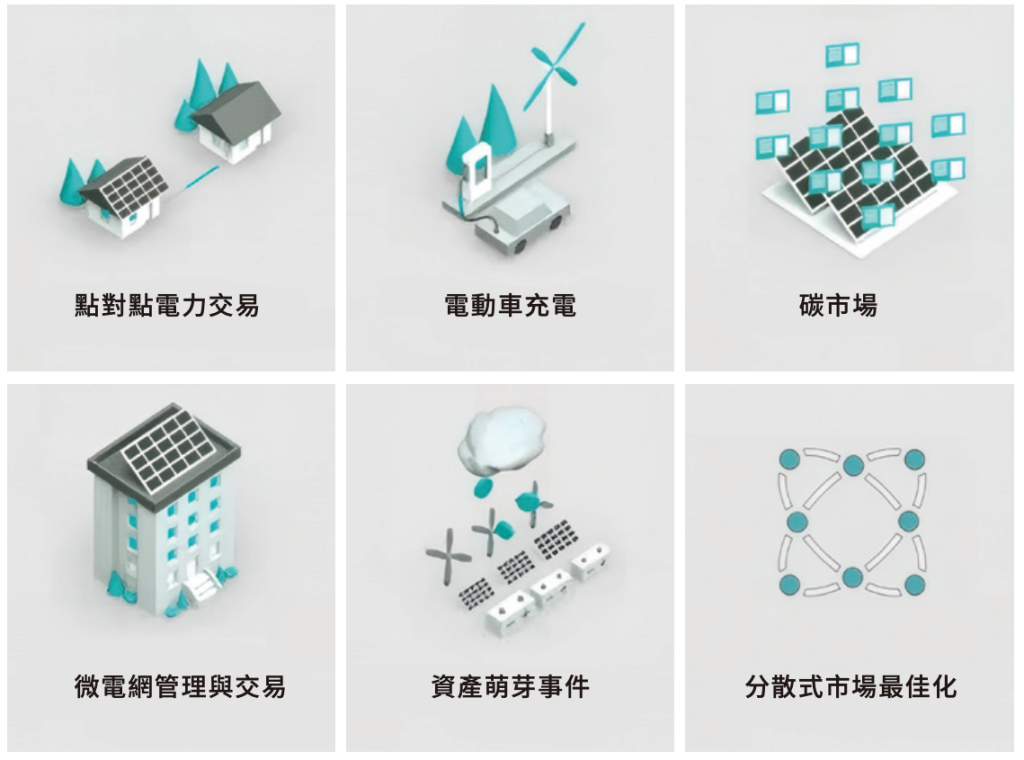
Figure 10: Powerledger conceptual diagram for P2P energy, EV charging, REC use cases.
This figure illustrates Powerledger’s blockchain-based framework, highlighting key applications such as peer-to-peer electricity trading, electric vehicle charging, carbon markets, microgrid management, asset creation, and distributed market optimisation.

In 2023, Australia carried out the world’s first transaction linking its demonstration Central Bank Digital Currency (CBDC) with a tokenised carbon credit, showcasing the potential for interoperability between CBDC and carbon markets. Figure 10 illustrates Powerledger’s broader architecture, which underpins many of these applications, including P2P energy trading and tokenised carbon markets. Although Australia’s compliance carbon market (Australian Carbon Credit Units, ACCUs) has not adopted blockchain, regulatory agencies such as the Clean Energy Regulator and CSIRO are assessing its potential applications. Government-supported initiatives, including the Fremantle Nexus project co-funded by ARENA, have explored how blockchain could reduce transaction costs, improve market transparency, and empower consumers in future carbon and renewable energy systems.
A representative case in sustainable supply chains is the collaboration between BHP Group Limited, one of the world’s largest mining companies, and the blockchain platform MineHub in 2020. The partnership digitalised the end-to-end trading process for commodities such as copper concentrate and iron ore, recording trade data on a shared ledger accessible to all parties. The platform embeds verified ESG information, including mineral origin, carbon emissions, and labour compliance, into each transaction, ensuring full traceability and accountability. By linking on-chain ESG verification with trade documentation, this system enables transactions to qualify for sustainable finance.
At the policy level, blockchain is included in the national Blockchain Roadmap, which highlights energy and sustainability as priority areas. [16] Regulatory sandboxes run by the Australian Energy Market Commission have allowed P2P trading pilots such as RENēW Nexus to test models outside strict market rules. The success of these trials could lead to new policies formally recognising local energy trading. Similarly, if exchanges like ACX build credibility, they may shape the evolution of voluntary carbon markets alongside the compliance system.
Overall, Australia has progressed from pilots to live implementations, with residents now regularly buying and selling solar energy via blockchain. The government remains cautious but supportive, funding research while learning from trials. With abundant renewables and the need to integrate distributed assets into the grid, blockchain could become a cornerstone of Australia’s transition toward a more resilient, consumer-driven clean energy system.
4.7 Africa
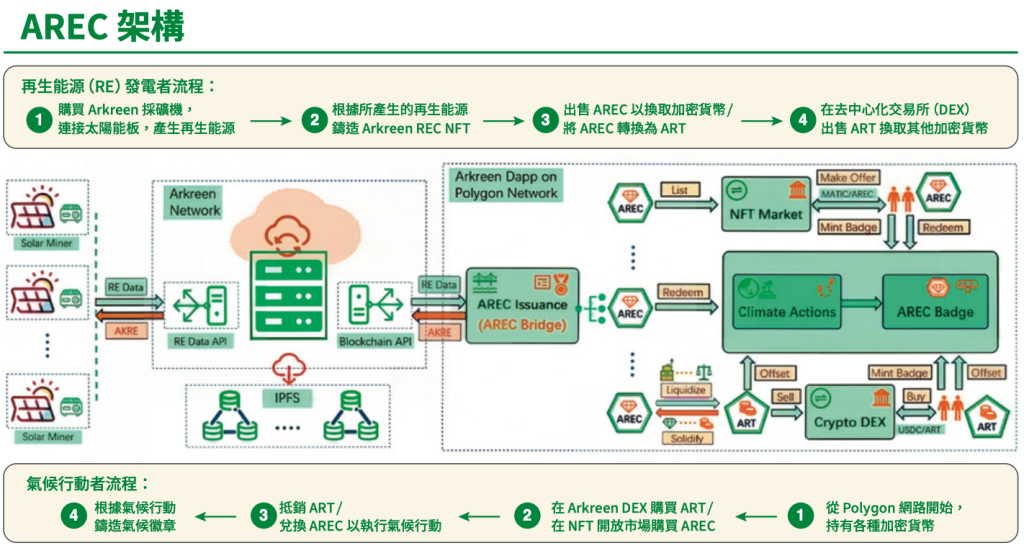
Africa is emerging as a key region for blockchain-enabled carbon markets, aiming to improve transparency and attract climate finance. A notable initiative is African Carbon Coin (ACC), which tokenises carbon credits generated from forestry and renewable energy projects. These credits are linked to internationally recognised standards, ensuring compliance and credibility. ACC’s model seeks to address Africa’s current under-representation in global carbon markets, where the continent accounts for only about 2% of voluntary carbon credits. It aims to create a secure, traceable system that can unlock an estimated USD 40 billion annually by 2030. Tokenisation allows fractional ownership of credits, enabling smaller investors and local communities to participate in climate finance while reducing the risks of double counting and fraud. As illustrated in Figure 11, ACC’s workflow integrates data collection, verification, token issuance, and market trading through a transparent blockchain-based system.
Figure 11: ACC – NFT Network Workflow.
This figure shows the workflow of Africa Carbon Coin (ACC), where renewable energy data from solar miners is collected and stored through distributed systems, then processed via the ACC network and blockchain APIs. Verified data is used to issue ACC-based NFTs, which can be listed and traded on the NFT market or redeemed for climate action badges. The platform also integrates with decentralised exchanges for buying, selling, and offsetting carbon credits, ensuring transparency and traceability across the entire lifecycle. (Source: Africa Carbon Coin.com)

The platform leverages blockchain to provide immutable records of credit issuance, transfer, and retirement, ensuring that each unit is unique and auditable. Smart contracts automate compliance checks and settlement, reducing transaction costs and improving market integrity. By integrating with digital wallets, ACC also facilitates cross-border transactions, making African carbon credits accessible to global buyers. This approach not only enhances liquidity but also channels revenue to local conservation projects, aligning financial incentives with sustainable land-use practices.
These developments illustrate how blockchain can serve as a foundational technology for high-integrity carbon markets in Africa. By combining tokenisation with transparent governance, the region is positioning itself as a credible player in the global carbon economy and creating new pathways for climate finance to reach underserved communities. A notable example is Zimbabwe’s launch of the Zimbabwe Carbon Registry (ZCR) in 2025, the world’s first national carbon registry fully powered by blockchain. Developed in partnership with A6 Labs and governed by the Zimbabwe Carbon Markets Authority (ZiCMA), the ZCR aligns with Article 6 of the Paris Agreement and aims to restore trust in Zimbabwe’s carbon market. The registry uses blockchain to record the issuance, transfer, and retirement of carbon credits with full transparency and immutability. [17] It also integrates geospatial tools and AI for real-time monitoring of emissions reductions, enhancing the credibility of credits issued.
The ZCR operates as a self-service platform, allowing project developers to manage their credits independently, while smart contracts automate compliance and credit retirement. The first credits issued through the registry came from Cicada Carbon’s “Clean Cooking Zimbabwe” initiative, which distributed over 100,000 clean cookstoves to rural households. This not only reduced deforestation but also improved health outcomes, demonstrating the registry’s efforts to link green finance with tangible social impacts. Figure 12 provides an overview of the Zimbabwe Carbon Registry’s dashboard, illustrating how credit issuance, status, and project data are recorded and visualised on-chain.
Figure 12: Zimbabwe Carbon Registry Dashboard Overview.
This figure illustrates a conceptual interface of a blockchain-based carbon registry. The main panel lists projects with their crediting standards (e.g., Gold Standard, Verra), sectors, and locations. The top-right widget summarises total credits (130,000), distinguishing 120,000 active and 10,000 retired credits. Additional panels display issuance trends across three periods and vintage breakdowns for 2004 and 2023, highlighting active versus retired credits. (Source: Zimbabwe Carbon Markets Authority)

Zimbabwe’s blockchain registry is supported by a robust legal framework, including the Zimbabwe Carbon Markets Policy Framework and Statutory Instrument 48 of 2025, which set technical standards and investor protections. By combining digital infrastructure with regulatory clarity, Zimbabwe is positioning itself as a regional leader in climate finance innovation. The ZCR serves as a scaleable model for other African nations seeking to modernise their carbon markets and unlock the potential of green finance through blockchain technology.
4.8 Middle East
Blockchain technology is emerging as a transformative tool for green finance in the Middle East, driven by the region’s commitment to sustainability and economic diversification. Countries such as the United Arab Emirates (UAE) and Saudi Arabia have integrated blockchain into their climate strategies to enhance transparency, efficiency, and trust in green financial instruments. This aligns with national visions such as Saudi Vision 2030 and the UAE Net Zero by 2050 initiative, which prioritise renewable energy and carbon neutrality. [18]
One of the most notable applications of blockchain in green finance is in carbon credit trading and emissions tracking. The UAE has taken a pioneering step by launching a national blockchain-based carbon credit registry through a partnership between the Ministry of Climate Change and Environment, and Venom Foundation, [19] formalised through an MoU between the two parties. This system leverages blockchain’s immutable ledger to ensure that every carbon credit issued, transferred, or retired is securely recorded and auditable. By embedding transparency and traceability into the process, the registry reduces the risk of double counting and greenwashing, which are common challenges in carbon markets.
In parallel, Abu Dhabi’s Technology Innovation Institute (TII) introduced a blockchain-powered platform during COP28 to enable global carbon token trading. This platform integrates digital monitoring, reporting, and verification tools, ensuring that emissions reductions are accurately measured and validated before credits are tokenised and traded. The use of smart contracts automates compliance checks and settlement processes, making transactions faster and more reliable. These initiatives not only strengthen investor confidence but also position the UAE as a regional hub for transparent and technology-driven carbon markets.
Additionally, blockchain is increasingly being leveraged to finance renewable energy projects in the Middle East, offering transparency and efficiency. A leading example is SunMoney Solar Group, headquartered in Dubai. The company uses asset-backed tokens linked to operational solar plants, enabling individuals and institutional investors to participate in clean energy projects without owning physical infrastructure. These tokens, such as the SDBN series, are issued on blockchain and stored in non-custodial wallets, ensuring secure, decentralised ownership and monthly payouts from electricity sales. This approach makes renewable energy investments more accessible to investors and accelerates capital flows into solar projects, while ensuring transparent records of energy production and financial returns.
Despite these advancements, challenges remain. Regulatory fragmentation across Middle Eastern countries, concerns over blockchain’s energy consumption, and the absence of standardised ESG taxonomies pose barriers to widespread adoption. However, with supportive policy frameworks such as the UAE Sustainable Finance Framework 2021–2031, blockchain is poised to play a central role in accelerating the region’s transition to a low-carbon economy. [20]
4.9 Global Trends
By analysing practices across various countries and regions, we observe that the application of blockchain in green finance has evolved from early proof-of-concept trials (2015–2018), to regulator-backed pilots (2019–2021), and, since 2022, to real market adoption in leading financial hubs. As summarised in Table 3, major regions have adopted diverse blockchain-enabled green finance initiatives that form the basis for these global trends. Different regions exhibit distinct strengths. Specifically, Singapore represents policy-driven fintech leadership, building interoperable infrastructure for tokenised bonds, carbon credits, and ESG data while scaling live markets such as CIX and ACX. Hong Kong focuses on government-led adoption, combining tokenised green bonds with innovative projects such as Project Genesis and energy-trading platforms.
Europe leads in capital-market integration, using blockchain to issue green and climate bonds under clear legal frameworks and linking it to environmental integrity through energy-efficient consensus and transparent impact reporting. Mainland China primarily emphasises data governance and credibility, applying blockchain to carbon data networks and regulatory monitoring systems. In contrast to these markets, the United States, Canada, and Australia advance blockchain and green finance through bottom-up innovation, where startups and local firms pioneer renewable energy and voluntary carbon market experiments. Africa is using blockchain to create inclusive carbon markets that channel climate finance to local communities, while the Middle East focuses on building tech-driven carbon trading hubs and tokenized renewable energy investments. Despite these differences, global efforts are converging toward three goals: standardisation, interoperability, and high-integrity ESG and carbon data infrastructures that support scalable sustainable finance.
5. Future Opportunities and Prospects
While blockchain technology holds considerable potential to advance green finance in Hong Kong, its practical implementation faces several challenges. Limited interoperability between blockchain platforms and existing financial infrastructure hampers cross-market transactions. Current scalability constraints mean that efficiency declines as volumes increase, making real-time settlement for tokenized assets difficult. In carbon markets, fragmented registries and inconsistent data and verification standards remain major bottlenecks. Concerns over data privacy and cybersecurity also restrict broader use in sustainable supply chain finance and energy-trading applications. Table 4 summarises the key challenges facing blockchain‑enabled green finance in Hong Kong and outlines potential responses and policy directions.
To address these issues, the next phase of blockchain development in green finance will depend on progress in three areas: standardisation, scalability, and security. Clear regulatory frameworks and common technical protocols are needed to provide legal certainty and interoperability across platforms, and collaboration among regulators, technology providers, and energy-market participants can align rules for tokenization, REC management, and decentralised trading. Within this broader effort, Hong Kong is well positioned to lead in setting regional standards for tokenised green assets, on-chain carbon verification, and disclosure, thereby helping to prevent market fragmentation. Cross-border integration will also be crucial, as climate finance is inherently international. Blockchain could connect Hong Kong’s Core Climate platform with Mainland China’s ETS and with voluntary markets in Singapore and Europe, while recent multi-currency pilots demonstrate that on-chain automated settlement can facilitate Belt and Road renewable projects at lower cost.
Improving scaleability and operational efficiency will determine whether blockchain can serve real financial markets. As transaction volumes grow, layer-2 solutions and sharding technologies can expand network capacity and reduce congestion without sacrificing security (see, e.g., Cole (2024) and Gangwal, Gangavalli, and Thirupathi (2022)). This scaleability will be critical for tokenised bond issuance and cross-border payments that require near-real-time settlement. Meanwhile, tokenisation also enables broader retail participation by lowering investment thresholds, allowing individuals to buy fractional green bonds or carbon credits through mobile platforms. Projects in Hong Kong such as Genesis have already shown that transparent, automated processes can make green finance more inclusive.
Strengthening data privacy, cybersecurity, and technological integration is key to maintaining trust (see, e.g., Deloitte (2017)). Governments and technology firms should jointly develop privacy-preserving architectures, robust encryption, and recovery mechanisms to protect sensitive financial and sustainability data. Moreover, by integrating with emerging technologies such as IoT sensors and AI analytics, blockchain can provide continuous, real-time tracking of environmental performance and enable data-driven assessments of green assets. This combination of transparency, security, and automation will lay the foundation for a resilient and interactive green-finance ecosystem.
In summary, blockchain has already demonstrated value in green bonds, carbon markets, sustainable supply chains, and renewable energy by improving transparency, lowering transaction costs, and widening access. Hong Kong’s tokenised government bond issuances and pilots in real-time impact tracking position it among the world’s leading financial hubs in this field. Meanwhile, meeting global climate goals requires large-scale investment and international cooperation. Blockchain is not a panacea, but it can serve as a powerful enabler for mobilising capital, strengthening trust, and supporting cross-border collaboration. With sustained policy support, coordinated standards, and participation from both public and private sectors, blockchain can play an essential role in advancing green finance and achieving carbon neutrality.
References
Chan, Paul. (2025). HK committed to Web3 ecosystem. news.gov.hk. https://www.news.gov.hk/eng/2025/02/20250219/20250219_143244_326.html
Cole (2024). The Role of Web3 in Renewable Energy Markets. https://blockapps.net/blog/the-role-of-web3-in-renewable-energy-markets/
De, Nikhilesh (2021). Blockchain Startup LO3 Partners With Power Exchange. https://www.coindesk.com/markets/2017/12/13/blockchain-startup-lo3-partners-with-power-exchange
Gangwal, Ankit, Haripriya Ravali Gangavalli, and Apoorva Thirupathi (2022). A Survey of Layer-Two Blockchain Protocols. https://arxiv.org/pdf/2204.08032.pdf
Kamath, R. (2018). Food traceability on blockchain: Walmart’s pork and mango pilots with IBM. The Journal of Blockchain and Business Applications, 1(1). https://jbba.scholasticahq.com/article/3712-food-traceability-on-blockchain-walmart-s-pork-and-mango-pilots-with-ibm/attachment/20459.pdf
Lok, Georgina (2024). Hong Kong’s tokenised green bonds: Thought Leadership in International Capital Markets (73), International Capital Market Association. https://www.icmagroup.org/assets/documents/Regulatory/Quarterly_Reports/Articles/ICMA-Quarterly-Report-article-Hong-Kong-tokenised-green-bonds-April-2024-100624.pdf
McLellan, L. (2022). BIS turns to blockchain to drive a new type of green bond. OMFIF. https://www.omfif.org/2022/04/bis-turns-to-blockchain-to-drive-a-new-type-of-green-bond/
Reyes, S., & Argüello, C. R. (2022). Four benefits brought by using blockchain in capital markets. Inter-American Development Bank. https://idbinvest.org/en/blog/digitization-and-connectivity/four-benefits-brought-using-blockchain-capital-markets
Turns, Anna. (2021). Hook to plate: How blockchain tech could turn the tide for sustainable fishing. The Guardian. https://www.theguardian.com/environment/2021/jun/09/hook-to-plate-how-blockchain-tech-can-turn-the-tide-for-sustainable-fishing-aoe
Table 1: Summary of Blockchain Applications in Green Finance
| Application domain | Main problems in traditional approach | Blockchain-based solution and example |
| Green bond issuance and tracking | Complex multi-party processes and slow settlement; limited transparency on use of proceeds and impact; high minimum investment thresholds. | Tokenised green bonds with on-chain lifecycle management and smart contracts; HKSAR’s 2023 and 2024 sovereign tokenised green bonds and the Project Genesis prototype with IoT data and retail access via the Octopus app. |
| Carbon markets and carbon credit systems | Opacity, double counting risks, fragmented registries, and limited liquidity undermine confidence in carbon credits. | Tokenised carbon credits recorded on a shared ledger with verifiable issuance, transfer, and retirement; Hong Kong’s Core Climate voluntary carbon marketplace, Project Ensemble pilots, and the MOI structure in Project Genesis 2.0. |
| Sustainable supply chain finance and trade finance | ESG and emissions data are siloed; high verification costs and information asymmetry; small suppliers struggle to obtain green financing. | Permissioned blockchain platforms that share transaction and ESG data and automate verification; the Contour trade finance platform and the 2020 Asian Development Bank pilot using blockchain-based guarantees. |
| Renewable energy certification and P2P energy trade | Difficulty verifying the provenance of renewable energy certificates (RECs); risk of double counting; limited participation by small producers. | Tokenised RECs and peer-to-peer energy trading with full provenance records; examples include the Brooklyn Microgrid, Very Clean Planet’s I-REC platform, and SP Group’s blockchain-based REC trading platform. |
Table 2: Hong Kong’s Blockchain-Green Finance Initiatives
| Initiative / Project | Timeframe | Description and Objectives |
| Project Genesis (HKMA & BIS) | 2021–2022 (prototype, two-phased study) | Proof-of-concept by HKMA and BIS to simulate tokenised green bonds. Tested features like app-based access and real-time impact tracking. Introduced Mitigation Outcome Interests (MOIs). Insights informed later live trials. |
| Project Evergreen (HKMA) | 2021–present | HKMA’s initiative to enable tokenised bond issuances. Provided infrastructure for Hong Kong’s 2023-2024 digital green bonds, offering subsidies and best practice sharing through EvergreenHub. Integrated private blockchain with CMU for broader access. |
| HKSAR Tokenized Green Bond (1st issue) | Feb 2023 | Hong Kong’s inaugural tokenised green bond (HK$800 million). World’s first sovereign tokenised green bond, issued on a permissioned blockchain with T+1 settlement. Established legal validity for tokenised bonds in Hong Kong. |
| HKSAR Tokenized Green Bond (2nd issue) | Feb 2024 | Second tokenised green bond (~HK$6 billion). First multi-currency digital bond fully issued on blockchain. Integrated with CMU, Euroclear, and Clearstream for seamless access. Standardized terms via ICMA’s Bond Data Taxonomy. |
| Project Ensemble (HKMA) | 2024–present (sandbox) | Regulatory sandbox to experiment with tokenisation across asset classes, including green finance and tokenised carbon credits. Focuses on cross-border interoperability and technical challenges for new digital markets. |
| HKSAR Tokenised Green Bond (3rd issue) | Nov 2025 | Third digital green bond issuance (~HKD 10 billion equivalent) under the Government Sustainable Bond Programme, with four currency tranches (HKD, RMB, USD, EUR). Largest digital bond issuance globally to date, and the first to integrate tokenised central bank money (e‑HKD and e‑CNY) into the primary settlement process. Retains native digital issuance via HSBC Orion and CMU clearing, while expanding tenors to up to five years, broadening the investor base, and advancing the adoption of global standards through Digital Token Identifiers (DTIs) and wider use of ICMA’s Bond Data Taxonomy. |
Table 3: International Examples of Blockchain in Green Finance
| Region | Initiatives (Year) | Focus Areas |
| Singapore | CIX (2021), SP Group REC (2018), Project Greenprint/ESGpedia (2021) | Carbon credits, RECs, and ESG data |
| Europe | BBVA green bond (2019), EIB digital climate awareness bond (2023), Distro microgrid project, Provenance (2016) | Bonds, energy trading, and supply chain transparency. |
| Mainland China | DLT green loan tracking; BoC issuance infra (2017); Energy-Blockchain Labs (2017); AntChain ESG | Monitoring, registries, and supply chain finance. |
| United States | Brooklyn Microgrid (2016); PJM/Energy Web RECs (2018); Walmart–IBM (2017) | P2P energy trading, granular RECs, and blockchain‑based supply chain traceability. |
| Canada | IBM-Plastic Bank (2017); GridExchange (2018) | Supply chain and energy trading. |
| Australia | RENeW Nexus (2018–2020); BHP-MineHub (2020) | Distributed energy, carbon trading, and supply chain finance. |
| Africa | Africa Carbon Coin (2024); Zimbabwe Carbon Registry (2025) | Carbon Trading, registries, and ESG data |
| Middle East | UAE national blockchain-based carbon credit registry (2023); TII Carbon Token Trading Platform (2023); SDBN (2022, 2023) | Registries, energy trading, and supply chain finance |
Table 4: Key Challenges and Future Directions for Blockchain-Based Green Finance in Hong Kong
| Challenge area | Issues at the current stage | Future directions and opportunities for Hong Kong |
| Interoperability and standardisation | Fragmented blockchain platforms and carbon registries; limited interoperability with existing financial infrastructure; inconsistent data and verification standards. | Develop clear regulatory and technical standards for tokenised green assets and on-chain carbon verification; use platforms such as Core Climate and Project Ensemble to link Hong Kong’s markets with Mainland China’s ETS and overseas voluntary markets. |
| Scaleability and operational efficiency | Current scalability constraints make real-time settlement for tokenised assets difficult; many implementations remain pilots rather than routine market practice. | Adopt more scaleable architectures and automation for high-volume use cases; continue regular tokenised green bond issuances and deepen the use of tokenised central bank money (eHKD and eCNY) to enable near real-time, atomic settlement. |
| Data privacy, cybersecurity, and data trust | Sensitive financial and environmental data raise privacy and cybersecurity concerns; the quality and reliability of ESG and carbon data can be uneven. | Design privacy-preserving, secure blockchain architectures and robust governance; integrate trusted ESG and climate data (including IoT- and AI-based monitoring) to strengthen data integrity and reduce greenwashing. |
| Retail participation and inclusiveness | Conventional green finance products often have high minimum investment thresholds and complex access channels, limiting retail participation and engagement. | Use tokenisation and mobile platforms to enable fractional investment in green bonds and carbon credits; build on the Project Genesis prototype (e.g. Octopus-based access and HKD 100 minimum) under clear investor-protection and disclosure rules. |
[1] I thank Cunyi Yang, Yirong Liu, and Xinyao Xu for their research assistance.
[2] Hong Kong Monetary Authority (February 16, 2023). HKSAR Government’s inaugural tokenised green bond offering. Hong Kong Monetary Authority. https://www.hkma.gov.hk/eng/news-and-media/press-releases/2023/02/20230216-3
[3] Hong Kong Monetary Authority (February 07, 2024). HKSAR Government’s Digital Green Bonds Offering. https://www.hkma.gov.hk/eng/news-and-media/press-releases/2024/02/20240207-6/
[4] HKEX (October 28, 2022). HKEX Launches Core Climate, Hong Kong’s International Carbon Marketplace, supporting Global Transition to Net Zero. https://www.hkex.com.hk/News/News-Release/2022/221028news?sc_lang=en
[5] BIS Innovation Hub (October 24, 2022). Genesis 2.0: smart contract-based carbon credits attached to green bonds. https://www.bis.org/about/bisih/topics/green_finance/genesis_2.htm
[6] ADB News Release (September 11, 2020). ADB Conducts its First Credit Guarantee Using Distributed Ledger Technology for Trade Finance. https://www.adb.org/news/adb-conducts-its-first-credit-guarantee-using-distributed-ledger-technology-trade-finance
[7] Hong Kong Monetary Authority. (November 11, 2025). HKSAR Government’s third digital green bonds offering. https://www.hkma.gov.hk/eng/news-and-media/press-releases/2025/11/20251111-6/
[8] BIS Innovation Hub (November 4, 2021). Project Genesis 1.0: prototype digital platforms for green bond tokenization. https://www.bis.org/about/bisih/topics/green_finance/green_bonds.htm
[9] NUS (March 2023). National University of Singapore (NUS) Green Bond Tokenization. https://www.unesco.org/en/dtc-financing-toolkit/national-university-singapore-nus-green-bond-tokenization
[10]The Straits Times (October 31, 2019). Singapore sees world’s first digital exchange platform for airlines to trade carbon credits. https://www.straitstimes.com/business/economy/singapore-sees-worlds-first-digital-exchange-for-airlines-to-trade-carbon-credits
[11] European Investment Bank. (June 19, 2023). EIB issues its first ever digital Climate Awareness Bond and Swedish Krona transaction. https://www.eib.org/en/investor-relations/press/all/fi-2023-09-eib-sek-digital-bond-due-2025
[12] CDP Press releases (June 10, 2025). CDP issues its second Green Bond for 500 million euro. First issuance in Europe with blockchain-based reporting. https://www.cdp.it/sitointernet/page/en/cdp_issues_its_second_green_bond_for_500_million_euro_first_issuance_in_europe_with_blockchain_based_reporting?contentId=CSA51339
[13] S&P Global Platts (October 5, 2020). World’s First High-Frequency Decentralized Energy Market Helps Drive Port of Rotterdam’s Energy Transition. https://press.spglobal.com/2020-10-05-Worlds-First-High-Frequency-Decentralized-Energy-Market-Helps-Drive-Port-of-Rotterdams-Energy-Transition
[14] IBM (March 20, 2017). Energy-Blockchain Labs and IBM Create Carbon Credit Management Platform Using Hyperledger Fabric on the IBM Cloud. https://www.prnewswire.com/news-releases/energy-blockchain-labs-and-ibm-create-carbon-credit-management-platform-using-hyperledger-fabric-on-the-ibm-cloud-300425910.html
[15] Alectra Utilities Corporation (December 23, 2024). The Transactive Grid – Enabling an End-To-End Market Services Framework Using Blockchain. https://natural-resources.canada.ca/funding-partnerships/transactive-grid-enabling-end-end-market-services-framework-blockchain?utm_source
[16] Department of Industry, Science, Energy and Resources (March 18, 2019). The national blockchain roadmap: Progressing towards a blockchain-empowered future. https://trustalliance.co.nz/wp-content/uploads/2024/05/Australia-National-Blockchain-Roadmap.pdf
[17] Zimbabwe Carbon Markets Authority (2024). Official Website – Zimbabwe Carbon Market Portal. https://zicma.org.zw/
[18] UAE Government (October 6, 2025). The UAE Net Zero 2050 Strategy. https://u.ae/en/about-the-uae/strategies-initiatives-and-awards/strategies-plans-and-visions/environment-and-energy/the-uae-net-zero-2050-strategy
[19] UAE Ministry of Climate Change and Environment (August 7, 2023). MoCCAE Signs MoU to Create National System for Carbon Credits Using Blockchain. https://www.moccae.gov.ae/en/media-center/news/7/8/2023/moccae-signs-mou-to-create-national-system-for-carbon-credits-using-blockchain-8642692f
[20] UAE Ministry of Climate Change & Environment (2021). UAE Sustainable Finance Framework. https://www.investuae.gov.ae/assets/663b7aab52cc952b74457b84_UAE_Sustainable_framework_21.pdf