
Carry trade by Trucks

New research shows that traders can bypass capital controls by transporting goods across borders by truck to reap currency carry rewards. We look at how they do it and what the consequences are


New research shows that traders can bypass capital controls by transporting goods across borders by truck to reap currency carry rewards. We look at how they do it and what the consequences are

Currency carry trade is a form of arbitrage in which borrowings are made in one currency that has a low interest rate, and loaned or invested in another currency with a higher interest rate.

The currency carry trade is a common activity in many financial markets, but some countries impose capital controls to restrict or ban the trade. This is the case in about 40 percent of the world’s countries, including China. But the potential rewards from the currency carry trade entice some traders to get around the restrictions, including through the physical movement of goods across borders. New research offers evidence that indirect currency carry trade takes place through round-trip reimports across the border between mainland China and Hong Kong.

The attraction of the currency carry trade

Conducting currency carry to evade capital controls is illegal and can result in fines or imprisonment for those involved. That’s on top of the risks of exchange rate fluctuations that can cut expected profits. The potential returns in the carry trade need to be high to convince traders to take the risk. They often are—according to a report from Bank of America Merrill Lynch that is cited in the new research, annualized returns on a US$1 million borrowing can be as high as 10 percent.

The appeal lies in the difference in interest rates. Since the global financial crisis of 2008, major economies including the US lowered their interest rates to close to zero. In other countries including China, however, the rate is higher.

A comparison of interbank lending rates shows the size of these rate differences. For example, the offer rate in London during 2010 to 2015 for the US dollar ranged between 0.23 percent and 0.43 percent for a three-month Libor. In comparison, the equivalent rate for the RMB in Shanghai was 2.5 percent to 5.2 percent.

Add to that the higher value of the renminbi to the US dollar. Since the renminbi was unpegged from the dollar in 2005, the renminbi’s value increased to 6.04 to the US dollar in 2014, up from 8.28 in 2005.

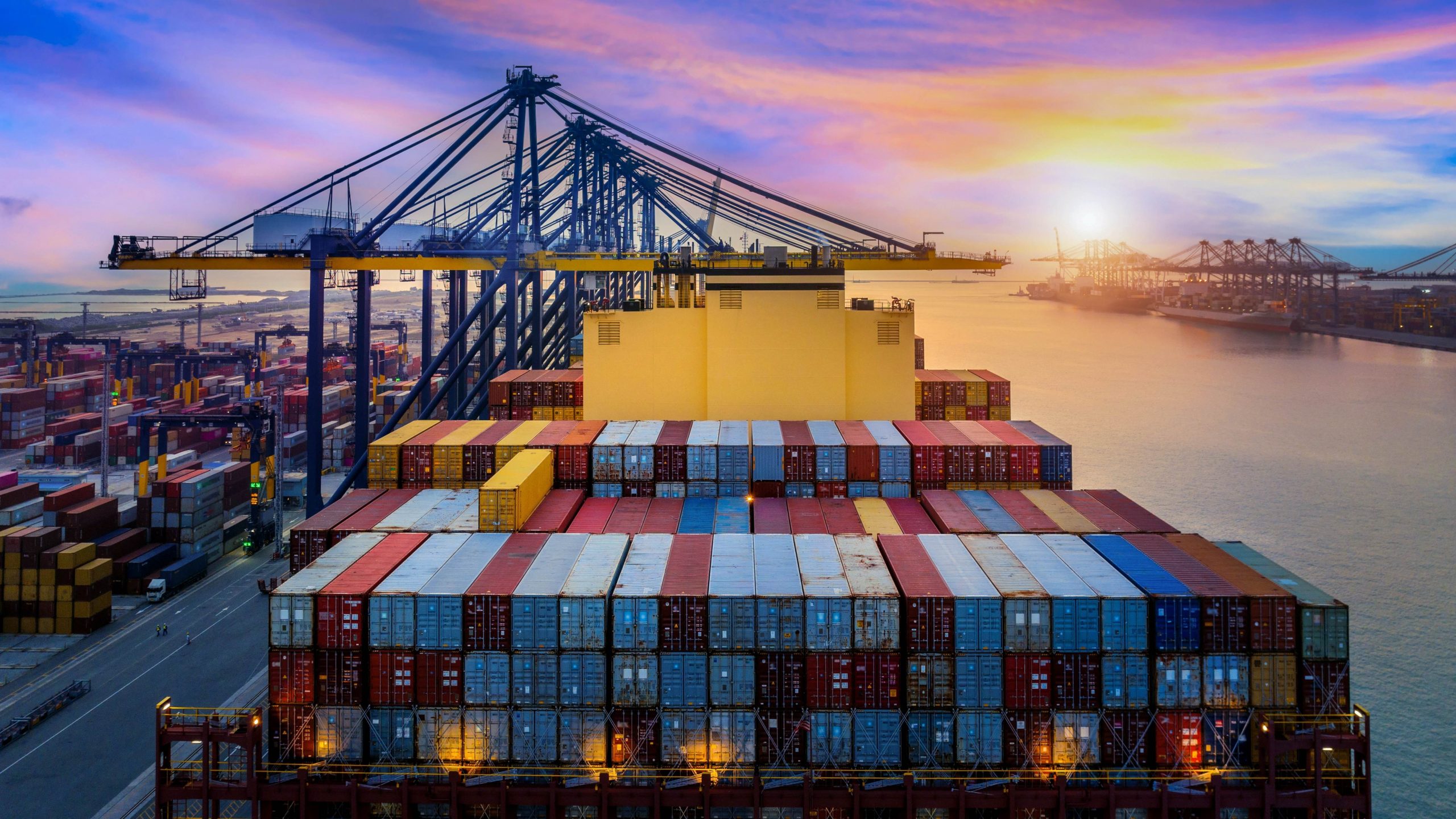
It’s clear that traders can turn a profit by borrowing in US dollars and lending or investing in renminbi. However, as capital controls are in operation in China and currency trading is tightly controlled, this currency carry trade cannot be done in financial markets. But while currency trading is restricted, trade of goods is less so. This leaves open the possibility to conduct what the authors call “currency carry trade by trucks”, where goods are sold in one currency and paid for in another.

The potential appeal of this kind of currency carry trade is not specific to mainland China or Hong Kong.  It can apply to any country which has capital controls and free cross-border movement of goods.

But the China-Hong Kong trade is particularly attractive for both sides. Hong Kong’s currency is pegged to the US dollar, and its interest rate moves in tandem with the US dollar. For Chinese companies, an added attraction in trading with Hong Kong is the convenience and proximity of direct trade over land.

Round-trip Reimports

After scrutinizing trade data from China and Hong Kong, the authors concluded that that round-trip reimports are likely used to conduct currency carry trade across the border.

Reimports are the export and reimports of the same, sometimes slightly processed, goods. One country exports goods to a second country, and then reimports the same goods back from the second country.

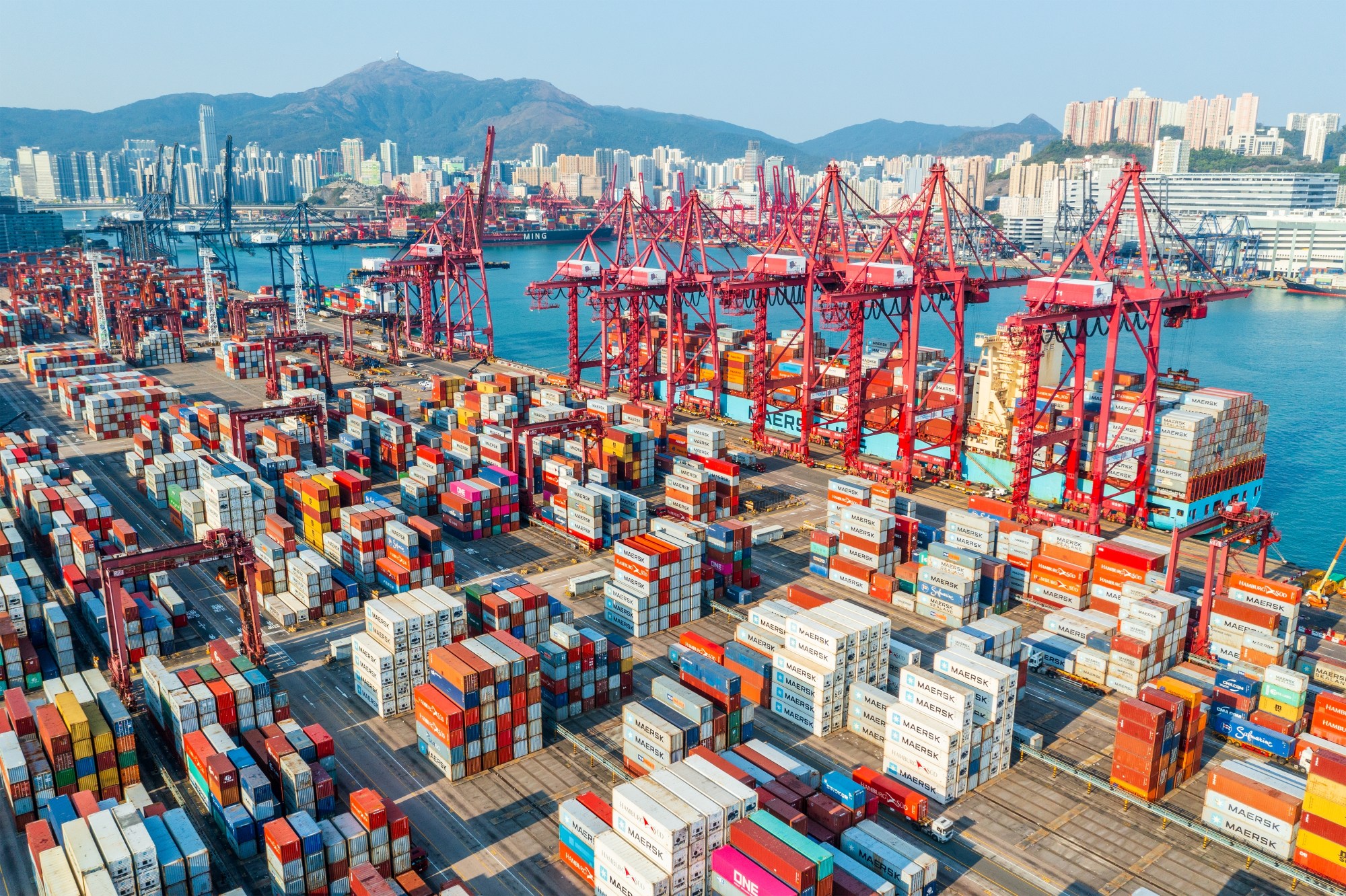
Reimports account for about 8 percent of China’s total imports, meaning that China itself is the fifth largest source of China’s imports. Reimports also account for almost 90 percent of China’s total imports from Hong Kong. Most of this trade is conducted overland, across the Hong Kong-Shenzhen border.

Reimports are a normal part of business for many Hong Kong companies. In recent decades, Hong Kong’s manufacturing has moved almost in its entirety to the mainland, due to space and cost constraints and the growth of Hong Kong’s service industry. Many companies open factories in neighbouring Guangdong province and keep a distribution centre in Hong Kong. The factories typically send the products to Hong Kong for sorting and labelling and the goods are then re-exported globally to locations around the world, including China.

In other cases, the goods are exported from China to Hong Kong before being reimported to China to allow companies to benefit from tax advantages such as exemptions from import duties or reductions in value added tax.

How it works

A company or agent in Hong Kong takes out a loan in Hong Kong dollars from a Hong Kong bank in order to buy goods from China.  The company pays a low interest rate for the loan. The goods are paid for and delivered to Hong Kong. The Chinese firm invests the payment received in a local financial or wealth management product that pays a higher rate of interest than the rate charged from the original loan in Hong Kong.

When the product matures, the Chinese firm reimports the goods from Hong Kong, and converts the total investment pay out from renminbi to Hong Kong dollars, often making a tidy profit.

This is the same path followed by the currency carry trade when it is conducted in financial markets: borrow US dollars at a low interest rate and invest the loan in renminbi at a higher interest rate.

Taxes on cross-border capital flows are a common way to stem these flows, but the taxes are not always fully enforceable.

It might be expected that countries with greater state control of the economy—such as China, through its state-owned enterprises—would see a lower incidence of the carry trade. In fact, the researchers found that the opposite was true: SOEs were more likely to conduct carry trade activities than other firms.


Tracking the trade

The Guangdong-Hong Kong route offers important advantages to the reimport trade. As well as proximity and the ease of sharing a border, China and Hong Kong benefit from the CEPA (Closer Economic Partnership Arrangement), which allows for zero tariffs on imports between the two places. This makes reimports via Hong Kong highly cost effective.

The new research found that most of the goods moved between Hong Kong and mainland China travel between Hong Kong and Shenzhen by truck, in some cases departing Shenzhen in the morning and returning with the same goods on board in the evening.

To discover the scale of the business, the researchers scrutinized trade data from China and Hong Kong. In particular, they looked at annual reimport data from China Customs with a focus on the weight of the goods in the transports. They reasoned that goods with a higher value-to-weight (V/W) ratio, such as mobile phone parts, semi-conductors, integrated circuits and small LCD panels, would be the most attractive to currency carry traders because they would be more profitable and also because they would incur lower transportation costs in both directions.

This proved to be the case. The average V/W in China’s reimports is US$8.14/kg compared to China’s overall imports which have a V/W of US$0.63/kg and exports with a V/W of US$0.95/kg.

The researchers write: “…using annual reimport data from China Customs, we find a strong correlation between China’s reimports and carry trade returns, especially for products with lower trade costs, as measured by higher values per kg (value/weight). We interpret this as evidence of currency carry trade…”

Over time, changes to capital controls, exchanges rates and interest rates may make the carry trade less lucrative and attractive. In the meantime, however, the effective bypassing of capital controls incurs a loss for China’s revenue coffers.

“The evidence of currency carry trade through fake goods trade shows that the effectiveness of China’s capital controls is compromised,” write the researchers. “This is a good example of how market forces can sneak in from the back door.”

About this Research

Xuepengj Liu, Heiwai Tang, Zhi Wang and Shang-Jin Wei (2023). Currency Carry Trade by Trucks: The Curious Case of China’s Massive Imports from Itself. Review of Finance 27(2):469–493
Read the original article

Translation

Long held assumptions about the mutually incremental relationship between quantities and discounts have been upended by new research. The rule of thumb that the bigger the purchase quantity, the higher the discount is shown not to hold true for medium-sized customers buying products such as semiconductors, with implications for other products and industries.


Pile them high and sell them cheap. Buy more, save more. These slogans, and the thinking that lies behind them, have been accepted principles of product sales and marketing for generation.


The logic seems indisputable from the points of view of both the seller and manufacturer and that of the buyers. If a seller or manufacturer makes a large number of identical items and a single customer wants to buy a large part of this total production, then that buyer will receive the goods at a cheaper price than a buyer who wishes to buy a much smaller amount of the same product. The accepted theory has been that the seller is eager to dispose of his stock as quickly and as easily as possible, and so a big customer will get a better deal. By the same logic, it follows that customers who buy progressively smaller amounts of the same product will receive progressively smaller discounts.


However, the underlying premise behind these assumptions – that the bigger the purchase, the bigger the discount – has now been shown to be valid for only part of the story. In a new study by Wei ZHANG, Sriram DASU and Reza AHMADI entitled “Higher Prices for Larger Quantities? Nonmonotonic Price-Quantity Relations in B2B Markets,” published in 2017 by the Institute for Operational Research and the Management Sciences in Maryland, USA, the first part of the established belief holds true: the biggest customers do receive the biggest discounts. These customers remain the most valuable to a seller or manufacturer as they account for the bulk of sales. They are therefore typically able to use their size and bandwidth to exert pressure successfully on the seller to get a large discount.


The research focused on investigating the impact of a buyer’s purchase quantity on the discount offered. In this case, the seller was a microprocessor company selling semi-conductors, which are a short-life cycle product. The company negotiates with each of its buyers to set a price for the product. The buyers are mainly large electronic consumer goods manufacturers. In line with established beliefs, the research showed that the discounts received by smaller customers increased in line with the quantities they purchased, and the smaller the quantity they purchased, the smaller the discount they received.


What is unexpected is the experience of medium sized buyers. According to established logic, these customers would be expected to receive bigger discounts on their purchase price than smaller buyers. But this is not the case. In fact, the researchers found that as the quantities bought increase, the discount decreases, and then increases again for the biggest quantities.


“Contrary to our intuition, larger quantities can actually lead to higher prices,” say ZHANG, DASU and AHMADI.Thus, while previous beliefs of a bigger purchase quantity meaning a bigger discount would have resulted in a curve heading steadily north-eastwards, the results of ZHANG, DASU and AHMADI’s studies is an N-shaped curve. This unexpected result is rooted in the importance of capacity to the seller and its impact on the price negotiation process, explain ZHANG, DASU and AHMADI.


To understand the importance of capacity in price setting requires a switch in focus from the buyer’s mind-set to that of the seller. The seller or manufacturer is not concerned solely with getting the best possible price for the product, they also place a value on capacity.


‘’Large buyers accelerate the selling process and small buyers are helpful in consuming the residual capacity,” write ZHANG and his team. “However, satisfying midsized buyers may be costly because supplying these buyers can make it difficult to utilise the remaining capacity, which may be too much for small buyers but not enough for large buyers. Therefore, midsized buyers are charged a “premium.”


To get the best price for all his products, the seller needs to avoid transactions of a medium size and instead plan his sales based on a rationing decision. The rationing decision depends on the remaining capacity level, purchase quantity, demand distribution and the buyer’s profit margin before subtracting the cost of this product. The calculation can be done by following a dynamic capacity rationing formula devised by the researchers. The formula is based on the need for the seller to find a balance between controlling the capacity allocated to each buyer while still offering a capacity range that is acceptable to the buyer.


Ultimately, ZHANG & Co, say, “The seller should reserve capacity for buyers who are willing to pay more.”


The pertinence of the research is clearly of most use to firms manufacturing or selling semi-conductors. This is a highly competitive industry with several unique features and is characterised in particular by fast changing technological developments. In the semi-conductor industry, manufacturing costs are high and lead times are long and these factors lead to inflexible capacities. It is common practice in the industry for sellers to allocate capacity to different product lines based on demand forecasts and to start work on the related production several months ahead of the planned delivery date. Customers arrive sequentially and differ mainly in the quantities of product they order. Although products have a set price, the actual price paid is typically agreed after a process of negotiation, with big buyers usually driving a hard bargain. Because of the nature of the business, negotiation on prices is inevitable, explain the researchers.


“Buyers know that the marginal production cost of microprocessors is low and that sellers are eager to discount prices to fully utilise their capacities. Moreover, buyers can allocate their business among competing sellers.”


But while buyers may have an advantage when it comes to price, sellers often have an advantage when it comes to selling and controlling capacity. Buyers are free to meet their needs by buying from different semiconductor suppliers, but they tend to decide on suppliers early on in the purchasing process. This is because the technical features offered by different suppliers vary, and once selected, these features will impact the design of the buyers’ products and will be difficult and costly to change. That means that buyers tend to keep to their chosen supplier.


The lessons that can be drawn from the study may also be useful to some degree to other businesses and products. Inflexible capacities are also a feature of many businesses in the tourism industry, for example, although the researchers note there are different characteristics and constraints involved – for example, hotel rooms do not go out of date in the same way that semiconductor products become obsolete. Hotel rooms, airline and coach seats are all fixed number items that the seller or owner needs to sell in quantities to his best advantage. The main customers in these industries include bulk buyers such as travel agencies and resellers who want to buy in large quantities but who also want to negotiate the best prices. As in the semi conductor business, the individually agreed deals are closely interconnected, with the price and quantity agreed for one buyer impacting the price and quantity to be agreed for the remaining buyers. The researchers recommend that sellers develop a price-quantity analysis model that can help them optimise their prices. As with semi-conductors, the key point for the seller is the need to control the quantity being sold to each buyer before negotiating the price.


“Basically, given that each transaction has an impact on subsequent transaction, a good model of the price-quantity relation is necessary for the optimisation of the trade-off between the profit from the current buyers and that of future buyers,” they explain.


Contributing Reporter: Liana Cafolla


Source: Wei Zhang, Sriram Dasu, Reza Ahmadi (2017). Higher Prices for Larger Quantities? Nonmonotonic Price–Quantity Relations in B2B Markets. Management Science 63(7): 2108-2126.


https://pubsonline.informs.org/doi/10.1287/mnsc.2016.2454