

Professor Heiwai Tang and Mr Cyrus Cheung
25 February 2026
Hong Kong is a highly developed economy with close to 94% of its gross domestic product (GDP) generated by the service sector. However, in the current service sector structure lies a “binary structure trap”. On the one hand, high-value-added services with scarce employment opportunities; on the other, mass-market sectors with relatively low value added (see Table). This reflects that Hong Kong needs to strengthen the development of high-value-added service industries capable of creating broad employment opportunities.
Table Overview of Hong Kong’s four pillar industries in 2024
| Value added per person (HK$) | Share in GDP | Share in total employment | |
| Financial services | 3.08 million | 26.2% | 7.2% |
| Trading and logistics | 1.06 million | 18.9% | 15.0% |
| Professional and producer services | 550,000 | 10.3% | 15.8% |
| Tourism | 540,000 | 2.8% | 4.3% |
Source: Census and Statistics Department, Hong Kong SAR Government
The financial sector: growth led by banking talent
Between 2000 and 2024, the financial sector stood out from the rest, with its share in Hong Kong’s GDP more than doubling from 12.8% to 26.2%, while its share in total employment edged up from 5.3% to 7.2%. In 2024, the financial sector’s value added per person reached $3.08 million, far higher than that of other sectors, giving rise to a small group of wealthy elites.
Across the sub-sectors, banking is consistently the main engine of growth. Between 2011 and 2024, its GDP share more than doubled from 9.3% to 18.9%. By contrast, its share in the overall employment remained broadly stable at around 2.6% to 2.7%, clearly showing that the banking boom has little connection with the employment market.
In comparison, in 2024, other financial services—including stockbroking, asset management, finance leasing companies, as well as investment and holding companies—accounted for 2.7% of overall employment, slightly higher than that of the banking sector at 2.6%. Yet their GDP share was only 3.9%, far below banking’s 18.9%, indicating a clear binary structure within the financial sector itself. As for the insurance sector, its share in total employment and GDP were 1.9% and 3.5% respectively.
Buoyed by foreign investors’ confidence in China’s technological development , as well as their expectation that consumption will emerge from deflation, Hong Kong’s financial sector remains promising. Looking ahead, Central will still be the premier meeting point for foreign capital and domestic-funded enterprises in the Mainland. Amid the wave of Mainland companies going global, the financial sector will continue to generate substantial value added for the local economy, bringing in considerable tax revenue. As a matter of fact, after several years of downward trend, the financial sector has been revived to its former glory. Between the end of 2023 and the end of 2025, the total market capitalization of Hong Kong stocks surged from $31 trillion to $47.4 trillion; the total equity funds raised skyrocketed from $156 billion to $644.4 billion, of which the initial public offering (IPO) proceeds surged from $46.3 billion to $285.8 billion.
Trading and logistics: caught in a growth impasse
Trading and logistics used to be the largest sector but its share in GDP fell from 28.5% in 2005 to 18.9% in 2024, while its share in total employment dropped from 24.4% to 15.0%. Part of the reason is the rise of e-commerce and the “China + 1” strategy undertaken by companies in response to geopolitical factors, which has weakened Hong Kong’s function as an entrepot. Nevertheless, this sector still ranks second in both GDP share and employment share.
Breaking the data down, between 2005 and 2024, the share of trading in GDP decreased from 23.4% to 15.3%, while its share in total employment fell from 18.6% to 10.4%. During the same period, the logistics industry, which is intricately tied to the trading sector, also showed a downward trend, with its GDP share declining from 5.1% to 3.6% and its share in total employment shrinking from 5.8% to 4.6%. With the development of digital trading platforms, intelligent warehousing systems, and high-value-added supply chain management, the trading and logistics sector is expected to shift from labour-intensive to capital- and technology-intensive, which may further put pressure on the labour market.
In terms of freight transport modes, excluding the COVID-19 pandemic period, in recent years, the shares of air and land transport have generally remained above 40%, while that of sea transport has continued to fall to below 10%. This reflects, on the one hand, the focus of Hong Kong on re-export of high-value added goods such as semiconductors, electronics, and biopharmaceuticals, and, on the other hand, the close economic and trade relations between Hong Kong and the Mainland.
For many years, Hong Kong International Airport has been ranked as the world’s busiest international cargo airport, with cargo throughput reaching 5.07 million tonnes in 2025. Leveraging its efficient air logistics network, Hong Kong is gradually transforming into a global distribution centre for key intermediate products and core technologies, further deepening its ties with advanced manufacturing and innovation-driven value chains.
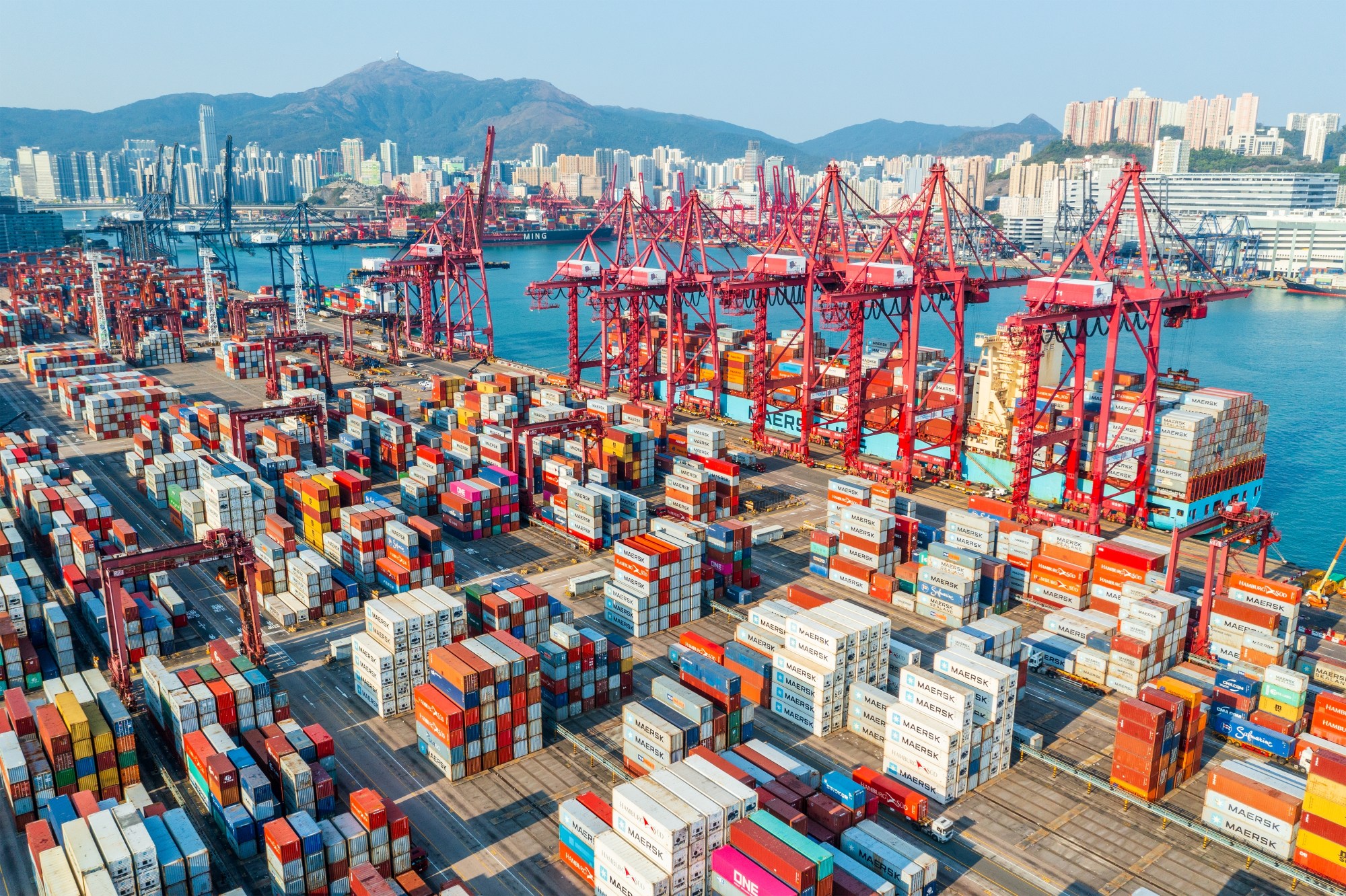
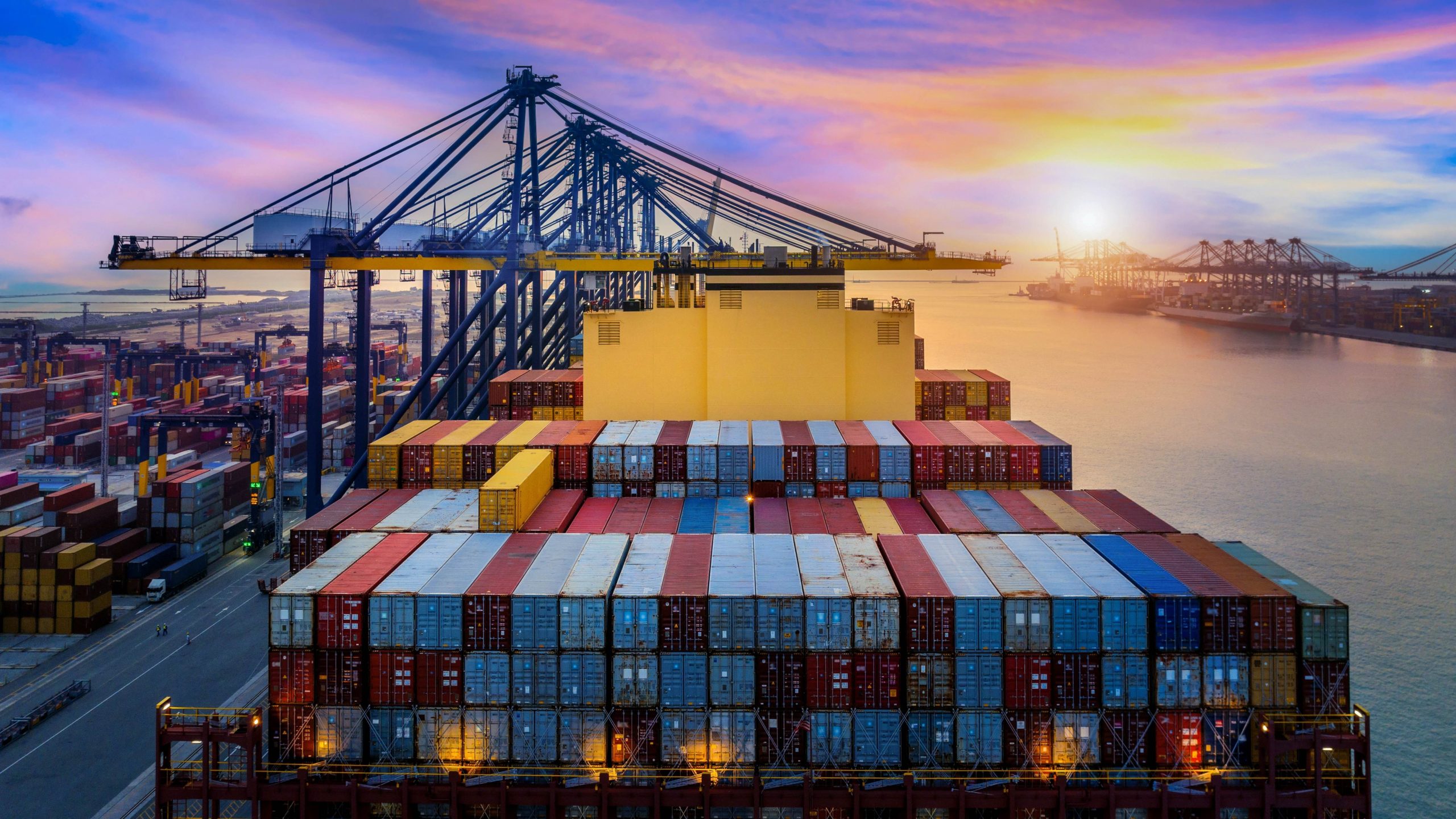
Judging from the data, the local maritime sector is clearly under pressure. The container throughput at the port of Hong Kong shrank from 20.07 million TEUs in 2015 to 12.91 million TEUs in 2025. According to the World Shipping Council, the SAR’s container throughput dived to 12th place globally in 2024. The reasons for this were, first, the city’s difficulty in maintaining its efficiency premium amid infrastructure upgrades and cost advantages in neighbouring port cities in recent years. The second reason is the effects of near-shoring and regionalization of supply chains. Notwithstanding these challenges, Hong Kong is actively seizing development opportunities in high-end maritime services such as maritime finance and shipping management.
Professional and producer services: confronting cut-throat competition and AI replacement
The professional and producer services sector showed a paradoxical divergence, with its GDP share declining from 12.5% in 2016 to 10.3% in 2024, but its share in overall employment rising from 14% to 15.8% over the same period. This suggests that the sector’s labour market may be trending towards “involution-style” competition.
Breaking this down, between 2000 and 2024, the GDP share of producer services (excluding professional services) dropped from 7.2% to 5.7%, while its share in total employment rose from 7.3% to 8.9%. The GDP share of professional services increased from 3.3% to 4.6%, while its share in total employment climbed from 3.9% to 6.9%.
As is well known, senior practitioners in professional services have always enjoyed generous compensation. The phenomenon that the sector’s share in overall employment is higher than its GDP share may reflect the fact that professional services involve a large number of junior positions responsible for standardized, repetitive work. Add to this the trends of “involution-style” competition plus artificial intelligence (AI) replacing white-collar work, and the vast ranks of junior practitioners may soon face a harsh winter.
Tourism: hopes for a full recovery
Given its marked economic spillover effects, tourism is often regarded as an important component of the economy. The golden era of Hong Kong’s tourism started with the introduction of the Individual Visit Scheme in 2003, allowing Mainland residents to visit Hong Kong on an individual basis. Visitor arrivals soared from 21.81 million in 2004 to a record high of 65.15 million in 2018, while total tourist consumption multiplied from $66.8 billion to $272.3 billion. However, this growth momentum came to an abrupt halt in 2019.
In the post-pandemic era, Hong Kong’s tourism industry has yet to fully recover. In 2024, tourism accounted for 4.3% in GDP and 2.8% in total employment, lower than the corresponding figures of 7.3% and 5% in 2013, when the sector was at its peak. Although visitor arrivals to Hong Kong rebounded to about 45.2 million (or approximately 70% of the peak level) in the same year, more than half were non-overnight visitors, whose in-destination consumption spending amounted to $27.9 billion, far less than that of overnight visitors at $120.5 billion. This phenomenon of “high headcount but low consumption” not only reveals a slow recovery in higher value-added long-haul travellers, but may also suggest that non-overnight visitor data includes cross-border commuters, a group that has emerged in recent years.
Looking ahead, as the SAR Government vigorously promotes the mega-events economy and infrastructure such as major local venues continues to improve, the community has high hopes that the local tourism industry will regain its past vitality. In 2025, visitor arrivals to Hong Kong rebounded to around 49.9 million, already showing clear signs of recovery.
Leveraging financial strengths to drive economic transformation
Looking back at Hong Kong’s economic development over the past 20-odd years, the city’s four pillar industries are clearly struggling to create a broad range of quality employment opportunities. Although the financial sector (banking in particular) has grown in leaps and bounds, making significant contributions to the local economy and tax revenue, it has brought about employment opportunities for only a small group of elites. The trading and logistics sector still makes important contributions to GDP and employment, but its development outlook is not encouraging. In addition, the professional and producer services sector has not only fallen into a predicament of “a declining share in GDP and a rising share in overall employment”, but is also facing the impact of AI replacing white-collar jobs. As for tourism, despite signs of recovery, shifting consumption patterns may make it difficult for the sector to return to its former peak.
There are various signs to suggest that Hong Kong urgently needs to develop a more inclusive model of economic development, so that the prosperity of its financial sector can drive productivity improvements across different industries. For example, the relative success of green finance should continue to help Hong Kong become an important engine of green economic transformation in the region. Going forward, efforts should continue to focus on exploring how the financial sector can support economic activities such as trade finance, digital trade, technology research and development, and intellectual property financing.
As a mature economy, Hong Kong also needs to develop more high-value-added service industries. GDP growth is not necessarily the only measure of a happy society; the growth of new industries, which can create quality employment opportunities, also deserves attention. The key to achieving the third economic transformation and inclusive growth for Hong Kong in the next decade hinges on the future success of the innovation and technology industry. Its significance lies not only in the “prosperity” generated by GDP growth, but also in the “stability” of society’s overall sense of well-being.