
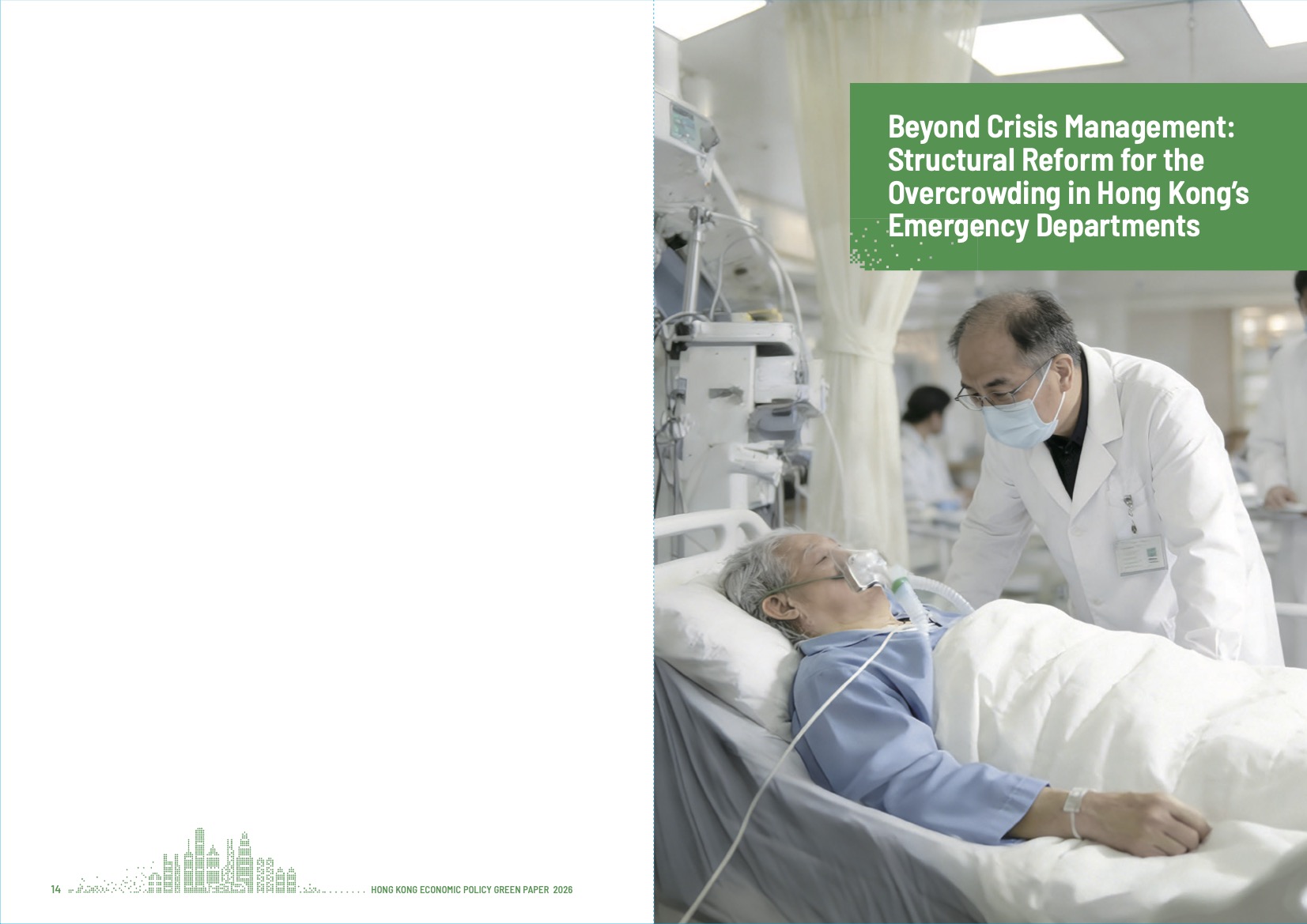
1. The Scale of the Crisis: A System at its Breaking Point
Hong Kong’s public emergency departments (EDs) are often operating beyond their breaking point. The system is strained by a relentless and growing demand that is exacerbated by a profound demographic shift. In the 2023-24 period alone, the Hospital Authority’s 18 public EDs managed over 2.14 million attendances, which translates to approximately 5,900 visits every day. Each of the four major hospitals (Queen Mary, Queen Elizabeth, Prince of Wales, and Tuen Mun) regularly process 400-500 patients daily during peak periods, operating at 150-200% of their designed capacity.
Figure 1. Emergency Department Attendance Trends and Population Ageing (2014-2046). The blue line shows total annual ED attendances at Hospital Authority facilities, demonstrating structural demand despite the COVID-19 pandemic disruption (gray shaded area, 2019-2022). ED attendances recovered to 2.14 million by 2023-24, approaching pre-pandemic levels. The solid orange line shows Hong Kong’s rapidly ageing population, and the dashed line represents data from projections. Source: Hospital Authority annual reports and Hong Kong Census and Statistics Department population projections.

This overwhelming volume is not a temporary surge; it is a structural crisis accelerated by Hong Kong’s rapid ageing (Yip et al., 2015). The proportion of the population aged 65 and above reached 22.8% in 2024 and is on a clear trajectory to exceed 30% by 2036. This demographic is not just a number; it represents a fundamental shift in healthcare needs. Elderly patients are disproportionately represented in higher-acuity triage categories and present with more complex, multi-morbidity conditions, leading to extended lengths of stay and the consumption of more resources.
This relentless operational pressure has created a parallel, and equally urgent, human resource crisis. The staff, the system’s most critical asset, are being stretched to their limits. A 2022 survey of Hong Kong emergency medicine physicians and nurses found that an alarming 82.2% reported symptoms of burnout in at least one domain (Chan et al., 2024). This is not a sustainable footing for a service that depends on a highly-skilled, alert, and resilient workforce.
2. The Core Problem: A Structural Mismatch of Demand
While chronic crowding is the most visible symptom, it is not the root diagnosis. The core problem is a structural mismatch between fluctuating patient demand and available service capacity. Hong Kong’s EDs are designed and staffed for emergencies, but they are increasingly being used for everything else.
This is the “Acuity Paradox” of Hong Kong’s public healthcare system. Despite the intense needs of the elderly and critically ill, the overwhelming majority of ED attendances are for non-emergency conditions. Data from 2023 illustrates this starkly that only 1.8% of patients fell into Category 1 (Critical) and 7.6% of patients in Category 2 (Emergency). This means the remaining 90.6% of all patients fell into Categories 3 (Urgent), 4 (Semi-urgent), and 5 (Non-urgent). This distribution creates a fundamental operational conflict.
Approximately 69% of attendances occur between 8am and 8pm, with weekends and Mondays showing consistently higher volumes than midweek days: these patterns are more consistent with primary care access issues than genuine emergency demand. The system’s resources are consumed by conditions that, while deeply concerning to the patients, do not require emergency-level intervention. Instead, they can be appropriately managed in a primary care setting, if this was accessible, affordable, and available.
The pricing structure reveals the problem: a visit to the public ED costs HK$180 including all investigations and medications, while private GP consultations typically cost HK$200-500 with additional charges for tests and drugs. Combined with the long waiting times at the public hospital specialist outpatient system for non-urgent conditions, patients face strong incentives to use EDs as their primary access point to comprehensive, affordable and faster medical assessment.
This points to the system’s failure to provide alternatives. The result is a system where everyone suffers: the critically ill wait longer while staff are allocated to manage the less urgent, and the staff become demoralized and burnt out from being unable to provide the right care at the right time. A 2022 physician survey found that 55.6% reported admitting or discharging patients just to manage ED volume at least a few times per week, and 43.2% acknowledged not fully discussing treatment options or answering patients’ questions. These provide direct evidence of how system constraints are forcing staff to compromise on care, in turn creating potential trouble down the road for the clinicians who made such decisions.
3. Charting a Path Forward: Comprehensive Strategies for Demand Management and Supply Expansion
The data paints a clear picture: Hong Kong’s emergency care system is trapped in a structural imbalance, struggling with demand it was never designed to meet. Solving this crisis requires more than good intentions or incremental adjustments. Given the fundamental mismatch between what EDs were built for and what they’re actually made to do, a sustainable solution needs a multi-faceted approach. We can’t simply build more capacity and hope the problem resolves itself. We need to manage existing resources more intelligently while addressing the root causes driving non-urgent patients to EDs in the first place.
This paper explores three key strategies that together could reshape Hong Kong’s emergency care landscape. First, we’ll examine how EDs can work more effectively from within, drawing from our published research on wait time information systems. Our simulation study demonstrated how strategic use of information can influence patient flow and reduce overcrowding—showing that sometimes the most powerful interventions come from working smarter, not just harder (Zou et al., 2024).
Second, we’ll propose evaluating fee adjustments as a way to rebalance demand patterns. This isn’t about punishing patients or creating barriers to care. It’s about creating economic incentives that gently guide people toward the right care in the right setting, while ensuring those with genuine emergencies face no obstacles.
Finally, we’ll explore how artificial intelligence could become a crucial ally in addressing both performance gaps and the staff shortage crisis. AI isn’t a replacement for skilled emergency physicians and nurses. It’s a tool to support them, reduce their burden, and help them focus on what they do best.
These three strategies aren’t isolated fixes. They’re complementary pieces of a larger reform that Hong Kong’s emergency system desperately needs. Together, they offer a realistic path toward a system that works better for patients and the dedicated professionals trying to care for them.
3.1 Effective Management: Using Information Systems Wisely
Given the system’s severe constraints, particularly finite budgets and a workforce at its breaking point, the most immediate and high-impact interventions must come from improving operational efficiency. The key is not simply to adopt new technology, but to use it wisely. Our research provides critical insights in this area.
Many hospital systems, including Hong Kong’s, have implemented patient wait time information systems to manage patient expectations and redistribute demand. The logic seems straightforward: if non-urgent patients see a long wait, they may choose an alternative ED. However, our simulation study, calibrated with data from three metropolitan EDs in Hong Kong representing 317,519 visits in 2019, reveals that this is a dangerous oversimplification. The effectiveness of these systems is entirely dependent on their prediction accuracy and update frequency, and when these factors aren’t right, the systems can make things worse.
Our research demonstrates a critical paradox: while accurate information consistently improves system performance, inaccurate information can make congestion worse than providing no information at all. When wait time announcements are based on simple historical averages (like the rolling average method used in numerous US systems) or the 95th percentile approach currently deployed across Hong Kong’s 18 public hospitals, they fail to capture the real-time volatility of an ED. This inaccurate information actively misleads patients. If enough patients follow this flawed guidance, it worsens crowding by creating self-fulfilling prophecies, driving patient surges to hospitals that are, by then, already overwhelmed.
The numbers tell a troubling story. In our simulations, when inaccurate prediction methods like the 95th percentile were combined with high patient adoption rates, average wait times increased by 96% compared to having no information system at all. These methods exhibited U-shaped performance curves, initially helpful at low adoption rates but dramatically harmful when widely used. The left-without-being-seen rate similarly worsened under these conditions, meaning more patients abandoned care entirely because they were misdirected to already-congested facilities.
Figure 2: Performance of Wait Time Prediction Methods Across Patient Adoption Rates. Simulation results show that inaccurate prediction methods (95P – Hong Kong’s previous approach, RA – Rolling Average) exhibit U-shaped performance curves, initially helpful at low adoption but harmful at high adoption rates. Accurate methods (LR – Linear Regression, NN – Neural Network) show consistent improvements. This demonstrates that poorly designed information systems can worsen the problems they aim to solve.

Conversely, our study shows that when wait time predictions are highly accurate (using methods like linear regression or neural networks) and updated frequently, they become a powerful tool for load balancing. Machine learning approaches with moderate accuracy enabled substantial improvements across all patient adoption levels, achieving up to 29% reductions in average wait times when widely adopted, along with a 42% reduction in wait time variability and a 39% drop in patients leaving without being seen. These methods successfully redistributed patient load across the ED network, with the most congested facility seeing a 39% reduction in average wait time and a 52% reduction in patients leaving without care.
Update frequency matters, but less than you might think once you reach reasonable accuracy. Our analysis reveals diminishing returns for increasing update frequency. For accurate prediction methods, 5-minute update intervals achieved performance nearly identical to real-time updates, with less than 2% deviation in key metrics across all levels of patient adoption. Even 15-minute intervals maintained substantial benefits. This finding is operationally significant: healthcare systems don’t need to invest in complex real-time infrastructure if they can achieve reasonable prediction accuracy with moderate update frequencies.
This forms the foundation for a true decision support system. Such a system can help streamline patient flow by guiding patients toward less congested facilities when they have genuine choices. It can optimize capacity arrangements based on accurate surge predictions, allowing administrators to reallocate staff proactively rather than reactively. And it can guide patients to the most appropriate care setting, reducing the burden on EDs serving patients who don’t require emergency-level care.
The practical implications are immediate and serious. Many systems currently deployed, including Hong Kong’s own 95th percentile approach and the rolling averages used across numerous international healthcare systems, fall into the “problematic” category that our research identified. When patient adoption is high, these systems are likely to increase congestion, though administrators may not recognize this effect because the relationship isn’t obvious without careful analysis. Healthcare systems should establish accuracy validation before deploying or promoting wait time information systems. Our results suggest that systems failing to achieve reasonable prediction accuracy should not be promoted for widespread patient use. Doing so risks making overcrowding worse while creating the illusion of progress.
Figure 3. Displayed waiting time information before and after changes on HA website and APP. The left panel shows the previous system (before October 2024) which displayed only a single reference waiting time estimate based on the 95th percentile of historical data, aggregated across all triage categories. The right panel shows the updated system which provides stratified information by triage category (I through IV & V), displaying both median (50th percentile) and 95th percentile waiting times for each urgency level.

Following our research findings and suggestions, Hong Kong’s emergency department waiting time system has recently been updated to display both 50th percentile (median) and 95th percentile information, with separate estimations for different urgency levels. This represents a significant shift from the previous approach of showing only the 95th percentile. By providing both median and upper-bound estimates stratified by triage category, the system provides patients with more nuanced information that better reflects the range of possible wait times they might experience based on their condition’s urgency. We believe this dual-metric approach could offer better load balancing across the hospital network by giving patients a more realistic picture of what to expect, potentially reducing the misdirection problem we identified in our simulations. However, further study using actual patient flow data following this implementation will be essential to validate whether these changes achieve the intended improvements in practice.
The potential for decision analytics extends far beyond wait time prediction systems. This same framework of data-driven optimization can be applied across multiple operational domains within emergency departments. Physician scheduling and rostering problems, for instance, could benefit from predictive models that anticipate surge patterns and match staffing levels to expected demand, reducing both idle time and dangerous understaffing periods. Patient flow analysis tools could identify bottlenecks in diagnostic pathways or treatment protocols, revealing where small process changes yield disproportionate improvements. Resource allocation policies governing everything from examination room assignments to portable equipment distribution could be optimized using real-time operational data rather than historical rules of thumb. Each of these applications shares a common thread: they leverage existing data and computational tools to extract greater efficiency from constrained resources. In a system where budget limitations and workforce shortages make capacity expansion difficult, these incremental efficiency gains compound into meaningful improvements in patient outcomes and staff wellbeing. The question is not whether Hong Kong’s EDs can afford to invest in these analytical capabilities, but whether they can afford not to.
3.2. Fee Adjustment: A Necessary but Insufficient Intervention
Improving ED efficiency is a critical supply-side fix, but it does not address the fundamental demand-side problem. In January 2026, the Hospital Authority will implement its first fee adjustment since 2017, a reform aimed at addressing the fundamental demand-supply mismatch that plagues Hong Kong’s ED s. The intent behind this reform is sound and necessary. By raising ED fees from HK$180 to HK$400 (while exempting Categories 1 and 2 patients with critical and emergency conditions), the policy seeks to redirect non-urgent patients toward more appropriate care settings. The reform also includes enhanced protections: an expanded medical fee waiver mechanism covering over 1.4 million people, an annual spending cap of HK$10,000 on public healthcare services, and relaxed eligibility criteria for the Samaritan Fund safety net. These measures acknowledge that financial barriers should not prevent those who genuinely need emergency care from accessing it.
Table 1 Hong Kong Public Healthcare Fee Reform Major Changes (2026).

Source: HA website
However, the reform’s success hinges on assumptions about patient behavior that deserve careful scrutiny, particularly regarding how different population segments will respond to the same price signal. The underlying theory is straightforward: higher ED fees will discourage patients with minor ailments from seeking emergency care, thereby reducing the 90.6% of visits currently classified as semi-urgent or non-urgent. Yet this theory overlooks the reality that price sensitivity varies dramatically across patient populations, creating potential equity concerns that may undermine the reform’s effectiveness.
The first critical issue is the differential impact on patients who fall into what we might call the “coverage gap”: those whose incomes exceed the fee waiver eligibility threshold but who remain highly sensitive to out-of-pocket healthcare costs. While over 1.4 million people qualify for enhanced protections under the expanded waiver mechanism, Hong Kong is home to millions more who earn modest incomes who won’t qualify for assistance (Zhang et al., 2025). For a family of four with a monthly household income just above the waiver threshold, a HK$400 emergency department fee represents a meaningful expense, particularly when multiplied across several family members over time. These are often the same families already struggling with rising housing costs, education expenses, and other financial pressures. This creates an equity paradox. The fee increase is meant to deter inappropriate utilization, but its deterrent effect will be felt most strongly by price-sensitive populations who may not always be those making inappropriate visits. Consider an elderly patient with multiple chronic conditions who experiences new symptoms. If they have modest savings that disqualify them from fee waivers but live on a fixed pension, the HK$400 charge may influence their decision to seek evaluation. They face genuine uncertainty about whether their symptoms represent a serious deterioration requiring emergency care or a minor issue that could wait. Unlike wealthier patients who can afford to “err on the side of caution” and visit the ED regardless of cost, this price-sensitive patient must weigh financial considerations against health risks. The result is that the fee structure may inadvertently create a two-tiered decision-making process: affluent patients who continue to use EDs based purely on medical judgment, while lower-middle-income patients who factor cost into their care-seeking decisions in ways that could delay necessary treatment. Similarly, working-class families with young children present another vulnerable group. A parent dealing with a child’s high fever at 9pm faces limited options. They could wait until morning and take the child to a general outpatient clinic for HK$50, gambling that the condition isn’t serious. They could visit a private doctor charging HK$300-500 plus additional costs for tests and medications. Or they could go to the ED for HK$400, where comprehensive evaluation is included. For families already operating on tight budgets, this decision becomes fraught with financial anxiety layered atop genuine concern for their child’s wellbeing. Wealthier families, by contrast, might visit the ED without hesitation, absorb the HK$400 cost, and proceed with their lives. The same price point thus functions as a meaningful barrier for some while representing a negligible consideration for others.
The fee structure’s reliance on post-arrival triage classification creates additional inequities. Patients only learn their triage category after arriving at the emergency department and being assessed by medical professionals. Category 1 and 2 patients pay nothing; Category 3, 4, and 5 patients pay HK$400. For price-insensitive patients, this uncertainty poses no deterrent. They will seek care when concerned, confident they can afford whatever fee applies. But for price-sensitive patients, particularly those who have previously visited emergency departments for symptoms that turned out to be non-urgent, this uncertainty becomes a psychological burden. They may remember being triaged as Category 4 for what they considered serious symptoms, learning afterward that their concern was medically unfounded. The next time they experience worrying symptoms, they face a dilemma: Is this serious enough to justify a potential HK$400 charge? The inability to know in advance creates a chilling effect specifically for those who cannot easily absorb the cost, even when their symptoms may ultimately warrant emergency evaluation.
The reform also assumes that affordable alternatives exist for patients diverted from EDs. In reality, the options are limited and increasingly expensive. Family medicine outpatient services through the Hospital Authority now charge HK$150 per visit (up from HK$135), with General Outpatient Clinics charging HK$50. But these services operate on limited hours and require advance booking, making them unsuitable for acute symptoms that develop outside business hours. Private general practitioners typically charge HK$200 to HK$500 per consultation, with additional fees for diagnostic tests and medications that are bundled into the HK$400 emergency department charge. For price-sensitive working families dealing with acute symptoms at 8pm on a weekday, the emergency department remains the most accessible option despite the higher fee, because the alternatives simply aren’t available when they’re needed. Wealthier patients, meanwhile, can more easily afford private urgent care or even retain family doctors who provide after-hours access, creating a divergence in care pathways driven by ability to pay rather than medical need.
A further complication that deserves attention is the potential ripple effect of public sector fee increases on private healthcare pricing. When the Hospital Authority raises emergency department fees from HK$180 to HK$400, private clinics and care providers may view this as a signal to adjust their pricing upward. From a market perspective, if the public “competitor” has raised prices substantially, private providers face reduced pressure to keep their fees competitive. A private general practitioner currently charging HK$300 for an evening consultation might feel justified raising fees to HK$400 or HK$450, reasoning that patients now face comparable costs in the public ED. Similarly, private urgent care centers that previously positioned themselves as premium alternatives to public EDs at HK$500-600 might increase to HK$700-800, maintaining their price premium relative to the new public baseline. This cascading price effect would be particularly damaging to price-sensitive patients in the coverage gap: those who don’t qualify for public fee waivers but who relied on moderately-priced private alternatives for after-hours care. If both public and private fees rise in tandem, these patients find themselves squeezed from both sides, with fewer affordable options for acute care outside regular clinic hours. The reform’s architects may have assumed that higher public fees would drive some patients toward private alternatives, creating competitive pressure to keep private fees stable. But market dynamics in healthcare rarely work so simply, especially in a system where public and private sectors serve somewhat different patient populations with different price sensitivities. Without monitoring and potentially regulating private sector pricing responses to public fee reforms, the intended rebalancing of demand across sectors could instead result in across-the-board price increases that harm precisely the vulnerable middle-income populations the reform’s protections were meant to shield.
There are also legitimate concerns about differential health outcomes across socioeconomic groups under this fee structure. International evidence on emergency department cost-sharing reveals a troubling pattern: while higher fees do reduce overall utilisation, they reduce both appropriate and inappropriate visits, with the reduction concentrated among price-sensitive populations (Selby et al., 1996). The new cost mechanisms may disproportionately affect low-income and chronically-ill patients, leading to delayed care for serious conditions, resulting in worse health outcomes and, paradoxically, higher total healthcare costs when patients eventually require more intensive treatment. A price-sensitive patient who delays seeking care for what they hope is a minor infection, only to possibly develop sepsis requiring ICU admission, generates far greater costs to the system than if they had been evaluated and treated early in an ED.
The fee adjustment must therefore be understood not as a standalone solution, but as one component of a broader restructuring of Hong Kong’s entire healthcare delivery system. For this reform to achieve its intended goals without exacerbating health inequities, several critical considerations must be addressed.
First, the public must have genuine access to alternative care pathways that can accommodate acute but non-emergency needs outside of regular business hours, with pricing structures accessible to price-sensitive populations. This requires a substantial expansion of after-hours primary care services. The Government’s recent establishment of District Health Centres is a step in the right direction, but their limited operating hours and service scope do not yet provide a true alternative to EDs for patients experiencing acute symptoms in the evenings or on weekends. A network of extended-hours urgent care centers, positioned between EDs and traditional primary care, could absorb much of the semi-urgent demand currently overwhelming EDs. These facilities could operate with lower overhead costs than full EDs while still providing immediate assessment and treatment for conditions like minor injuries, simple infections, and exacerbations of chronic diseases. Critically, these urgent care centres should maintain fee structures significantly below the HK$400 emergency department charge to provide a genuine financial incentive for appropriate utilisation.
Second, and perhaps more importantly, the Hospital Authority and Health Bureau must establish robust systems for monitoring the real-world effects of these fee changes as they unfold, with particular attention to differential impacts across socioeconomic groups. This is not a policy that can be implemented and assumed to work as intended. The reform creates opportunities for rigorous evaluation using the Hospital Authority’s extensive administrative data. Comprehensive, data-driven research needs to be conducted to understand the true impact of this fee reform on patient behaviour, health outcomes, and system efficiency across different population segments. Such evaluation should examine several critical dimensions. First, how do ED utilization patterns change after the fee increase across different patient populations? Second, what happens to health outcomes, particularly whether we see increases in complications from delayed care concentrated among vulnerable groups? Third, what are the downstream effects on other parts of the healthcare system. Can primary care services absorb diverted demand, and do waiting times increase in ways that disproportionately affect price-sensitive patients? Fourth, are the enhanced protections (fee waivers, spending caps, and Samaritan Fund expansions) actually reaching their intended beneficiaries, or do administrative barriers prevent uptake?
Critically, monitoring must extend beyond the public sector to track pricing responses in private healthcare following the public fee reform, examining whether private fees increase in tandem and how such increases affect access to care for middle-income families who fall in the coverage gap. Without such monitoring, the reform’s intended rebalancing of demand across public and private sectors could instead result in across-the-board price increases that harm precisely the populations the reform’s protections were meant to shield.
The Hospital Authority’s commitment that all additional revenue from fee adjustments will support medical services, particularly for critically-ill patients requiring expensive treatments, is laudable. This promise need to be made transparent and verifiable through public reporting. With this accountability, the reform would be perceived by the public as a genuine restructuring of healthcare delivery rather than a revenue-raising exercise.
The fee adjustment is a necessary intervention in a system where the current pricing structure has created unsustainable distortions in demand. But it is not sufficient on its own, and its impact will vary dramatically across different patient populations. Unless accompanied by genuine expansion of alternative care pathways accessible to price-sensitive populations, proactive outreach to ensure vulnerable groups access available protections, careful monitoring of differential impacts across socioeconomic groups and private sector pricing responses, and willingness to adjust course based on evidence, the reform may simply shift the crisis from overcrowded EDs to inequitable access. This could delay treatment for vulnerable populations, and worsen health outcomes among those least able to afford the consequences.
The principle that no person should be denied adequate medical treatment through lack of means must remain central not just in policy statements, but in operational reality. And that reality can only be verified through rigorous, ongoing evaluation of how this reform actually affects the different groups of people it is meant to serve. Such evidence-based assessment will be essential to ensure that the fee adjustment achieves its efficiency goals without sacrificing the equity that has long been the foundation of Hong Kong’s public healthcare system.
3.3. Artificial Intelligence and Digital Health: Technology as an Enabler of System Reform
The global healthcare sector stands at the threshold of what many describe as an artificial intelligence revolution. From diagnostic algorithms that can detect cancers in medical images with accuracy rivaling specialist radiologists, to predictive models that identify patients at risk of clinical deterioration hours before traditional warning signs emerge, to large language models that can synthesize medical literature and assist in clinical decision-making, AI applications in healthcare have proliferated at remarkable speed. Major healthcare systems worldwide, from the United Kingdom’s National Health Service to Singapore’s integrated health networks to leading American academic medical centers, are investing billions in AI infrastructure, betting that these technologies will address the twin challenges that plague modern healthcare: rising demand and constrained resources. Figure 4 illustrates an overview of how AI applications can address bottlenecks across the entire care continuum, from pre-hospital access through post-discharge follow-up.
Figure 4. AI Applications Across the Healthcare Delivery Spectrum.
AI technologies can address specific bottlenecks at each stage of the patient journey, from pre-hospital triage and telemedicine through ED resource optimization, clinical decision support, and post-discharge monitoring.

For Hong Kong, grappling with ED overcrowding, workforce shortages, and an aging population placing unprecedented strain on public healthcare services, the promise of AI is particularly compelling. If algorithms can triage patients more efficiently, if virtual assistants can handle routine inquiries that currently consume nursing time, if telemedicine platforms powered by AI can provide accessible alternatives to ED visits, then perhaps technology offers a path toward sustainability that doesn’t require either massive workforce expansion or politically fraught service rationing. This optimism is not entirely misplaced as AI does offer genuine capabilities that could meaningfully improve healthcare delivery. But the gap between technological potential and operational reality in complex healthcare systems is substantial, and Hong Kong’s specific context presents both opportunities and obstacles that demand careful consideration.
AI-Augmented Workforce: Addressing the Shortage Through Technology
The workforce crisis, including thousands of nursing vacancies, physicians stretched beyond sustainable workloads, recruitment failing to keep pace with demand, creates an obvious case for AI as a workforce multiplier. Clinical documentation automation offers one of the most immediate opportunities. Physicians and nurses spend 30-40% of their working time on documentation (De Groot et al., 2022; Joukes et al., 2018). Natural language processing systems can now transcribe and structure clinical conversations, automatically generating documentation from physician-patient interactions. Deployed in EDs, such systems could reduce the time physicians spend at computer terminals and increase time available for direct patient care, effectively increasing capacity without hiring additional staff. Virtual nursing assistants and AI chatbots represent another application aimed at reducing demand on human healthcare workers. Rather than nurses spending time answering routine patient questions about visiting hours, medication schedules, or post-discharge instructions, AI-powered virtual assistants could handle these information-provision tasks, allowing nurses to focus on clinical assessment and complex care. Some hospitals internationally have deployed “AI nurses” that conduct routine patient check-ins and escalate to human nurses only when responses indicate problems requiring intervention.
AI-powered clinical decision support represents another workforce augmentation opportunity. ED physicians managing high patient volumes under time pressure could benefit from AI systems that synthesize patient data, flag potential diagnoses, suggest appropriate diagnostic workups, and identify treatment options. Such systems function as cognitive assistants, helping clinicians avoid oversights and consider alternatives they might not immediately recognize. International examples include AI tools that recommend optimal antibiotic selection based on patient factors and local resistance patterns, or algorithms that identify patients with chest pain who are safe for early discharge versus those requiring extended observation.
Yet several limitations constrain this potential. Current AI chatbots cannot reliably handle the full range of patient questions and concerns that arise in hospital settings. They excel at retrieving standardized information but struggle with nuanced clinical questions requiring judgment. Moreover, nursing work involves not just information provision but emotional support, reassurance, and the ability to detect subtle changes in patient condition through observation—dimensions of care that resist automation. In Hong Kong’s context, where significant portions of the patient population are elderly and may have limited comfort with technology, virtual nursing assistants might serve some patients well while creating additional barriers for others, potentially exacerbating rather than reducing disparities in care quality.
AI-Enhanced Demand Management
Section 3.2 outlined how fee increases alone cannot resolve ED overcrowding without expanding accessible alternatives where diverted patients can receive appropriate care. AI-powered telemedicine and self-triage tools could provide precisely such alternatives, offering convenient, affordable access to assessment and advice for patients with non-urgent concerns who currently default to emergency departments.
Telemedicine platforms enhanced with AI capabilities could function as a first line of virtual care, accessible 24/7 via smartphone or computer. AI-powered triage chatbots could conduct initial symptom assessment, gathering information about patient complaints through natural language conversation. For straightforward cases, the AI might provide self-care recommendations. For more concerning presentations, the AI would immediately connect the patient to a physician or nurse for virtual consultation. For clearly emergent conditions, the AI would direct patients to immediately proceed to the nearest ED. International examples demonstrate this model’s potential. The United Kingdom’s NHS has deployed AI-powered symptom checkers and telemedicine platforms that handle millions of consultations annually, successfully diverting low-acuity patients from emergency departments. Singapore’s HealthHub app integrates AI-powered health advice with telemedicine, appointment booking, and medical record access, creating a comprehensive digital front door to the healthcare system.
For Hong Kong, deploying a similar public telemedicine platform could provide the affordable alternative care pathways essential to the fee reform’s success. A patient experiencing symptoms at 10pm on a Saturday could access a subsidized telemedicine service for, say, HK$100-150, rather than defaulting to the ED charging HK$400. However, realizing this potential requires confronting substantial implementation challenges.
First, Hong Kong’s regulatory environment for telemedicine remains ambiguous. Regulations don’t clearly address AI-enhanced triage or liability allocation when AI triage recommendations lead to adverse outcomes. Second, the effectiveness of AI triage tools depends critically on their accuracy and safety, domains where current evidence reveals concerning limitations. Multiple studies evaluating commercially available symptom checker applications have found highly variable performance, with some systems failing to identify serious conditions that should prompt emergency care while others over-triage minor complaints (Yu et al., 2020; Schmieding et al., 2022; Wallace et al., 2022). Third, equity considerations demand attention. Technology-based solutions risk exacerbating disparities if not designed inclusively. AI-powered telemedicine requires smartphone access, internet connectivity, and digital literacy, resources unevenly distributed across Hong Kong’s population. Elderly residents, low-income families, and recent immigrants may face barriers accessing digital health tools. Addressing these equity concerns requires ensuring telemedicine platforms function on basic smartphones, providing multilingual support, offering telephone-based access for users uncomfortable with applications, and subsidizing devices and internet access to underserved populations.
Hong Kong’s Readiness: Infrastructure, Data, and Governance Gaps
Beyond specific applications, Hong Kong’s readiness to leverage AI in healthcare depends on foundational infrastructure, data ecosystems, and governance frameworks that currently present significant gaps.
Hong Kong’s healthcare data landscape is characterized by profound fragmentation that the Hospital Authority manages data for public facilities while private hospitals and practices operate largely separate systems with minimal interoperability. For AI systems that depend on large, diverse datasets for training and validation, particularly algorithms designed to predict patient outcomes or optimize clinical decisions, this fragmentation creates a fundamental barrier. The problem extends beyond technical interoperability to the sensitivity of personal health data, raising profound privacy concerns about accessing comprehensive patient information across care settings. International healthcare systems that have deployed AI most successfully have confronted this challenge through clear legal frameworks, robust technical safeguards, and transparent governance. Hong Kong currently lacks this integrated infrastructure and accompanying governance framework. The Personal Data (Privacy) Ordinance provides general principles but lacks healthcare-specific provisions addressing the unique sensitivities of medical data. The first step toward successful AI deployment must therefore be creating this integrated data infrastructure as the foundation for both the sophistication of models that can be developed and the insights they can generate, requiring coordinated investment in Hospital Authority IT infrastructure, healthcare-specific amendments to privacy legislation, and establishment of a health data governance body to oversee access while maintaining public trust.
Regulatory frameworks present additional challenges beyond data governance. The deployment of AI in clinical decision-making raises questions that Hong Kong’s current medical device and healthcare regulations do not adequately address. When should an AI diagnostic algorithm be classified as a medical device requiring regulatory approval? What standards must it meet for validation before clinical deployment? How is liability allocated when an AI system recommends a treatment that possibly causes patient harm? These questions lack clear answers in Hong Kong’s current regulatory environment, creating risk aversion among healthcare administrators and clinicians hesitant to deploy AI tools without regulatory clarity.
Workforce readiness represents another dimension where gaps are evident and often underestimated. For AI to genuinely improve healthcare delivery rather than simply adding technological complexity, clinicians must understand how to use these tools effectively, interpreting AI recommendations in clinical context and knowing when to trust versus override algorithmic suggestions. This requires integrating AI literacy into medical and nursing education, designing curricula that incorporate clinical informatics, machine learning, or digital health. Existing healthcare workers need continuing education to develop competencies in working with AI systems. Without this human capital development, deploying sophisticated AI tools may simply add to workflow complexity rather than improving efficiency or outcomes, with clinicians spending more time questioning systems than they would have spent making decisions without algorithmic support, or developing alert fatigue where excessive AI-generated warnings lead to ignoring all alerts.
Addressing these infrastructural, regulatory, and workforce gaps requires substantial investment and sustained commitment. The revenue from fee increases discussed in Section 3.2 could strategically support this foundational development: upgrading Hospital Authority IT systems, establishing secure data infrastructure with robust privacy protections, developing regulatory frameworks, and implementing workforce training programs. These investments will not yield immediate relief for emergency department overcrowding, as building integrated data infrastructure takes years, developing regulatory frameworks requires extensive consultation, and training thousands of healthcare workers demands sustained effort. With proper foundations carefully constructed, AI could genuinely contribute to a more sustainable, efficient, and equitable healthcare system. But without these foundations, AI deployment in Hong Kong’s healthcare system will remain piecemeal and limited in impact.
4. Conclusion and Policy Recommendations
The chronic overcrowding in Hong Kong’s EDs is not an isolated operational problem but a symptom of deep structural imbalances in the healthcare system. It represents the logical outcome of a system where inappropriate demand has overwhelmed services designed for genuine emergencies, a problem accelerated by demographic aging, facilitated by perverse price incentives, and exacerbated by a healthcare workforce stretched beyond sustainable limits. The 2.14 million annual ED visits reveal a striking pattern: Category 1 (critical) and Category 2 (emergency) patients account for less than 10% of cases, while Category 4 (semi-urgent) and Category 5 (non-urgent) patients occupy more than 50% of emergency department capacity. This imbalance reflects rational patient behaviour within a system that makes EDs the most accessible, affordable, and convenient option for immediate medical attention. Patients are not abusing the system; they are responding predictably to the incentive structures and access barriers the system has created.
Resolving this crisis requires moving beyond reactive crisis management toward comprehensive structural reform that addresses both demand and supply simultaneously. On the demand side, this means implementing strategic fee reform that creates meaningful economic signals to discourage inappropriate emergency department use while carefully avoiding barriers to genuinely urgent care. The fee structure outlined in Section 3.2, maintaining free or minimal-cost access for truly emergent cases while charging HK$400 to 500 for non-urgent visits, provides one such framework, but its success depends absolutely on pairing price signals with expanded alternatives. Fee increases without accessible alternatives simply create access barriers and shift costs onto the most vulnerable. The Government must therefore simultaneously invest substantially in building out these alternatives: subsidized telemedicine platforms providing convenient 24/7 access to medical consultation; expanded general outpatient clinic capacity with extended hours and rapid appointment availability; and mobile primary care services reaching underserved communities. These investments represent essential complements to fee reform, not optional additions. Furthermore, intelligent decision support systems validated through rigorous research can guide patients toward appropriate care settings, but only if those appropriate settings exist and remain genuinely accessible.
On the supply side, addressing workforce constraints requires both immediate interventions and long-term capacity building. While initiatives like establishing a third medical school address physician supply in the 2030s and beyond, the current crisis demands more urgent action focused on the nursing shortage that often represents the true bottleneck in ED patient flow. This means competitive compensation to retain experienced nurses, streamlined foreign credential recognition to expand the talent pool, optimized skill-mix models that allow nurses to practice at the top of their licenses with administrative tasks delegated to support staff, and deployment of AI and automation technologies to reduce documentation burden and cognitive load. These technologies should be understood not as replacements for human healthcare workers but as force multipliers that allow constrained workforce capacity to serve more patients more effectively. However, realizing this potential requires the foundational investments in data infrastructure, regulatory clarity, and workforce training detailed in Section 3.3. Without these foundations, technology deployment risks adding complexity rather than delivering value.
The path forward requires integrated policy action across multiple domains, implemented with both decisiveness and adaptability. First, the government should implement tiered emergency department fees as outlined in Section 3.2, with careful exemptions for vulnerable populations and mechanisms to ensure fees do not deter genuinely urgent care. Revenue from these fees should be explicitly earmarked for expanding alternative care pathways rather than absorbed into general Hospital Authority budgets. Second, substantial public investment must immediately expand telemedicine infrastructure and primary care capacity, creating genuine alternatives before fee increases take full effect. Third, aggressive workforce initiatives should address the nursing shortage through enhanced compensation, streamlined recruitment, and retention programs, while beginning the longer term work of expanding medical education capacity. Fourth, strategic investment in AI infrastructure should focus on foundational elements: integrated data systems, regulatory frameworks, and workforce training, recognizing that technology can support but never replace the human judgment, compassion, and expertise that define excellent healthcare.
Critically, all these interventions must be implemented with robust evaluation frameworks that allow for evidence-based course correction. The fee reform should be introduced as a carefully monitored natural experiment with systematic data collection on ED utilization patterns, patient outcomes, equity impacts, and downstream effects on primary care and specialist services. Telemedicine and AI deployments similarly require rigorous evaluation of effectiveness, safety, and equity implications. Hong Kong’s policy culture too often implements initiatives without systematic evaluation, making evidence-based refinement impossible. Breaking this pattern represents an essential meta-reform that enables all other reforms to succeed.
The ED crisis has persisted for years, worsening incrementally as temporary measures and incremental adjustments failed to address root causes. The temptation to continue this pattern of adding a few more hospital beds here, recruiting a few more nurses there, and implementing small fee adjustments that generate revenue without changing behavior must be resisted. Half-measures that address symptoms while leaving structural problems intact will perpetuate the crisis, consuming resources without delivering sustainable improvement. What the moment demands is comprehensive structural reform that confronts uncomfortable realities: that universal healthcare access with no meaningful price signals generates unsustainable demand; that workforce expansion alone cannot keep pace with demographic pressures; that technology offers genuine potential but requires foundational investment to deliver value; and that effective policy requires not just implementation but systematic evaluation and evidence-based refinement.
Hong Kong has the financial resources, technical expertise, and institutional capacity to build a sustainable emergency care system that provides timely, high-quality care for genuine emergencies while ensuring all residents can access appropriate medical attention through diverse, accessible pathways. Achieving this vision requires political courage to implement fee reforms that will face public resistance, sustained commitment to invest in alternatives and workforce development even when fiscal pressures create competing demands, and intellectual honesty to evaluate interventions rigorously and adapt based on evidence rather than ideology. The crisis is urgent, but the solution requires patient, strategic work building foundations that will serve Hong Kong for decades. This paper has outlined a comprehensive framework for that work, integrating demand management through strategic pricing, supply expansion through workforce development and technological innovation, and system-wide reform through data infrastructure and evidence-based governance. The question now is whether Hong Kong’s policymakers possess the vision to recognize that incremental adjustments have failed, the courage to implement reforms that will face resistance, and the discipline to evaluate outcomes rigorously and adapt based on evidence. The crisis is no longer coming. It has arrived. The choice is between comprehensive structural reform now, or continued deterioration until external forces impose even more painful adjustments.
References
Chan TK, Lui CT, Wu WYC, Rainer T, Leung CS (2024) Burnout in emergency physicians in Hong Kong—A cross‐sectional study on its prevalence, associated factors, and impact. Hong Kong j. emerg. med. 31(3):130–142.
De Groot K, De Veer AJE, Munster AM, Francke AL, Paans W (2022) Nursing documentation and its relationship with perceived nursing workload: a mixed-methods study among community nurses. BMC Nurs 21(1):34.
Joukes E, Abu-Hanna A, Cornet R, De Keizer N (2018) Time Spent on Dedicated Patient Care and Documentation Tasks Before and After the Introduction of a Structured and Standardized Electronic Health Record. Appl Clin Inform 09(01):046–053.
Park, E., Ouyang, H., Wang, J., Savin, S., Leung, S. C., & Rainer, T. H. (2025). Patient sensitivity to emergency department waiting time announcements. Manufacturing & Service Operations Management, 27(6), 1740-1759.
Schmieding ML, Kopka M, Schmidt K, Schulz-Niethammer S, Balzer F, Feufel MA (2022) Triage Accuracy of Symptom Checker Apps: 5-Year Follow-up Evaluation. J Med Internet Res 24(5):e31810.
Selby JV, Fireman BH, Swain BE (1996) Effect of a Copayment on Use of the Emergency Department in a Health Maintenance Organization. N Engl J Med 334(10):635–642.
Wallace W, Chan C, Chidambaram S, Hanna L, Iqbal FM, Acharya A, Normahani P, et al. (2022) The diagnostic and triage accuracy of digital and online symptom checker tools: a systematic review. npj Digit. Med. 5(1):118.
Yip WL, Fan KL, Lui CT, Leung LP, Ng F, Tsui KL (2015) Utilization of the Accident & Emergency Departments by Chinese elderly in Hong Kong. World Journal of Emergency Medicine 6(4):283.
Yu SWY, Ma A, Tsang VHM, Chung LSW, Leung SC, Leung LP (2020) Triage accuracy of online symptom checkers for Accident and Emergency Department patients. Hong Kong Journal of Emergency Medicine 27(4):217–222.
Zhang Q, Wang JSH, He AJ, Peng C, Abe A, Ku I, Ng IYH, Zhao X (2025) Providing financial protection in health for low-income populations: a comparison of health financing designs in East Asia. Int J Equity Health 24(1):215.
Zou C, Zhang Y, Ouyang H, Sun Z (2025). Impact of Announced Wait Time Information on Emergency Department Overcrowding Mitigation: A Simulation Study. Journal of the American Medical Informatics Association under revision.


