

Professor Heiwai Tang and Mr Cyrus Cheung
24 December 2025
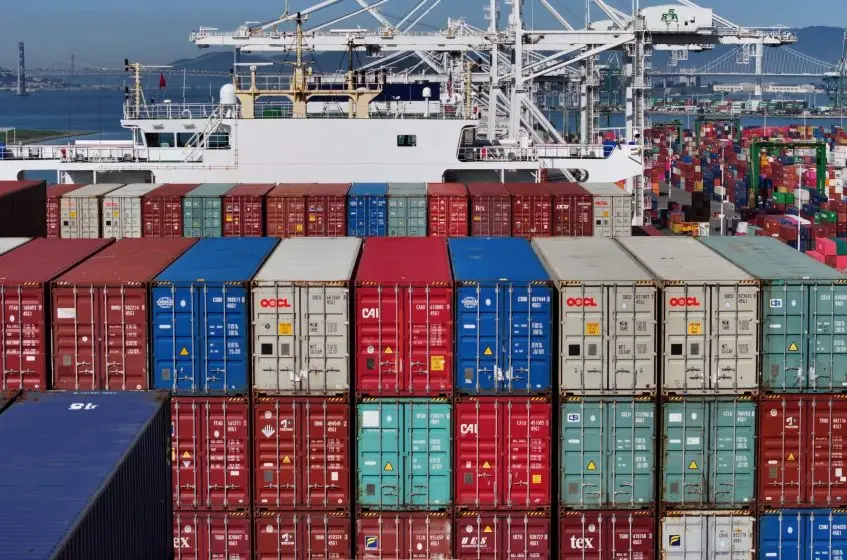
The Chinese economy is in a state of “strong supply and weak demand”. While production capacity continues to leap forward, domestic demand has not expanded in tandem. Data from the General Administration of Customs shows that on 11 January 2025, China’s trade surplus reached a new high of US$1.076 trillion. Using export to relieve pressure may have worked in the past, but the world market today is no longer necessarily willing to absorb such a massive increase in supply. Against such a backdrop, this of course reflects the comparative advantage of China’s manufacturing prowess. However, when huge amounts of low-price, high-quality goods are exported abroad, local suppliers will be crowded out, followed by contraction of employment and political backlash. As tariffs, technical standards, and subsidy thresholds are stacked ever higher, international trade will no longer be free and will struggle to function as a means of countering “involution-style” competition.
Chinese enterprises going global: from export sales to “local resonance”
As a result, “overseas expansion” is beginning to take on a new meaning. It is no longer just about selling products to distant markets, but has become a way of exploring how to establish an entirely new ecological relationship on foreign soil: building factories locally, hiring apprentices, setting up service networks, cultivating suppliers, and keeping part of the supply chain’s added value within the local economy, which will contribute to the local GDP and employment. The values of technology, brand, operations, and governance are reflected in the financial statements of Chinese enterprises in pursuit of overseas expansion. In this structure of “resonance with the local community”, export capacity is no longer merely a string of figures, but part of a more harmonious system of cooperation.
Despite its seemingly promising nature, this path of overseas expansion will not be plain sailing. The reason is that any large-scale expansion overseas will give rise to a series of problems in the short term, hampering the local economy and employment. After the production lines have been relocated abroad, what can be done with the remaining workers and supporting infrastructure? Can the emerging industries resulting from industrial upgrades fill the domestic employment demand gap in time? Can the skills mastered by the domestic workforce meet the new demands of the market? These are, of course, mostly issues arising during development or transformation. Compared with adjustments at the macroeconomic level, companies’ competitive clock always runs faster. This time difference makes the distance between vision and reality the hardest to grasp.
Hong Kong’s role: from a connecting window to an empowering platform
In terms of the overseas expansion of Chinese enterprises, Hong Kong occupies a meaningful position. Over the past decades, the SAR has been serving as a window between Western countries and Mainland China, playing the role of a “super connector” that brings together capital and projects from both sides. Yet international landscape has long shifted and emerging markets along the Belt and Road have become key destinations for many Chinese enterprises pursuing expansion overseas. In contrast, when it comes to language, culture, law, education, and finance, Hong Kong’s ties with the Global South remain modest. In addition, as global supply chains are fragmented by geopolitics and regulation, “connections” alone no longer suffice. Companies today require more than just a name card but comprehensive solutions that can be implemented, scaled, and resilient to risk. Hence, to ride the current wave of Chinese enterprises going global, Hong Kong must reinvent its role―evolving from a connecting window into an empowering platform, delivering added value while matching partners.
The first added value is in risk control. Hong Kong excels at the intersection of international practices, with multi-jurisdictional contract design, arbitration arrangements, tax planning, and data governance, which have become a daily routine for the city. When a Mainland company ventures into Southeast Asia or the Middle East, it encounters diverse regulatory frameworks in different countries, ranging from market access, investment approvals, tariffs and rules of origin to labour laws, environmental protection standards, data compliance, and tax treaties. Embedding these rules and regulations into contract design upfront, instead of treating them as after-the-fact remedies will be conducive to mitigating the commercial uncertainty. The law firms, consultancies, and arbitration institutions in Hong Kong, with their capability to translate regulations into operational processes, can provide Chinese enterprises in pursuit of overseas expansion with the first layer of insurance.
The second added value is in capital. Overseas expansion involves not only the relocation of production lines but also business growth, financing, and cash flow management. Be it trade financing, order-to-cash, greenfield investment, asset leasing, mergers and acquisitions, venture capital, equity financing, or collateralized financing, the ultimate aim is to unlock asset value, enrich funding sources, integrate resources, and diversify risks. Hong Kong’s financial sector has been proficient in combining equity and bonds, insurance and reinsurance, supply chain finance, and risk hedging, turning the uncertainties of the current political and economic environment and exchange rates into quantifiable insurance policies and options. Hong Kong can also, through the transparency of its capital market, endorse corporate brands and corporate governance, and, through dedicated funds and real estate investment trusts (REITs), secure long-term capital for heavy-asset investments such as localized infrastructure. Once capital engineering is synchronized with industrial engineering, the pace of Chinese enterprises’ overseas expansion will not be forced to slow down due to delays in cash flow. Hong Kong’s financing, capital management, and risk-hedging capabilities provide Chinese enterprises seeking global expansion with a second layer of value.
The third added value is in the business ecosystem. A key constraint on overseas expansion stems from not only risk control and capital, but also whether a localized network can be built efficiently. Such a network comprises a variety of factors, including raw materials and service providers, production and quality control, sales channels and after-sales services, talent and management teams, government and regulatory engagement, public relations, and verifiable Environmental, Social, and Governance (ESG) performance. Hong Kong’s advantage is rooted in its platform capability to “assemble” these scattered elements into a system. Its government, trade associations, higher-education institutions, trade fairs, and professional service providers can offer these Mainland enterprises experience sharing and intermediary services, integrating dispersed resources into standardized and modular solutions. This helps to reduce information asymmetry and transaction costs, and accelerates market entry and capability transfer for enterprises in new jurisdictions. Such resource integration services constitute the third layer of value that Hong Kong can provide for Chinese enterprises pursuing expansion abroad.
From Europe and the US to the Global South, and from exporting production capacity to exporting brands
In recent years, many senior executives from Mainland enterprises have come to Hong Kong to learn from its experience. Apart from exploring a gateway for connections, they also seek a full suite of supporting services for their international expansion. Hong Kong needs to convert connectivity into capability, and capability into marketable products. Only by a convergence of flow and functionality can the city create a highly value-added empowering platform. Indeed, Hong Kong already has years of experience in facilitating the overseas expansion of Chinese enterprises, with notable leverage in areas such as financial infrastructure, transportation networks, and East–West cultural integration. Unlike in the past, the city may now need to relearn how to deepen engagement with the Global South economies such as the Association of Southeast Asian Nations, the Middle East, Eastern Europe, Central Asia, and South America, as well as to refine its services to adapt to the prevailing global development trends.
Countering “involution-style” competition means shifting the focus from costs to standards, and from prices to quality in order to transform growth in production capacity into the export of brands and systems, and to link corporate growth with progress in local communities. Hong Kong’s unique contribution is its institutional imagination, which is instrumental in helping Chinese enterprises going global tackle not only tariffs and port logistics, but also the barriers of trust and governance. Once Hong Kong harnesses the strengths of rules, capital, and ecosystems, its transformation from a “super connector” to a “super value-adder” will be the logical conclusion.