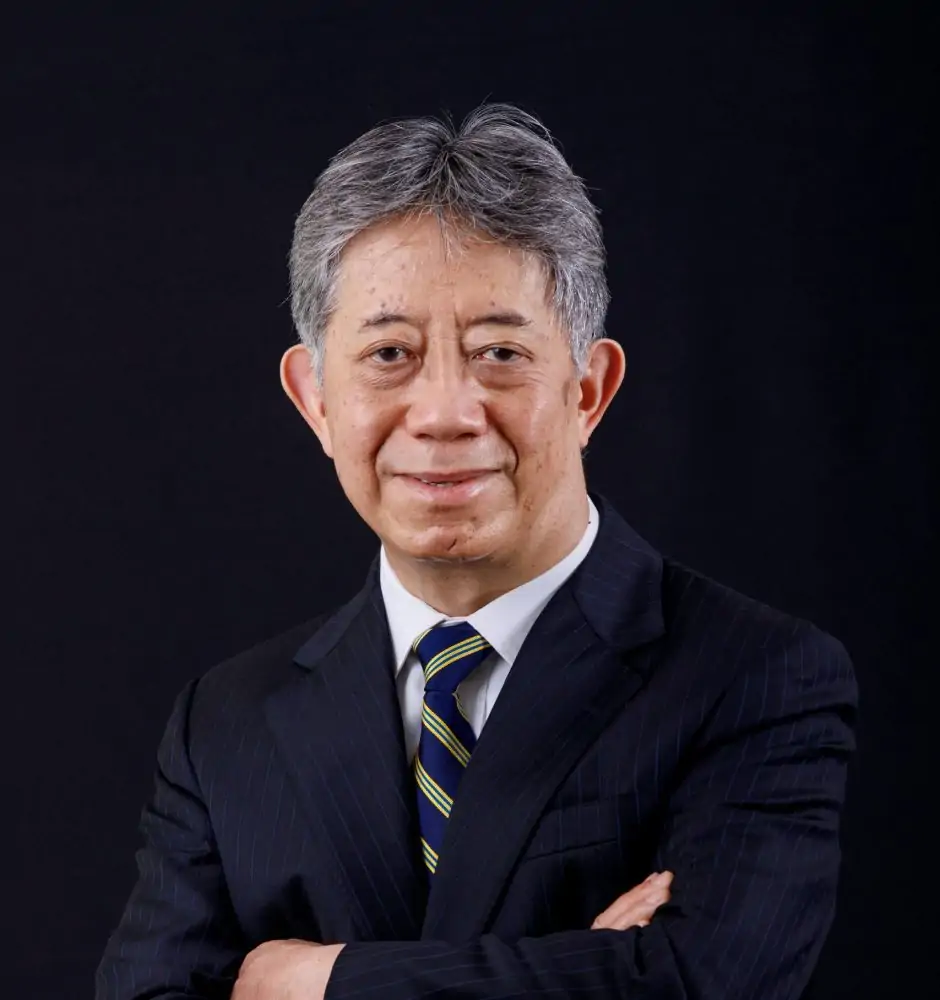

Dr Yim-fai Luk
26 November 2025
Amid the vicissitudes and uncertain prospects of the world’s political and economic landscape today, global governance has likewise landed in disorder. As a leading governance platform worldwide, the G20 convened its annual leaders’ summit in Johannesburg, South Africa last weekend, underscoring the turmoil in current international affairs. Prior to the G20 summit, parties to the United Nations Framework Convention on Climate Change held their 30th convention (COP30) in Brazil, where a fortnight of negotiations on the roadmap to phase out fossil fuels proved fruitless. A notable similarity between these two major events is the gaping absence of the US.
In the aftermath of the Second World War, under the framework of the United Nations, the World Bank, the International Monetary Fund, and the General Agreement on Tariffs and Trade, the major Western powers embarked on the path to economic recovery. However, the collapse of the Bretton Woods system and the oil crisis in the early 1970s brought severe economic challenges. In 1975, the six industrialized nations of the US, the UK, France, West Germany, Italy, and Japan began meeting to discuss international economic issues. Canada joined in the following year to form the G7, which went on to dominate the global economy in the next three decades. Nevertheless, after the outbreak of the 2008 financial tsunami, as the G7 was unable to address the fallout alone, the G20 was brought in from the bench to take up the task. The G20 was founded towards the end of the last century post-Asian financial crisis, with the aim of strengthening global financial stability. Its members comprise 19 countries and the European Union, with meeting attended mainly by finance ministers and central bank governors. 2008 saw the elevation of the G20 to a meeting of leaders’ summit given its important responsibilities, cementing its role as a premier forum for key global issues spanning the economy, finance, trade, sustainable development, climate change, etc. The presidency rotates among the 19 member countries. With South Africa holding the chair this year, the first full rotation has just concluded. This milestone should have opened up an opportunity for review, assessment, and a new chapter, yet the latest summit failed to serve that purpose.
Nevertheless, through numerous meetings over more than a decade, the G20 did achieve some impressive results. First, in terms of crisis management. After the financial tsunami, the G20 summit held in Washington, DC successfully reached a consensus on the root causes of problems. A joint effort was made by various countries to implement significantly accommodative fiscal and monetary policies, raise capital adequacy ratios, emphasized close cooperation, and rejected trade protectionism. Member nations also established a new international organization―the Financial Stability Board―to provide institutional safeguards for global financial stability. Soon after the outbreak of the coronavirus pandemic in 2020, the G20 promptly met at the end of March the same year and granted debt relief and suspended debt repayments for low-income countries, facilitated international distribution of medical supplies and vaccines, and kept supply chains open.
The G20 comprises developed countries from the G7 as well as lower-income countries including India, Indonesia, and Mexico, and hence enjoys significant global representation. In 2023, with 55 member states covering two-thirds of the world’s population and 85% of global GDP, the African Union joined the G20, further strengthening its role as the key platform for dialogue between the Global South and North. In addition, the G20 has continued to work on other issues, such as promoting open trade and reducing carbon emissions. A few days ago, the G20 summit in South Africa issued a joint declaration calling for reforms to the World Bank and the International Monetary Fund to better meet the needs of developing countries, e.g. lowering loan interest rates, providing debt relief, and offering climate financing support. What sets the declaration apart is that unlike the usual practice of releasing it only after multiple rounds of negotiation at the end of the summit, it was issued on the morning of the first day and was endorsed by all participants. This suggests that the attendees already had firm positions on the issues and that US unilateralism will not threaten the functioning of global governance.
In the global community, countries have both common and conflicting interests, and thus will inevitably join hands or part ways, come together or drift afar over time. When interests arise, with the size of the pie fixed, conflicting interests will occur in a competitive zero-sum game. Effective global governance is, by nature, a public good. Unlike private goods such as food, which are available for exclusive consumption, public goods are non-exclusive and can thus be enjoyed by many. However, this non-exclusive nature makes it difficult for suppliers to gain commensurate returns, thereby dampening their motivation to provide such goods. At the national level, governments typically take the lead to provide these goods. Yet at the international level, there is no “global government” with enforcement power. To achieve effective governance, it is essential for international organizations to define mandates, and through countries exercising self-restraint, e.g. by entering into agreements. As domestic and international dynamics change, the global governance system is bound to become fragmented.
Compared with today, global governance in the wake of the Second World War was relatively clear and stable. The world was divided into two principal blocs, one led by the US and the other by the USSR. The interests and values within each bloc were relatively aligned. With limited economic and political influence, other countries were in no position to challenge the prevailing global governance framework. Meanwhile, new norms were also set by emerging international systems, such as the General Agreement on Tariffs and Trade. Furthermore, while globalization in the post-war era was dominated by developed countries, many developing countries continued to maintain protectionist policies. In other words, the latter did not fully participate in international economic affairs, which in turn led to a relatively concentrated group of players in global governance.
However, with the advent of the 1980s, globalization underwent a profound transformation, giving rise to increasingly complex global governance. First, various emerging markets and developing countries began taking part in global economic activities, including economies that had previously operated under a planned system. Huge flows of labour and capital between East and West have substantially reshaped the global economic landscape. Globalization has fostered a high degree of integration among diverse economies, which became mutually embedded and interwoven. Multilateral economic activities are interconnected and mutually constraining, thus necessitating coordinated negotiation to resolve common problems.
Second, the economic growth rate of emerging markets and developing countries has long surpassed that of developed countries. As of today, based on purchasing power parity, the former group accounts for 61% of global GDP, leading to a more multipolar distribution of economic power. The hierarchical structure and clear dominance-subordination relationships in the post-Second World War economic order no longer exist.
Third, international issues are increasingly diverse and complex. For example, technological advancement has given rise to an industrial organization structure characterized by a winner-takes-all dynamic. Climate change has spawned various new industries and such issues transcend national boundaries.
Finally, policy fluctuations during the two terms of Trump’s presidency, including frequent policy U-turns and breaking with established rules, have added further uncertainty to global governance.
The post-Second World War world economic order has been maintained for eight decades. As the global economic situation has undergone fundamental changes, the global governance model needs to change with the times instead of being oblivious to reality. Donald Trump is a typical breaker of the original governance rules, with his primary goal being to safeguard American interests rather than to optimize global governance as a public good. In the extremely chaotic situation at present, building a new governance model is no easy task. Nevertheless, all countries should strive to expand common interests, not focus on conflicts of interest.
Next year, the G20 leaders’ summit will return to the US, marking the start of the second cycle of rotating presidencies among member countries. In view of Trump’s leadership style, he is unlikely to take the initiative to advance multilateralist issues that involve global interests. However, beyond his usual repertoire, how he uses the G20 summit stage for political performance will be an interesting interlude. Next year, the upcoming summit will coincide with the 250th anniversary of the founding of the US and the year-end US mid-term elections. With the one-year suspension of the tariff war with China set to expire, its future course remains uncertain. Trump’s earlier-proposed April visit to China, along with the subsequent planned visit to the US by President Xi Jinping, will be the major events that influence global political and economic trends next year.