Last week, the Chief Executive released his Policy Address 2025, covering the full gamut of Hong Kong’s economic and livelihood development, from promoting fertility and regulating non-local workers to supporting the space economy. By focusing on a few highlights from the Policy Address, I would like to offer my two cents’ worth to readers for future reference.
Strategic growth in the Northern Metropolis
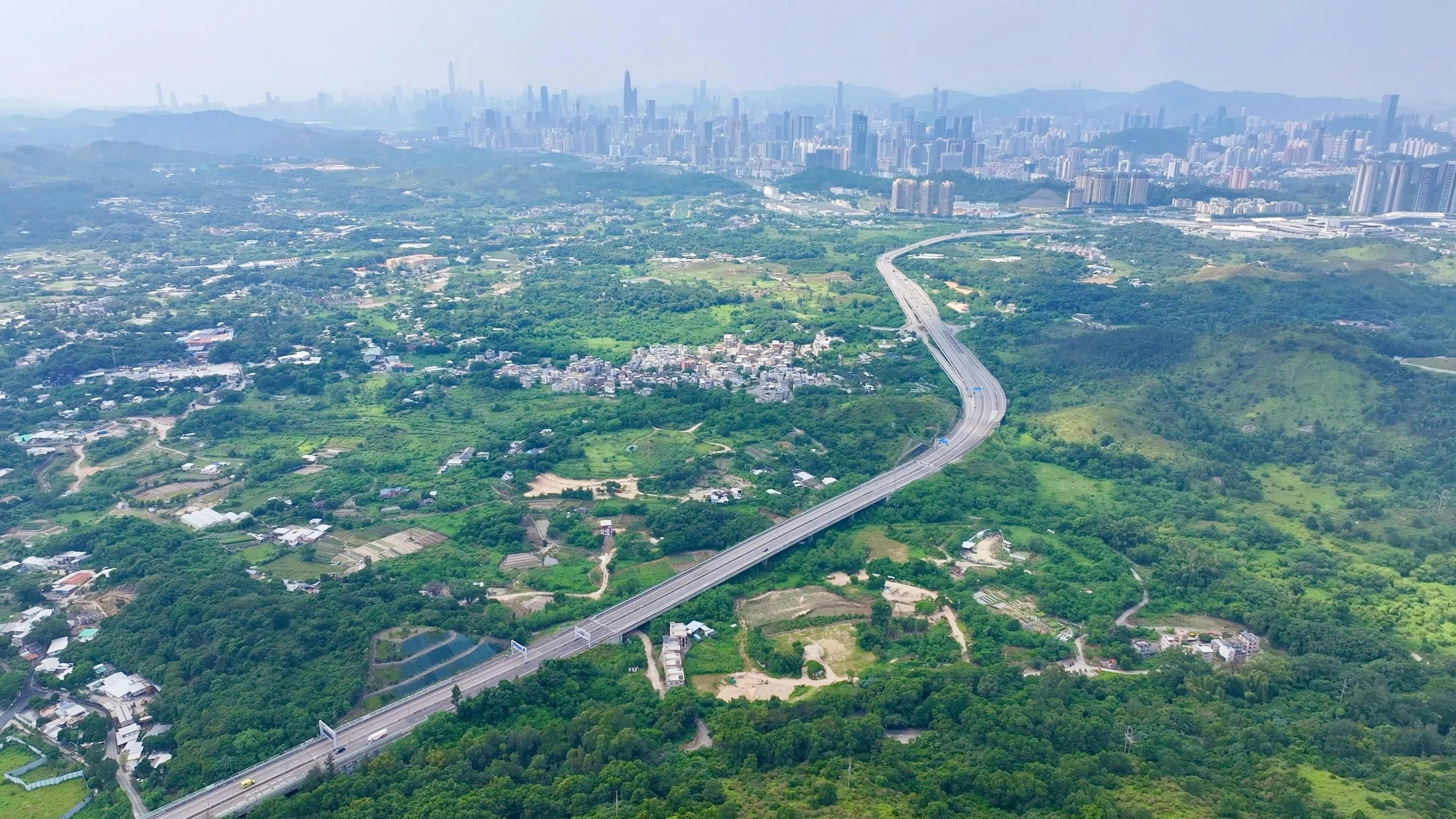
The emphasis of this year’s Policy Address is clearly on the planning for the Northern Metropolis, which encompasses the entire Northern New Territories, covering a land area equal to one-third of Hong Kong’s total size. The completed development area can accommodate 2.5 million residents, more than 1.5 times the existing population of approximately 0.98 million.
Particularly noteworthy are the four major zones, which will be developed into, from the west to the east, the High-end Professional Services and Logistics Hub, the Innovation and Technology Zone, the Boundary Commerce and Industry Zone, and the Blue and Green Recreation, Tourism, and Conservation Circle. Together, the four major zones will form the future urban landscape of the Northern Metropolis featuring diversified industries, high quality of life, internationalization, and ecosystem integration.
What will maximize the impact of these zones is the network of railway routes criss-crossing them. The Policy Address prioritizes railway development, particularly the interconnection between the Northern Metropolis and the Guangdong-Hong Kong-Macao Greater Bay Area, serving also as an impetus for related land and industrial development. The Northern Link, cross-boundary railways, and the planned Metropolis transport network will constitute the most important infrastructure development projects within the Northern Metropolis.
The Northern Link Main Line connects, from west to east, the existing Kam Sheung Road station on the Tuen Ma Line with the Sheung Shui and Lok Ma Chau stations on the East Rail Line. The Northern Link Spur Line connects the San Tin Technopole and the Hetao Shenzhen-Hong Kong Science and Technology Innovation Co-operation Zone through to the new Huanggang Port in Shenzhen. In addition, an extension line of the Northern Link and the Northeast New Territories Line connecting Heung Yuen Wai will also be built. The Hong Kong-Shenzhen Western Rail Link will connect Hung Shui Kiu and Qianhai.
With the completion of the above-mentioned projects, there will be three railway ports―Qianhai, Huanggang, and Liantang―between Hong Kong and Shenzhen. This will not only perfect the transportation network in the Northern Metropolis, but will also significantly facilitate transportation between the two cities, as well as ecosystem integration and economic and cultural exchange in the region.
To ensure the efficient development of the Northern Metropolis, Chief Executive John Lee Ka-chiu will establish and chair the Committee on Development of the Northern Metropolis. Under the Committee, three Working Groups will also be set up : Working Group on Devising Development and Operation Models, led by the Financial Secretary; Working Group on Planning and Construction of the University Town, led by the Chief Secretary for Administration; and Working Group on Planning and Development, led by the Deputy Financial Secretary. The Government will strive to streamline administrative procedures across departments, eliminating unnecessary complexity, delays, and mutual obstruction. In addition, cross-departmental coordination will be strengthened and dedicated legislation introduced to empower the authorities to bypass certain statutory processes, thereby expediting procedures related to land, planning, approvals, and construction for the development of the Northern Metropolis.
Regarding the Government’s visionary ambitions and investment plans for the Northern Metropolis, let me highlight three key observations as follows.
First, as the idiom cautions, “more haste, less speed”. While operating outside the box is intended to boost efficiency, it could also entail risks such as chaos, errors, backroom deals, and even corruption. How to avoid these potential threats calls for prudent deliberation on the part of the Government.
Second, given that the Northern Metropolis plan requires a huge expenditure, the adoption of flexible financing mechanisms may mask the magnitude of the financial burden borne by the SAR.
Third, in the chapter on the development of the Northern Metropolis, the Policy Address contains the point that “Where appropriate, we may also apply the above administrative measures to areas outside the Northern Metropolis.” This suggests that the Northern Metropolis is not merely a new development area, but may also function as a pilot zone for evaluating Hong Kong’s governance approach. Accordingly, throughout the development process, the Government should issue interim reports and summaries and disclose relevant information to the public. In doing so, it would uphold self-evaluation and information transparency, while allowing for public scrutiny. These measures could achieve far-reaching impact and profound significance for the city’s future governance.
Great leap in proportion of non-local students
In the Policy Address, the Chief Executive announces that the maximum proportion of non-local university students will be increased from 40% to 50% in the 2026/27 academic year. The enrolment ceiling for self-financing non-local students at publicly-funded universities, set at 10% in 2004 to safeguard resources for local students, was in 2008 doubled to 20% in line with the evolution of the internationalization policy. This adjustment not only enabled local universities to expand the admission of students from overseas and the Mainland, but also reinforced Hong Kong’s status as an international education hub. As the 20% cap, which had been maintained for over a decade, was only raised to 40% in the 2024/25 academic year, the latest escalation was undeniably fast in coming. Government officials have further remarked that the 50% ceiling does not represent the definitive limit.
Since taught postgraduate programmes offered by the eight funded universities are self-financed, no enrolment cap applies to non-local students in these programmes. Coupled with the determination of building the Northern Metropolis University Town, local tertiary institutions are seeing a structural change in the sources of undergraduate and postgraduate students. This could have far-reaching implications for Hong Kong’s labour market. On the one hand, non-local graduates educated at local universities will make substantial contributions to productivity. On the other hand, local students born and raised here will face an unprecedented level of competition from a large pool of candidates. Both local students and their families should be mentally prepared for this.