Professor Maurice Tse and Mr Clive Ho
3 June 2026
In the middle of last month, Standard Chartered Group announced that it planned to cut over 15% of its back-office and support roles by 2030, affecting nearly 8,000 employees. At an investor briefing, Chief Executive Bill Winters said that the bank’s strategy was “not simply about cutting costs” but, in certain cases, about replacing “lower-value human capital” with financial and investment capital. He subsequently added that the bank would provide affected employees with retraining, internal transfers, and other arrangements, emphasizing that the job cuts merely reflected changes in job functions and did not negate individual value.
Nevertheless, the negative impression created by the remark was difficult to erase. Former Singapore president Halimah Yacob publicly criticised the cold term, describing it as “disturbing”. Regulators in Hong Kong and Singapore have reportedly asked the bank to explain its redundancy arrangements, including whether it was using AI as justification for reducing headcount.
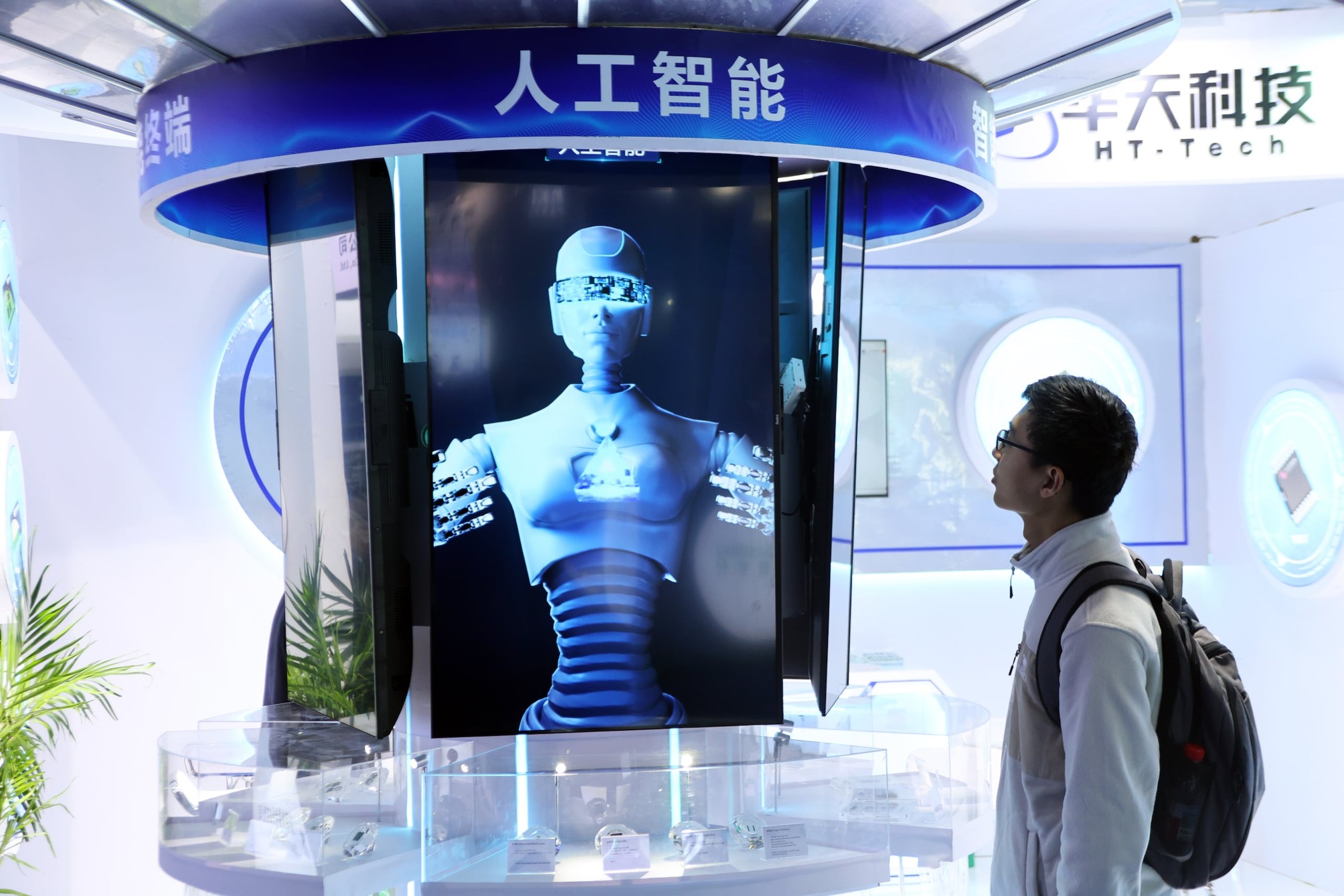
This controversy has attracted considerable attention because it reveals that AI is no longer simply an auxiliary tool for enhancing efficiency, but is beginning to reshape recruitment structures, job hierarchies, and returns on education.
Pressure hits new entrants first
The impact of this change on entry-level positions in Hong Kong is particularly evident. Last month, in response to questions from Legislative Council members, the Secretary for Labour and Welfare pointed out that the number of full-time job vacancies suitable for university graduates had dropped by approximately 61%, from around 80,000 in 2022 to about 31,000 in 2025. The decline was particularly significant in roles such as administration, information technology, and programming.
Undoubtedly, job anxiety induced by AI is spreading widely from the technology sector to white-collar work and education. Tasks such as document organization, administrative coordination, and preliminary analysis, which used to be handled by large numbers of new hires, are now increasingly performed by generative AI. Evidently, entry-level positions, which once enabled young people to enter the workforce, are the first to bear the brunt: these roles are now being redesigned or directly absorbed into systems.
Nor is this phenomenon unique to Hong Kong. According to the World Economic Forum’s The Future of Jobs Report 2025, AI, information processing, robotics, and automation are simultaneously creating and eliminating jobs globally. The fastest-growing skills are concentrated in AI and big data, cybersecurity, and technological literacy, while the fastest-declining roles include repetitive administrative positions.
The report indicates that by 2030, about 39% of existing skills will be reconfigured or become outdated. Approximately 40% of employers expect to reduce headcount in areas where tasks can be automated by AI, while as many as 70% of companies plan to recruit employees with new AI-related skills. Over 60% of employers regard the “skills gap” as the greatest obstacle to corporate transformation. What AI is truly changing is not just the number of jobs, but the criteria by which employers evaluate talent. Core competitiveness in the workplace now lies in the ability to raise critical questions, integrate cross-departmental information, and make judgment in uncertain environments, rather than the capacity to simply execute established procedures.
Labour market changes force educational transformation
For fresh graduates, this also means that job-seeking pressure now comes from the reality of growing “replaceability”. When some entry-level tasks can be handled by AI, companies recruiting university graduates now expect strong mature communication, planning, and analytical skills. The workplace-learning curve has been brought forward into the university phase. A degree no longer guarantees employment. Employers favour job-seeking graduates with internship experience, interdisciplinary capabilities, an international outlook, and the ability to collaborate with technology.
In fact, the higher-education sector is already making corresponding adjustments. In the 2025–2028 triennium, the eight publicly funded universities will launch about 30 new programmes, covering emerging fields such as AI, data science, cybersecurity, creative industries, and sustainable development, thereby aligning curriculum design with industry trends. At the same time, in the list of designated programmes for the 2026–27 academic year announced by the Education Bureau, many institutions have incorporated such technological elements as AI business applications, intelligent information systems, and creative media technology into their undergraduate programmes. This demonstrates that AI has already permeated business, communication, creative, and interdisciplinary fields.
Reinterpreting learning for practical application
Even so, a more fundamental question has also emerged: should education merely keep pace with technological change, or should it reflect more deeply on which human capacities are difficult for machines to replace?
With the rising popularity of business analytics programmes in recent years, traditional business curricula have been gradually broadened to integrate training in Python, databases, statistics, and decision analysis. These programmes also offer AI-related elective streams, emphasizing data use to design strategies and focusing on cultivating talent capable of “collaborating with AI”. In other words, in an era of rapid AI development, business analytics is moving from being a specialized skill to becoming a prerequisite for business education’s redefinition of employability.
Teaching and assessment methods are undoubtedly another dimension that cannot be overlooked. Traditional assessment approaches centred on one-off written examinations, model answers, or academic essays must keep pace with the times. Higher education will inevitably place greater emphasis on oral presentations, staged assignments, and real-world tasks in order to assess students’ learning outcomes, rather than simply their ability to use AI to generate answers. As for the role of teachers, it will increasingly lie in guiding students to ask questions, identify errors, build frameworks of judgment, and organize fragmented information into contexts so as to deepen understanding. Evidently, future investment in education should not focus only on purchasing platforms and software; it must also rely on teacher training and ethical norms. Otherwise, it may improve classroom efficiency, but the very meaning of education will be lost.
The widespread adoption of AI does not necessarily mean the marginalization of human capabilities. Nvidia CEO Jensen Huang has pointed out that AI is turning human language into a new programming language, lowering the threshold for human-computer interaction, and shifting workplace competition from coding skills to problem articulation, information integration, and judgment. Meanwhile, Daniela Amodei, co-founder of Anthropic, believes that as AI capabilities improve, companies will place greater emphasis on human capacities such as communication, empathy, and collaboration, and that the importance of the humanities will increase rather than diminish. Tesla CEO Elon Musk has also emphasized that machines cannot fully replace human creativity and judgment, especially in scenarios involving ethics and real-time decision-making, such as medical triage or autonomous driving.
The trade-off between efficiency and dignity
The Standard Chartered incident discussed at the beginning of this article has brought society face to face, sooner and more directly than expected, with a pointed question: as AI reshapes the economy, should the meaning of work be determined by companies on the basis of efficiency and cost, or defined by society at the institutional and ethical levels?
In the future workplace, demand for repetitive human labour will decline. The key questions are which capabilities will be amplified, which pathways of advancement will vanish, and who will be marginalized during this transformation. With this in mind, education should not merely supply skills to the market. It should prioritize the cultivation of judgment, adaptability, communication, and ethical awareness. If companies measure talent only in terms of cost and output, what may be lost first is not jobs but the basic institutional respect for human beings. If schools blindly chase technological trends while neglecting the humanistic and critical capacities required in the new era, mastering new tools alone will do little to help students adapt to change.
In sum, the public debate surrounding corporate restructuring has brought into focus a core issue that Hong Kong must confront: as AI reshapes the economy, are we prepared to redefine the nature of work, education, and what it means to be human?