
Professor Maurice Tse and Mr Clive Ho
29 October 2025
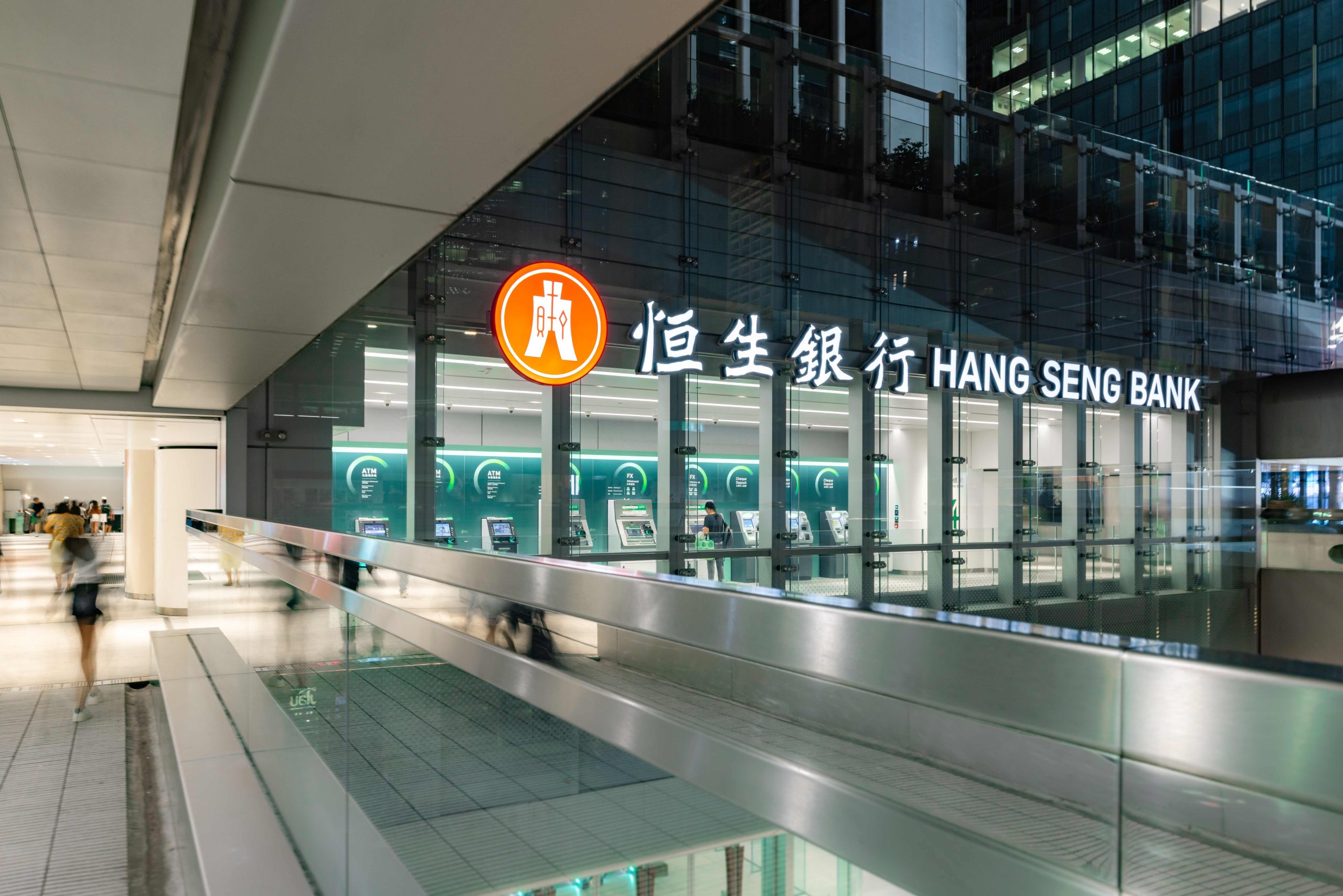
Following the proposal in February 2025 by its Japanese parent company Toridoll Holdings to privatize Tam Jai International, which had been listed in Hong Kong for less than three and a half years, HSBC Holdings announced in September 2025 its plan to privatize the 1933-founded Hang Seng Bank. In other words, once it becomes a wholly-owned subsidiary of HSBC Holdings, Hang Seng Bank will see its listing status of more than 50 years cancelled.
Decision-making in a privatization proposal
Data from the Hong Kong Exchanges and Clearing Limited (HKEX) shows that an average of 21 listed companies have gone private each year over the past five years. In value terms, the market capitalization of the 16 privatized companies in 2024 stood at HK$122.6 billion, which was higher than the funds raised through initial public offerings.
In general, a privatization is proposed by the controlling shareholder of a listed company, or a third party, such as other investors or financial institutions, with the aim of buying out shares from all other shareholders either in cash or in securities. The rationales for privatization encompass the following five aspects.
1. Commercial confidentiality and cost considerations
Maintaining a public listing entails considerable annual fixed costs, including those for regulatory reporting, information disclosure, and exchange annual fees, all of which can be avoided after privatizing the company. Being under no obligation to disclose sensitive financial or business information, private companies can gain a competitive edge in fiercely contested markets. In addition, leveraged buyouts—an important means of achieving privatization— incur debt interest expenses which can be used for tax deductions. While such tax benefits are often perceived as a form of subsidy, they are ultimately funded by the government and the public.
2. Managing agency costs
Privatization entails taking on substantial debt through leveraged buyouts, prompting the company to allocate its free cash flow towards debt servicing. This could mitigate management’s propensity for misguided investments or wasteful spending. A reduction in free cash flow, coupled with an increase in debt-related financial leverage, is conducive to lowering agency costs. Moreover, after privatization, the company’s ownership becomes concentrated in the hands of a few majority shareholders or management. Such arrangements will incentivize the company to exercise effective oversight, thereby preventing the drawbacks of dispersed ownership, e.g. high monitoring costs.
3. Addressing the “free rider” problem
In companies with dispersed ownership, oversight of management functions as a public good. Shareholders who actively monitor management incur high costs but cannot exclusively enjoy the resulting benefits, whereas other shareholders may act as “free riders” in economic terms, with reduced incentives to engage in monitoring. After delisting, a company dominated by a single organization or a few shareholders would be in a better position to overcome the “free rider” problem.
As a matter of fact, this is more efficient for corporate policy-making. Key initiatives no longer require excessively exhaustive research or detailed reporting to the board of directors, allowing management to formulate policies more efficiently and effectively. It can thus focus on the company’s long-term development, the restructuring of non-core businesses, and even higher-risk transformative investments.
4. Wealth transfer effect
The growth in equity value following privatization is attributable to wealth transfer to shareholders from creditors, preferred stockholders, employers, governments, etc. After going private, a company may pursue greater profit by making higher-risk investments, thereby posing higher risks for creditors and preferred stockholders. Nonetheless, the resulting profit will primarily go to shareholders. On the other hand, to achieve privatization, a company prior to privatization may issue more dividends to distribute part of the company’s cash to shareholders. This reduction in capital retention will compromise the interests of creditors and preferred stockholders.
5. Information asymmetry and persistently-low stock prices
In the process of privatization, management, with access to more information on the company’s value than ordinary investors, is in a position to buy out the company for a price lower than its actual value. Insiders may use accounting and financial techniques to suppress the stock price, allowing them to complete the buyout at a price lower than the real value. The investing public tend to have their eyes set on short-term gains, often underestimating companies with long-term investment value. The worse the market condition, the greater the discount of the share price relative to the asset price, and the higher the discount, the greater the likelihood of privatization. Penny stocks and smaller real-estate stocks are among the most likely to propose privatization.
If the share price is lower than the net asset value, the controlling shareholder can use privatization to repurchase assets at a relatively low cost. Take Alibaba for example. The group listed its B2B e-commerce company (Alibaba.com Limited) in Hong Kong in 2007 at an issue price of HK$13.5. Subsequently, sluggish business growth and a persistently low stock price prompted the group to privatize it in 2012 at the original issue price. After listing its shares on the New York Stock Exchange in 2014, the group relisted in Hong Kong in 2019, when the HKEX permitted listing of companies with weighted voting right structures.
Privatization: stories of success and failure
In 2024, 16 listed companies in Hong Kong were privatized. Among the companies recently delisted from the HKEX is the ESR Group, which was listed in 2019. At the end of 2024, ESR founders formed a consortium with international financial institutions to buy out all the tradable shares of the group at HK$13 per share. The deal to take the group private was valued at HK$55.2 billion.
According to the party initiating the privatization, ESR was committed to transforming itself into an asset-light platform focused on new economic sectors. Given that this strategy could cause short-term profit volatility, management resolved that delisting was necessary to facilitate this transformation by avoiding the short-term pressures of public markets and restrictive listing rules.
On the other hand, there has been no lack of failed privatization attempts. One reason is that the offer price in many proposals is higher than the discounted net asset value, making it difficult to gain acceptance from independent shareholders. In addition, some proposals are subject to a majority vote of the independent shareholders present at the voting. This hurdle often leads to the derailment of a privatization proposal at the last minute.
In April 2025, Dickson Poon, a substantial shareholder of Dickson Concepts, proposed to take the company private. The offer of HK$7.2 per share was at a premium of more than 50% to the market price but still below the company’s net asset value at HK$9.05 per share. Moreover, the company’s substantial cash holdings led a portion of shareholders to vote against the proposal. Consequently, at the court meeting held in July 2025, the proposal failed to meet the required approval threshold as the proportion of opposing votes reached 10.16%.
Challenges and opportunities from delisting
The privatization of listed companies is inevitably faced with challenges. First, after the deal is completed, the company’s financing options may be restricted as it can no longer raise large capital through share issuances or secondary offerings. Since funding sources will be confined to bank loans or private placements, a company’s financial flexibility will be significantly reduced. Second, the interests of minority shareholders may be compromised. If the buyout offer is unreasonable, or if major shareholders leverage their dominant position to suppress the offer price, retail investors and minority shareholders may not receive fair value for their shares.
Over the past century, many Hong Kong banks have changed hands (see Table). For instance, in 2008, China Merchants Bank acquired CMB Wing Lung Bank for HK$19.3 billion. In 2013, the Yuexiu Group, a large state-owned enterprise in the Mainland, acquired a 75% stake in the Liu Chong Hing family’s Chong Hing Bank. Today, the Bank of East Asia, Dah Sing Bank, and the unlisted Tai Sang Bank are the only remaining independent local banks in Hong Kong.
Table: Mergers and acquisitions in the local banking sector since 2000
| Year | |
| 2000 | The Bank of East Asia acquired First Pacific Bank |
| 2003 | Wing Hang Bank acquired Chekiang First Bank; ICBC (Asia) acquired Fortis Bank Asia HK |
| 2004 | Fubon Financial Holding headquartered in Taiwan acquired a stake in the International Bank of Asia |
| 2006 | Public Financial Holdings acquired Asia Commercial Bank |
| 2008 | China Merchants Bank acquired CMB Wing Lung Bank |
| 2013 | The Yuexiu Group acquired Chong Hing Bank |
| 2014 | OCBC Bank acquired Wing Hang Bank |
HSBC’s recent decision to privatize Hang Seng Bank is widely seen as a strategic move to address Hang Seng Bank’s bad debts, effectively streamline the group’s business structure in Hong Kong, rationalize policy-making process, and enhance operational flexibility. HSBC has made it clear that share buybacks will be suspended for three quarters after the deal’s completion to retain capital. Despite interim pressure on overall shareholder returns (covering both dividends and buybacks) and market expectations of a short-term stock price decline, the privatization initiative will generate positive impacts in the long run.
Once Hang Seng Bank goes private, HSBC will be able to boost efficiency and achieve a synergistic effect through integration of businesses, human resources, and customer networks. While Hang Seng Bank will retain its brand and branches, the management and policy-making of the two banks will be more closely aligned. As global banking sectors face mounting geopolitical and regulatory pressures, HSBC’s privatization initiative will not only mark a new era for Hong Kong’s financial sector but will also likely introduce a wave of integration across the banking sectors in Asia.