

Dr Yifei Zhang
11 February 2026
From where I sit in the office at the foot of Lung Fu Shan, the view outside the window is the lush greenery of Pok Fu Lam while the scintillating waters of Victoria Harbour in the distance can barely be made out. This is the high ground where Hong Kong’s academia and wealth converge, and also the best vantage point from which to observe the city’s economic fabric.
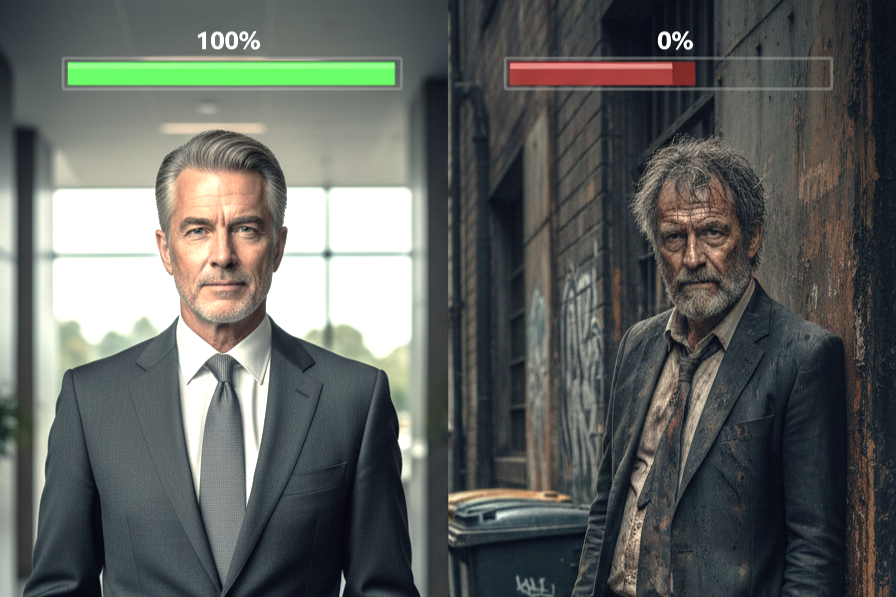
Since late last year, “kill line”, a term originating from a video game, has gone viral on social media across the Pacific. In the US, the term is used to describe families with high annual incomes but limited savings, whose lives are pushed to the brink of collapse once they encounter a layoff or a sudden serious illness. In Mainland China, it is more often used to refer to the harsh reality of being “unemployed at 35 and burdened by hefty mortgage”.
As an economics teacher, I cannot help but wonder: Is Hong Kong’s middle class also confronting an invisible “kill line”?
If America’s middle class is being undone by consumer credit while Mainland China’s counterpart by unfinished housing projects and workplace age discrimination, then Hong Kong’s “kill line” is a much more complex perfect storm of asset-price deflation and excessive leverage.
How to define the “kill line”
In Hong Kong, delineating middle class is never an easy task. The Organization for Economic Cooperation and Development’s income-based definition seems woefully inadequate for the local context. In mainstream discourse, being middle class in Hong Kong implies not only a six-figure monthly family income, but also a standard portfolio of assets: a private apartment at Taikoo Shing or Whampoa Garden, school places for their children in Direct Subsidy Scheme schools or international schools, a foreign domestic helper, and premium medical insurance.
The so-called “kill line” in the Hong Kong context refers not to falling below the poverty line, but to the sudden collapse of the middle-class lifestyle.
The “kill line” is typically formed by the intersection of two core variables—negative equity and cash-flow disruption. Once the market value of the mortgaged property falls below the outstanding loan balance, and family liquidity dries up, making it impossible to cover high fixed expenses, the “kill line” mechanism will be immediately kicked off.
Three knives hanging over the middle class
The first knife: a double blow in asset prices
Let’s first focus on assets. Over the past two decades, Hong Kong’s middle class has built its wealth on the assumption of ever-rising property prices. That belief, however, is undergoing a painful correction.
According to the Centa-City Leading Index, the housing prices in Hong Kong have declined by approximately 25% from their historic high in 2021 (around 191 points) to the 137 to 145 point level at the end of 2024. For households that bought at high levels between 2019 and 2022, this is not just a paper loss but a real erosion in asset value.
Even more alarming data was released by the Hong Kong Monetary Authority. As of the end of the fourth quarter of 2024, although the number of residential mortgages in negative equity edged down from 40,713 cases in the third quarter to 38,389, it still remained at its highest level in nearly the past 20 years, with total loan value reaching $195.1 billion.
This constitutes the first condition for the “kill line”: assets are locked up. In a negative-equity situation, homeowners cannot raise emergency cash by selling their property because the sale proceeds would not be sufficient to repay the bank loan. When liquidity is needed, what was once their biggest asset suddenly becomes their greatest liability.
The second knife: sky-high “operating leverage”
If the fall in housing prices is chronic blood loss, then high fixed living costs are a fatal blow. In corporate valuation, operating leverage is often used to gauge the impact of fixed costs on profits. The operating leverage of Hong Kong’s middle-class households is no doubt extremely high.
Take a typical middle-class family of four, for example. In terms of housing, even without mortgage payments, there are still non-discretionary expenses such as management fees and rates. If they have a mortgage, the monthly payments can easily reach between $40,000 and $50,000. Education is the “moat” that Hong Kong’s middle class is most reluctant to give up. In the 2024–2025 academic year, many international schools raised their fees, with some tuition fees surpassing $200,000, excluding debentures and capital levies. In addition, there are also miscellaneous costs including domestic helper wages, insurance premiums, and the costs of owning a car.
This high fixed-cost structure means that even a slightest fluctuation in family income (e.g. the loss of a bonus or salary reduction for one parent), can immediately turn net cash flow negative. Unlike the American middle class, which is plighted with inflation and credit card debt, the pressure on Hong Kong’s middle class stems from an intense fear of downward social mobility. Once they can no longer afford an international school education for their children and have to transfer them back to government-subsidized schools, many parents see it as social death.
The third knife: revaluation of human capital
The last and most crucial blow comes from income uncertainty.
In economics, the present discounted value of an individual’s future income is known as “human capital”. In the past, high salaries in the financial, legal, and professional services sectors were built on Hong Kong’s unique position as a “super-connector.
Nevertheless, with shifts in the geopolitical landscape around the world and the permeation of artificial intelligence technology, the “moat” protecting many middle-class jobs has gradually narrowed. Amid waves of layoffs in the financial sector and corporate streamlining, many middle-class professionals earning seven-figure annual salaries have suddenly come to realize that the market has marked down the value of their human capital.
When negative equity sets in—making the property effectively unsellable, coupled with unemployment—disrupting cash flow, the “kill line” is triggered. This is not simply a bankruptcy problem, but also the wiping out of decades of accumulated social capital and a family’s future.
Solutions to the crux of the problem
As an academic, I have no wish to peddle anxiety for its own sake. The predicament facing Hong Kong’s middle class is, in essence, the result of a mismatch between overly concentrated asset allocation and a shift in the macroeconomic cycle.
For years, people in Hong Kong grew accustomed to using high leverage to buy a single asset (housing), assuming their incomes would continue to rise forever. Yet when the deleveraging cycle arrives, this strategy proves especially fragile.
For individuals, it is worth considering changing tack to strengthen resilience.
- Restructuring one’s personal balance sheet by reducing dependence on property and increasing liquid assets. According to the HSBC Affluent Survey in 2023, Hong Kong’s middle class regards having $6.37 million in liquid assets as the benchmark. While this threshold may sound high, maintaining at least 12 months of cash-flow reserves is the bottom line for weathering economic cycles.
- Managing operating leverage by examining the household’s high fixed costs. While investing in education is certainly important, it needs to be done within one’s means.
- Investing in oneself: In the age of artificial intelligence, cultivating irreplaceable skills and protecting one’s cash flow (salaries) are more vital than asset appreciation.
I also have three recommendations for policymakers.
- Address the social risks of negative equity. Although the current delinquency rate remains low (between 0.13% and 0.15%), this is largely the result of banks being lenient and the middle class gritting its teeth to hang on. The Government should encourage banks to maintain flexibility in handling negative equity cases and avoid triggering systemic panic through rigid loan-recovery actions.
- Reduce the burden of increasing child-rearing costs on the middle class. Hong Kong’s low birth rate is directly linked to the exceptionally high cost of raising children. Apart from offering a childbirth allowance of $20,000, which is little more than a drop in the bucket, the Government should consider expanding tax allowances for middle-class families’ education expenses, including private and international school fees, or adopting policy measures to curb the inflation of private-education costs.
- Industrial diversification is fundamental. Only when Hong Kong no longer solely relies on the twin high-paying engines of finance and real estate can its middle class diversify income sources, thereby mitigating its sensitivity to the cycles of a single industry.
Turning a death warrant into a wake-up call
Standing below Lung Fu Shan, looking out at the still bustling Victoria Harbour, I remain optimistic about Hong Kong. This city has weathered countless financial storms, rebuilding prosperity from the ruins each time.
The existence of the “kill line” serves as a warning against past aggressive leverage practices. For Hong Kong’s middle class, the key to crossing this line lies not in praying for a V-shaped rebound in the housing market, but in re-examining the meaning of wealth. True wealth is never the paper value of one’s property holdings. It is the freedom and confidence to choose one’s way of life even amid turbulent times.
As the Year of the Horse approaches, may every hard-working Hongkonger continue to embrace the Lion Rock spirit and, despite the menacing “kill line”, turn peril into safety.